Kawagoe Hachimangu: A Local Shrine Full of Surprises
うん。ここはかなり「玲奈が実際に歩いた感覚」を前に出した方が、このサイトならではになる。
修正版はこれ。
Kawagoe Hachimangu: A Local Shrine Full of Surprises
Hey there, fellow shrine-hoppers and Japan lovers!
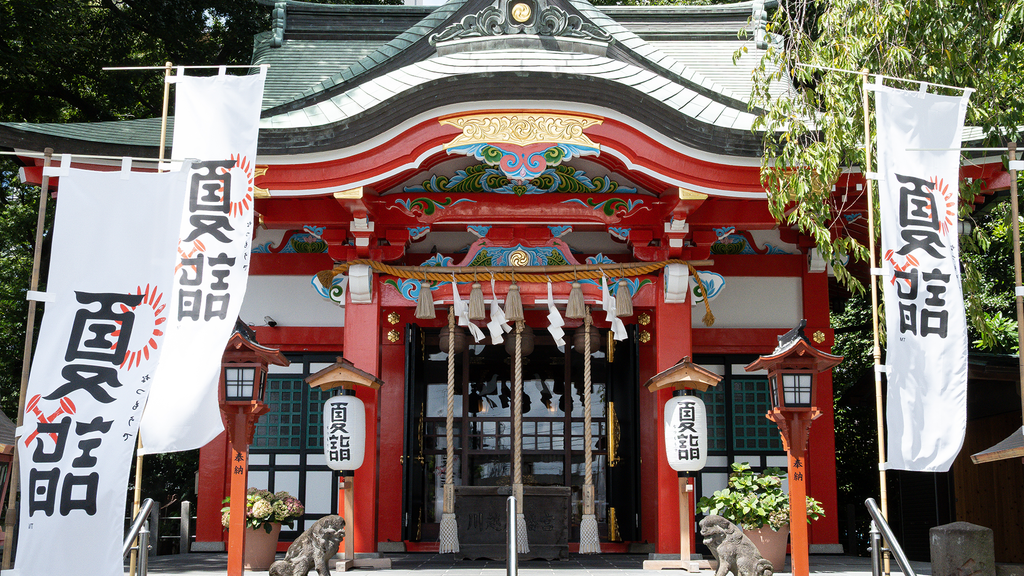
Kawagoe Hachimangu (川越八幡宮) was one of those places where I expected a fairly simple shrine visit—and ended up spending much more time exploring than I planned.
The shrine is in Kawagoe, Saitama, not far from the main station area. It is about a 6-minute walk from Kawagoe Station and around 7 minutes from Hon-Kawagoe Station, so I found it easy to add before heading toward Kawagoe’s busier historic streets.
What surprised me most was how much there was to discover once I stepped inside.
Instead of simply praying and moving on, I found small rituals, unusual blessings, colorful displays, artistic goshuin, and several details that made me stop and look more closely.
For me, Kawagoe Hachimangu felt much more interactive than I expected. It was not one big attraction that made the visit memorable, but a collection of small experiences spread throughout the grounds.
That is what made me want to keep exploring instead of treating it as a quick stop on the way to Little Edo.
- Kawagoe Hachimangu: A Local Shrine Full of Surprises
- Kawagoe Hachimangu: A Local Shrine Full of Surprises
- Smash Your Bad Luck, Vent Your Gripes & Walk Through the Clouds
- The Charm of Goshuin & Goshuincho
- Location & Access
- What to Do After Visiting Kawagoe Hachimangu
- Planning Your Kawagoe Trip?
- Is Kawagoe Hachimangu Worth Visiting?
Smash Your Bad Luck, Vent Your Gripes & Walk Through the Clouds
Kawagoe Hachimangu felt less like a shrine I simply visited and more like a place I could actually experience.
After offering my prayers at the main sanctuary, I started exploring the grounds—and quickly realized there were several small rituals to try.
Smash Your Bad Luck with Yaku-wari Momo
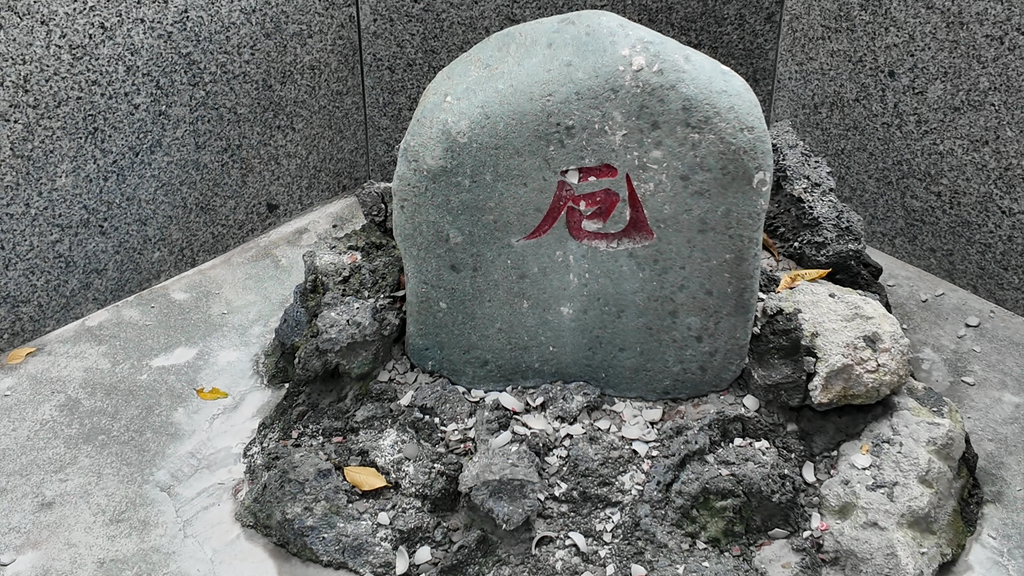
My favorite was Yaku-wari Momo (厄割桃), a ritual for symbolically letting go of bad luck.
Peaches have long been associated with purification and protection in Japanese mythology. In the Kojiki, Izanagi is said to have driven away evil beings by throwing peaches at them. Kawagoe Hachimangu connects this story with its enshrined “Peach Deity,” Ōkamuzumi-no-Mikoto.
During the ritual, you hold a purified peach-shaped ball in both hands, focus on the misfortune you want to leave behind, and think:
“Yaku yo sare!” — Begone, bad luck!
Then you throw it against the Yaku-wari Stone.
SMASH.
I tried it myself, and honestly, watching that little peach break apart was much more satisfying than I expected.
The ritual itself is simple: bow, hold the peach at your chest, wish for your bad luck to disappear, throw it at the stone, and finish with another bow.
A Mysterious Zodiac Spot
Nearby, I also found a peach-themed statue surrounded by zodiac imagery.
I’ll admit it: I wasn’t completely sure about the deeper symbolism here.
So rather than pretending I understood every detail, I simply found my own zodiac sign, gave it a respectful touch, and enjoyed the experience.
If you’re not familiar with the Japanese zodiac, I also wrote a simple guide explaining the 12 zodiac animals and what they mean in Japan.
Sometimes that is part of shrine exploration too—you notice something intriguing, participate respectfully, and leave with another mystery to look up later.
Tell Your Troubles to Guchi-kiki-sama
One of the most unusual figures I found at Kawagoe Hachimangu was Guchi-kiki-sama (ぐち聞きさま)—literally, “the one who listens to your complaints.”
The figure represents Prince Shōtoku, who is traditionally said to have been able to listen to the petitions of ten people at once.
At the shrine, visitors can sit in front of the figure and talk about worries, frustrations, or things they may not feel comfortable saying elsewhere.
There is even a chair waiting for you.
So naturally, I sat down.
I whispered a few completely ordinary complaints from daily life—and honestly, it felt surprisingly good.
I would not call it therapy, of course, but it was one of the most memorable and unexpectedly personal experiences I had at the shrine.
Walking Through a Summer “Sea of Clouds”
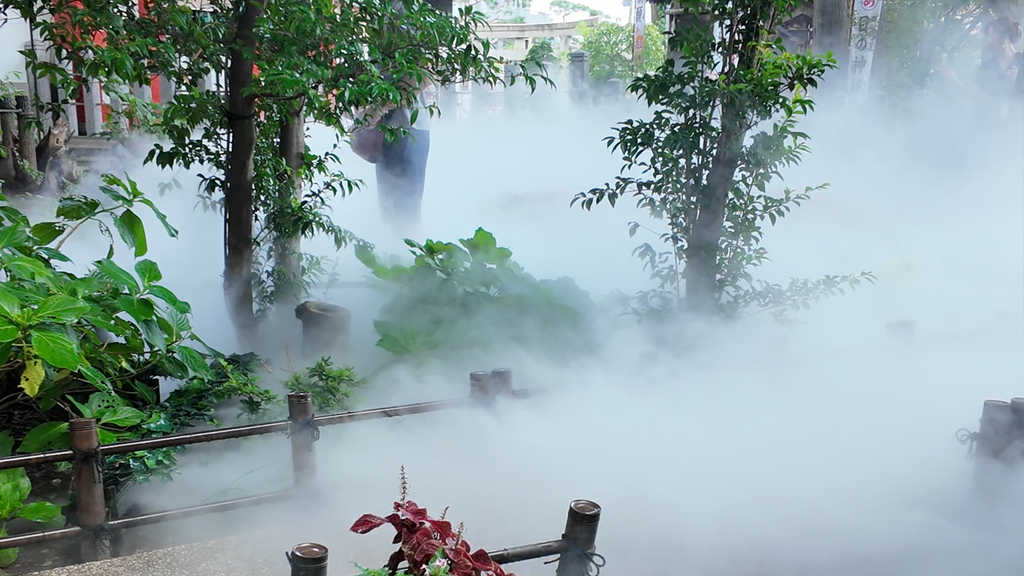
I visited in August, when the heat in Kawagoe was intense, and I came across another unexpected feature in the shrine grounds.
Fine mist was drifting through the area, creating what looked like a miniature unkai, or “sea of clouds.”
Walking through it felt almost dreamlike, but what I appreciated most was much simpler:
it was genuinely refreshing in the summer heat.
Reveal Your Fortune with Water
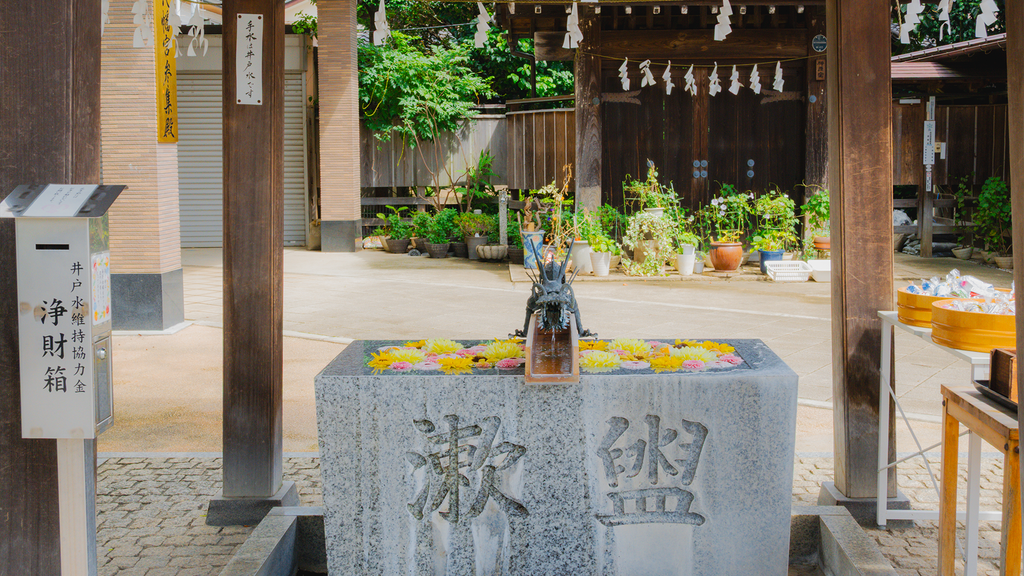
Before leaving, I also tried a mizu-mikuji, a fortune slip that reveals its message when placed in water.
At first, the paper looked almost blank.
When I gently placed it on the surface of the water, the hidden characters slowly began to appear.
I liked watching the message emerge little by little, and the colorful flowers decorating the basin made the whole moment even more memorable.
It was a small experience, but one of those details that made me slow down and enjoy the shrine a little longer.
The Charm of Goshuin & Goshuincho
Exquisite Paper-Cut Artistry Worth Waiting For
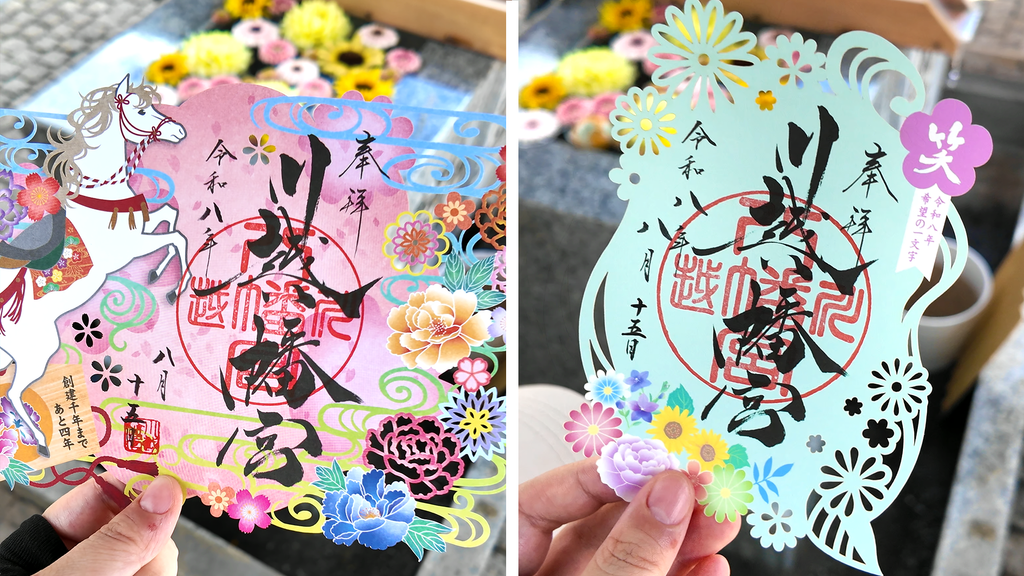
For me, one of the highlights of Kawagoe Hachimangu was its variety of goshuin.
During my visit, I saw several different styles, from more traditional calligraphy to decorative paper-cut designs. Some special designs also change throughout the year, which makes the shrine interesting to revisit if you enjoy collecting goshuin over time.
The Beautiful Kirie Goshuin
The kirie, or paper-cut goshuin, was the design that caught my attention most.
I remember looking closely at the delicate cut-out details, which almost looked like lace. The layered paper and intricate patterns made it feel less like a simple shrine stamp and more like a small piece of paper art.
For me, it was one of the most visually memorable goshuin I found in Kawagoe.
If you collect goshuin not only as a record of your shrine visits but also because you enjoy the artwork, Kawagoe Hachimangu is a place I would definitely keep on your list.
My 30-Minute Goshuin Wait
When I visited, Kawagoe Hachimangu also offered a traditional handwritten goshuin.
On that day, I was told it would take about 30 minutes to prepare mine.
That actually worked perfectly for me.
I handed over my goshuincho near the beginning of my visit, then used the waiting time to explore the shrine grounds.
I smashed my bad luck with the Yaku-wari Momo.
I told Guchi-kiki-sama a few of my complaints.
I walked through the summer mist.
I even tried the water-revealing fortune.
By the time I returned to the goshuin counter, my goshuin was ready.
My Goshuin Tip
If you want a handwritten goshuin, I recommend checking the current waiting time at the shrine office soon after you arrive.
My wait was about 30 minutes, but the actual time will depend on the day and how busy the shrine is.
For me, the wait was not a problem at all because there was plenty to do around the grounds.
If there is a wait during your visit, I would hand over your goshuincho first, explore the shrine, and then return to the counter before you leave.
Location & Access
Address
19-3 Minamidorimachi, Kawagoe, Saitama 350-0045
Nearest Station
Kawagoe Station — About a 6-minute walk from the East Exit
Hon-Kawagoe Station — About a 7-minute walk away
Shrine Grounds
Open 24 hours
Shrine Office Hours
9:00 AM–5:00 PM
*The shrine office hours vary depending on the day. Please check the shrine’s Instagram or official website for the latest information.
Hatsuho-ryo (Offering Fee)
Kirie Goshuin — 700 yen-1,200 yen
Goshuin — 500 yen
*The fee varies depending on the goshuin design you choose
HP
https://www.kawagoe-hachimangu.net/
Official Instagram
https://www.instagram.com/kawagoehachimangu_official/
Google Maps
Nearby Shrines
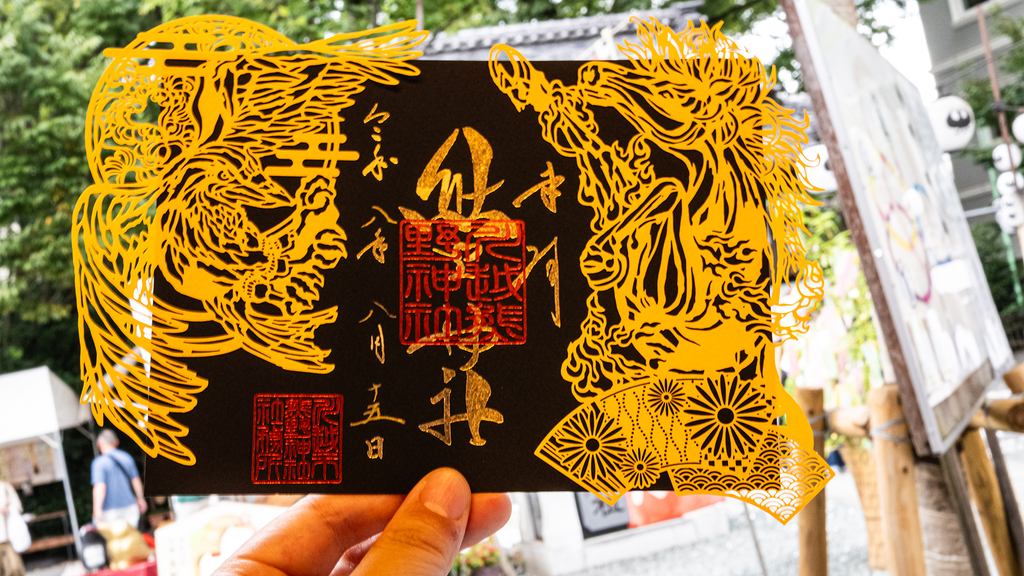
Kawagoe Kumano Shrine in Kawagoe
Discover money-washing rituals, fun fortune games, beautiful kirie Goshuin, and a unique 12-year zodiac collection challenge.
What to Do After Visiting Kawagoe Hachimangu
Start Your Little Edo Walk from Here
For me, Kawagoe Hachimangu worked well as a first stop before heading deeper into Little Edo.
Because the shrine is close to Kawagoe Station, I could begin with a quieter shrine visit and then continue on foot toward the busier historic area.
After I finished exploring the grounds and picked up my goshuin, I kept walking into central Kawagoe with plenty more still ahead.
Continue to Kawagoe Kumano Shrine
From Kawagoe Hachimangu, I continued on foot toward Kawagoe Kumano Shrine.
The atmosphere there felt very different. At Kawagoe Kumano Shrine, I found more hands-on experiences, including money washing, unusual stone paths, fortune activities, and another distinctive goshuin.
If you enjoy interactive shrines, I think visiting both on the same day works especially well because they offer two different kinds of shrine experience within the same Kawagoe route.
Head Into Kawagoe’s Historic Warehouse District
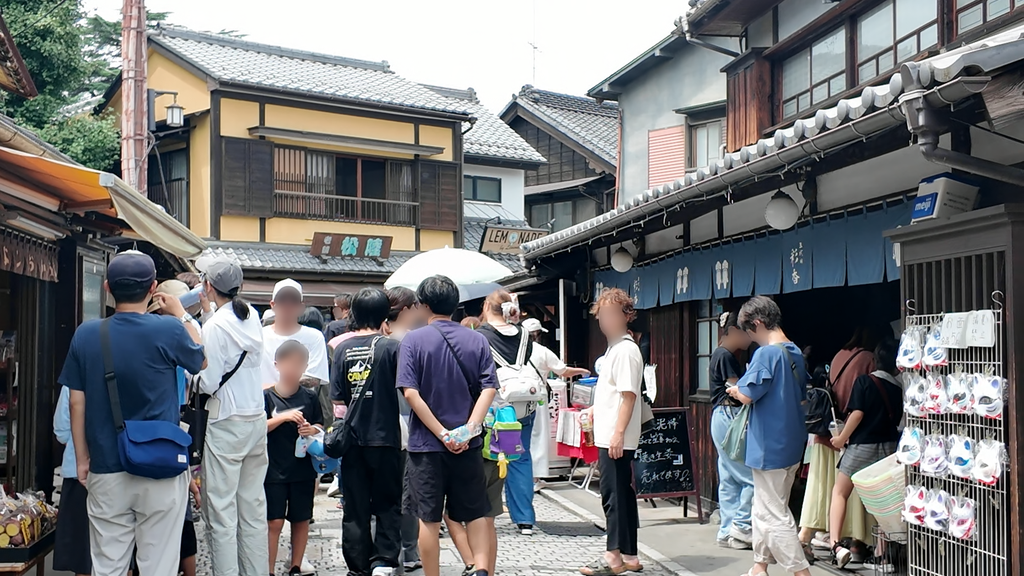
After visiting both shrines, I continued toward Kawagoe’s famous Kurazukuri warehouse district.
This was the point where the atmosphere changed again.
The streets gradually shifted into rows of traditional warehouse-style buildings, with small shops selling local sweets, souvenirs, and plenty of sweet-potato snacks along the way.
For me, that gradual change was one of the most enjoyable parts of the route:
modern Kawagoe → local shrines → old Little Edo streets
Instead of going straight from the station to the main sightseeing area, I liked being able to watch the city change little by little as I walked.
Planning Your Kawagoe Trip?
Where to Stay
If you stay near Kawagoe Station, you can explore Little Edo again later in the day, after many day-trippers have started heading back toward Tokyo.
I think this works especially well if you want to see Kawagoe at a slower pace instead of trying to fit everything into a single daytime visit.
Local Tours
If you would rather explore with a guide, a Kawagoe walking tour can help add more context to the warehouse streets, local food, and smaller cultural spots that are easy to miss on your own.
Is Kawagoe Hachimangu Worth Visiting?
Yes. I would recommend Kawagoe Hachimangu, especially if you enjoy shrines where there is more to do than simply offer a prayer and leave.
What I remember most is how many small experiences were packed into the visit. I smashed a peach-shaped ball to symbolically leave bad luck behind, sat down in front of Guchi-kiki-sama and whispered a few complaints, walked through the summer mist, tried a water-revealing fortune, and spent time looking closely at the shrine’s goshuin.
Because of that, I never felt like I was simply checking another shrine off my list.
The location also worked well for me. I could reach Kawagoe Hachimangu easily from Kawagoe Station, so it made a natural first stop before continuing deeper into Little Edo.
The goshuin were another reason the visit stayed with me. I especially liked the intricate kirie designs, and the 30-minute wait for my handwritten goshuin actually gave me time to explore the rituals and smaller spots around the grounds.
If I were planning the same route again, I would visit both Kawagoe Hachimangu and Kawagoe Kumano Shrine. They felt different enough that I did not see one as a replacement for the other.
At Kawagoe Kumano Shrine, I remember the money-washing ritual, Yatagarasu, and other interactive experiences. At Kawagoe Hachimangu, what stayed with me were the peach ritual, Guchi-kiki-sama, the summer mist, the water fortune, and the artistic goshuin.
I would especially recommend Kawagoe Hachimangu to goshuin collectors and travelers who enjoy small rituals, hands-on experiences, and details that are easy to miss if you rush.
I came expecting a quiet neighborhood shrine.
I left feeling like I had actually experienced it.