Imado Shrine: Lucky Cats, Love & a Quieter Side of Asakusa
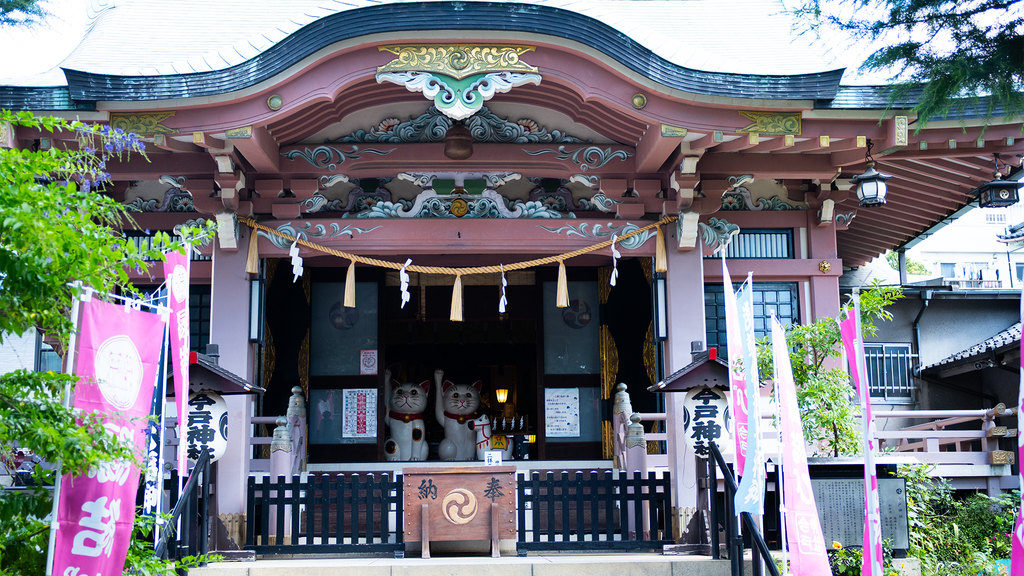
If you have already visited Sensō-ji and want to see a different side of Asakusa, Imado Shrine (今戸神社) is an easy place to add to your route.
The shrine is about a 15-minute walk from Asakusa Station, and during my visit, what stood out to me first was how different the atmosphere felt from the busier streets around Sensō-ji.
I found heart motifs, colorful decorations, and maneki-neko—Japan’s famous beckoning cats—throughout the shrine grounds. Imado Shrine is also associated with one of the legends surrounding the origins of the lucky cat, although other places in Japan have similar stories.
The shrine is also well known for enmusubi, or prayers connected with good relationships and romantic connections.
For me, one of the most memorable parts was the combination of these playful cat motifs with the shrine’s goshuin. During my visit, I found artistic goshuin designs that felt very different from the more traditional styles I had collected elsewhere in Tokyo.
If you are already exploring Asakusa and want to see a shrine with lucky cats, relationship symbolism, and distinctive goshuin, Imado Shrine is an easy stop to include in your day.
- Imado Shrine: Lucky Cats, Love & a Quieter Side of Asakusa
- From Lucky Cats to Samurai Legends: The Story of Imado Shrine
- The Goshuin of Imado Shrine: Lucky Cats & Cut-Paper Art
- The Pink Kirie Goshuin
- Location & Access
- What to Do After Visiting Imado Shrine
- Planning Your Asakusa Trip?
- Is Imado Shrine Worth Visiting?
From Lucky Cats to Samurai Legends: The Story of Imado Shrine
Imado Shrine may be known today for its lucky cats and heart-shaped motifs, but the shrine also has a long history connected with local folklore, matchmaking, and traditional Imado pottery.
The Legend Behind Imado’s Lucky Cats
One of the best-known stories connected with Imado tells of an elderly woman who lived in the area during the late Edo period.
According to the legend, she became so poor that she could no longer afford to keep her cat and had to let it go.
One night, the cat appeared in her dream and told her to make a doll in its image.
She followed the advice and began creating small cat figurines using Imado-yaki, the traditional pottery associated with this part of Tokyo. The figures became popular and helped improve her circumstances.
This story later became connected with one of the origin legends of the maneki-neko, Japan’s famous beckoning cat.
Imado also has a genuine historical connection with pottery production, and traditional Imado figurines have long included beckoning cats. Taito City still introduces the area as one of the places associated with the origins of maneki-neko.
Because several places in Japan have their own maneki-neko origin stories, I think of Imado as one fascinating part of the larger story behind Japan’s lucky cat tradition.
Why Are the Cats Always Together?
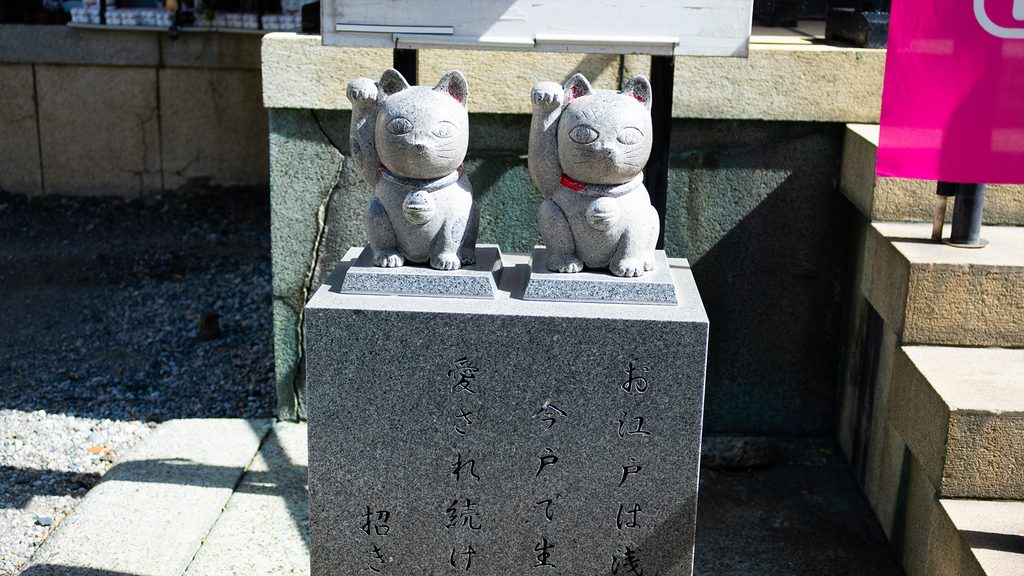
During my visit, one detail I kept noticing was that the cats often appeared in pairs.
That connects closely with the shrine’s association with enmusubi, or forming good relationships and connections.
Imado Shrine enshrines Izanagi-no-Mikoto and Izanami-no-Mikoto, the married creator deities of Japanese mythology. The shrine is also known for matchmaking and even organizes matchmaking gatherings.
For me, the paired cats made much more sense once I understood that connection. They are not just cute decorations—they reflect one of the main reasons many people visit the shrine.
The Samurai Legend Hidden Among the Cats
One of the things I did not expect to find at Imado Shrine was a connection to Okita Sōji, the young swordsman of the Shinsengumi.
Among all the lucky cats, heart motifs, and symbols of good relationships, I came across a monument connected with the story of Okita’s final days.
According to one tradition, Okita spent his last period in this area while suffering from tuberculosis. His exact place of death is still debated, so I would treat this as a historical tradition rather than a confirmed fact.
What stayed with me was the contrast.
A few moments earlier, I had been looking at smiling lucky cats and symbols of new relationships. Then suddenly I was standing in front of a reminder of a young swordsman whose life ended during the turbulent final years of the Tokugawa shogunate.
That unexpected shift is one of the things I remember most about Imado Shrine. It is easy to come here for the cats and goshuin, but if you take the time to look around, there are stories hidden in the grounds that give the shrine a very different side.
The Goshuin of Imado Shrine: Lucky Cats & Cut-Paper Art
For fellow goshuin collectors, Imado Shrine is one of the more playful stops I found in Asakusa.
During my visit, the goshuin were available as kakioki (書き置き)—pre-prepared sheets that you can later place inside your goshuincho.
But the format did not make them feel any less special.
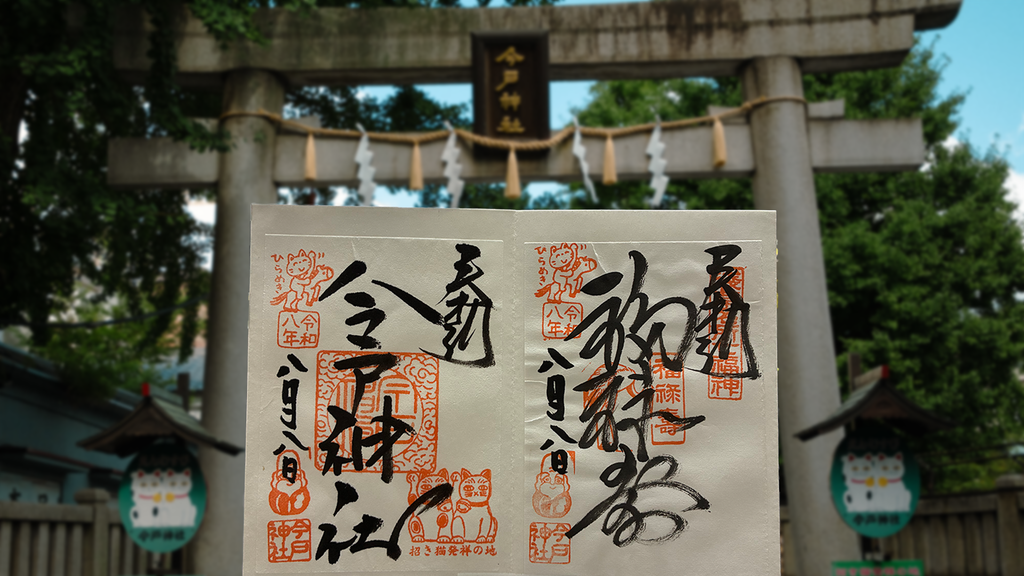
I found two designs that really matched the personality of the shrine.
The Classic Lucky Cat Goshuin
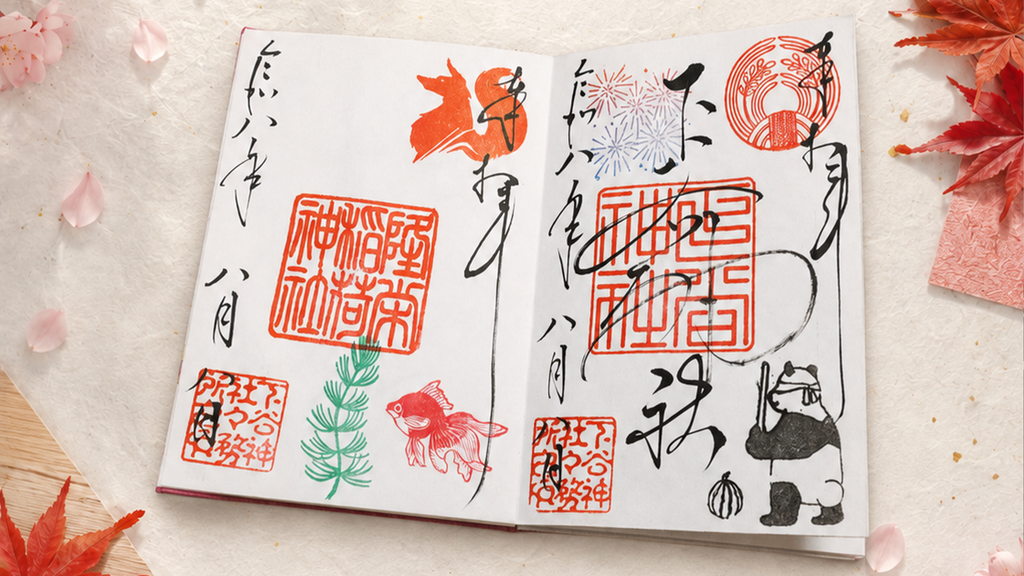
The more traditional design combines bold Japanese calligraphy with bright red stamps, including Imado Shrine’s distinctive lucky-cat motifs.
What I liked about this one was the balance between a familiar goshuin style and the playful cat imagery. At first glance, it still feels traditional, but the cats give it a personality that made it stand out from many of the more solemn goshuin I had collected elsewhere in Tokyo.
The Pink Kirie Goshuin
And then there was the goshuin that caught my attention the most.
During my visit, I found a kirie-style goshuin made from soft pastel-pink paper, with delicate cut-out details surrounding Imado Shrine’s lucky-cat motif.
I remember looking at it and thinking that it felt very different from a typical goshuin. Rather than simply being something to add to my collection, it felt almost like a small piece of paper art.
What I especially liked was the combination of the soft pink color and the cats. It suited Imado Shrine perfectly—cute and playful, but still detailed enough that I wanted to stop and look at it closely.
Even after bringing it home, it was one of those goshuin that caught my eye again when I opened my collection later.
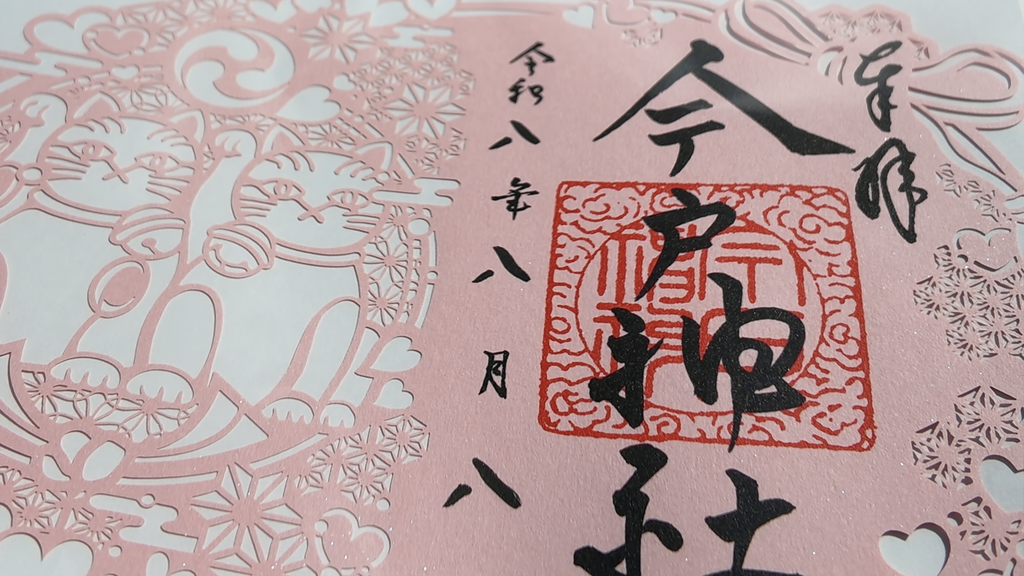
For me, this was the kind of goshuin that stayed memorable not only because of the artwork, but because it brought back the feeling of visiting Imado Shrine whenever I looked at it again.
Location & Access
Address
1-5-22 Imado, Taito City, Tokyo
Nearest Station
Asakusa Station — About a 15-minute walk
Nearby Bus Stops — A convenient option if you prefer not to walk
Shrine Grounds
Open 24 hours
Shrine Office Hours
9:00 AM–4:00 PM
*The shrine office hours vary depending on the day. Please check the shrine’s Instagram or official website for the latest information.
Hatsuho-ryo (Offering Fee)
Kirie Goshuin — 1,000 yen
Goshuin — 500 yen
*The fee varies depending on the goshuin design you choose
*Imado Shrine currently offers its goshuin as kakioki, meaning pre-written sheets rather than direct calligraphy inside your goshuincho.
HP
https://imadojinja1063.crayonsite.net/
Official Instagram
https://www.instagram.com/imadojinja/
Google Maps
Nearby Shrines
Shitaya Shrine in Inaricho
Shitaya Shrine is a historic shrine in Ueno, known for its calm atmosphere and seasonal goshuin. It is also one of the quieter shrine stops you can easily combine with sightseeing around Ueno.
My Personal Imado Shrine Tip
One of the most memorable parts of my visit was a small interaction with a shrine staff member.
She was incredibly warm and welcoming, and during my visit, she gave visitors fresh four-leaf clovers. She also gave me a few tips on where to stand for better photos.
It was a very small moment, but for me, it made the visit feel much more personal.
I also recommend taking your time around the grounds instead of walking through too quickly.
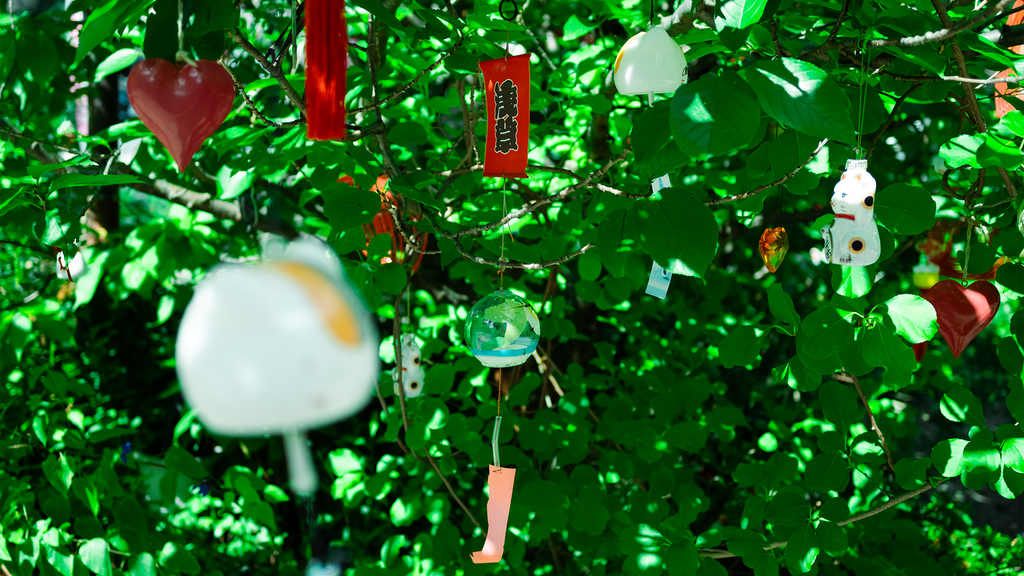
When I visited, I noticed small cat decorations among the trees and heart-shaped wind chimes moving gently in the breeze. Those little details were easy to miss at first, but they ended up being some of the things I remembered most.
What to Do After Visiting Imado Shrine
One of my favorite little surprises came after I left the shrine and started walking back toward central Asakusa.
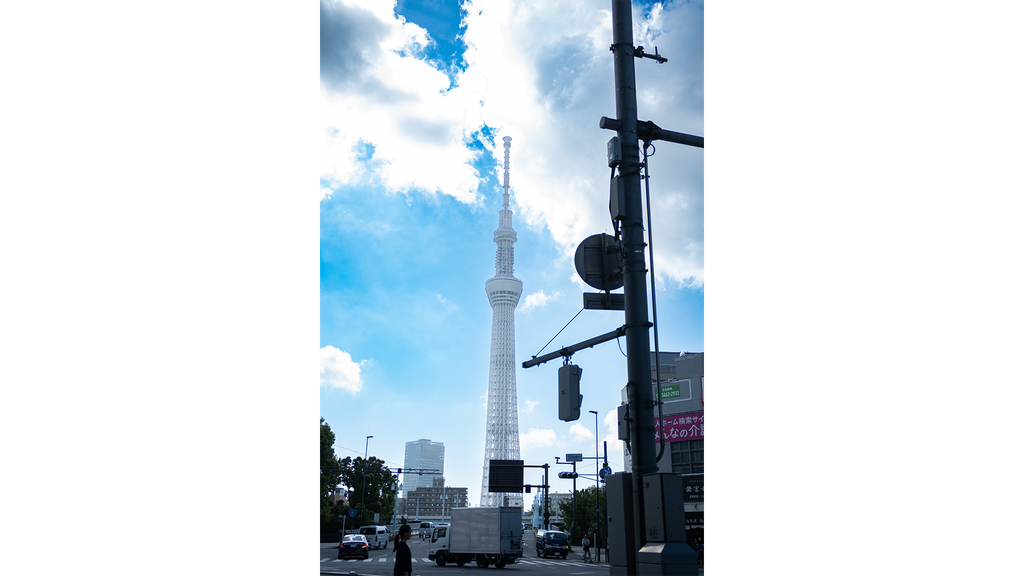
As I walked through the quieter streets around Imado, I suddenly noticed Tokyo Skytree rising above the rooftops.
Look Back for a Skytree Photo
The streets around Imado felt much calmer than the area around Sensō-ji, which made the view of Tokyo Skytree stand out even more.
During my visit, I found a spot near the shrine where the tower lined up nicely with the surrounding neighborhood.
It is not an official viewpoint, and I would not go there expecting a famous photo spot. For me, that was exactly what made it memorable—it was simply something I noticed while walking.
A quick safety note from my walk: some of the roads around Imado Shrine are narrow and are used by local residents and vehicles. I recommend staying on the sidewalk where possible and avoiding stopping in the road to take photos.
If you want more open views of Tokyo Skytree, the Sumida River and Azuma-bashi area are also good places to continue your walk.
Continue Back Into Asakusa
From Imado Shrine, I would continue toward Asakusa Shrine and Sensō-ji, then walk on toward the Sumida River.
A simple half-day route would be:
Sensō-ji → Asakusa Shrine → Imado Shrine → Sumida River → Tokyo Skytree views
I like this route because it combines Asakusa’s major sights with a quieter shrine stop and a riverside walk, all without moving to a completely different part of Tokyo.
If you still have time, the Asakusa Culture Tourist Information Center near Kaminarimon also has an upper-floor viewpoint overlooking the area.
Planning Your Asakusa Trip?
Where to Stay
If you want to explore Asakusa at a slower pace, staying in the area can be especially convenient.
I like the idea of staying nearby because it gives you the chance to see Sensō-ji and the surrounding streets earlier in the morning or later in the day, when the atmosphere can feel very different from the busiest sightseeing hours.
Local Tours
If you want to learn more about Asakusa beyond simply visiting the major sights, a local walking tour, food experience, or traditional craft workshop can add more context to the area.
These can also work well alongside a shrine-focused route if you want to combine sightseeing with food, local history, or hands-on experiences.
Some links in this section are affiliate links. If you book through them, Sacred Japan Guide may earn a small commission at no extra cost to you. See our Affiliate Disclosure for details.
Is Imado Shrine Worth Visiting?
Yes—especially if you want to see a softer, more playful side of Asakusa.
Imado Shrine is not a place I remember for huge gates or grand architecture. What stayed with me were the smaller details: the lucky cats, heart motifs, seasonal decorations, unusual goshuin, and the shrine’s connection with enmusubi, or good relationships and matchmaking.
For me, that is what made the visit feel personal.
I remember the twin maneki-neko, the artistic goshuin, the wind chimes, the small cat decorations among the trees, and even the four-leaf clover I received from a shrine staff member. Then, on the walk back toward central Asakusa, Tokyo Skytree appeared above the neighborhood streets.
I would especially recommend Imado Shrine to travelers who:
- love cats and maneki-neko
- collect unique or artistic goshuin
- are interested in enmusubi and Japanese relationship traditions
- want a quieter stop beyond Sensō-ji
- enjoy noticing small local details rather than only visiting famous landmarks
If this is your first trip to Tokyo and you only have a short time in Asakusa, Sensō-ji will probably still be your main priority.
But if you have an extra hour—or if you have already visited Asakusa before—I think Imado Shrine is worth the walk.
What I liked most was that the shrine never felt like it was trying too hard to be memorable. The cats, the four-leaf clover, the samurai story, the goshuin, and the quiet neighborhood around it all added up naturally.
It was one of those places where the small details stayed with me more than any single “main attraction.”