Escape Takeshita Street: Discovering a Quiet Shrine in the Heart of Harajuku
Harajuku is not the first place that comes to mind when I think of a quiet Shinto shrine.
Just a few minutes from the crowds, shops, and colorful energy of Takeshita Street, however, Togo Shrine felt like a completely different side of the neighborhood.
As I turned away from the busy streets and approached the shrine, the noise seemed to fade surprisingly quickly.
Within just a few minutes, I went from one of Tokyo’s busiest shopping areas to a much calmer space surrounded by trees and shrine grounds.
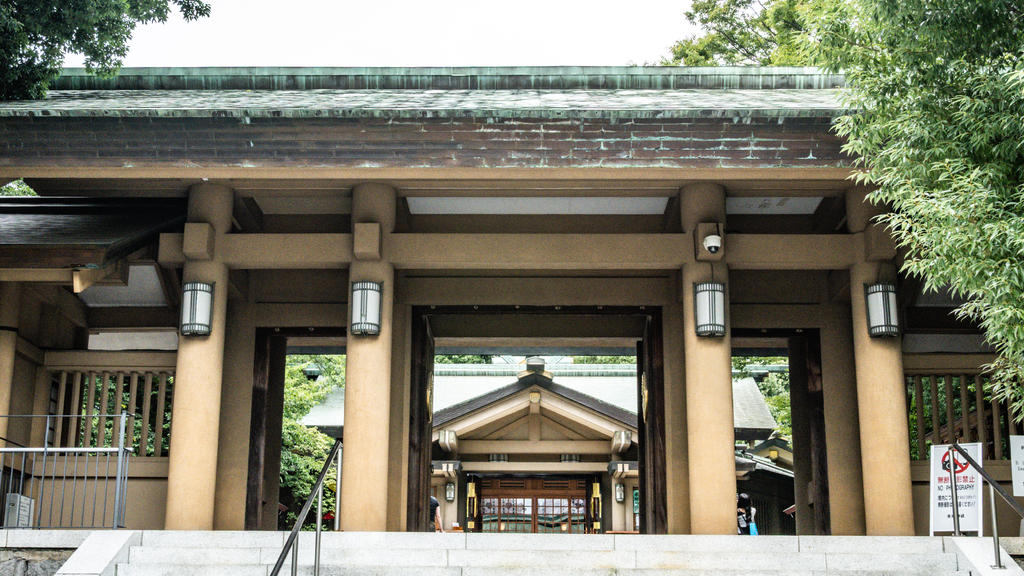
The moment I stepped through the torii, Harajuku suddenly felt much farther away.
Instead of crowded sidewalks and storefronts, I found tall trees, open space, and a calm approach leading deeper into the shrine grounds.
That contrast was what caught me first.
One moment, I was surrounded by one of Tokyo’s busiest youth-culture districts. The next, I was walking through a peaceful shrine dedicated to Admiral Togo Heihachiro.
Togo Shrine enshrines Togo Heihachiro, who is worshipped here in connection with sincerity, victory, good fortune, and relationships.
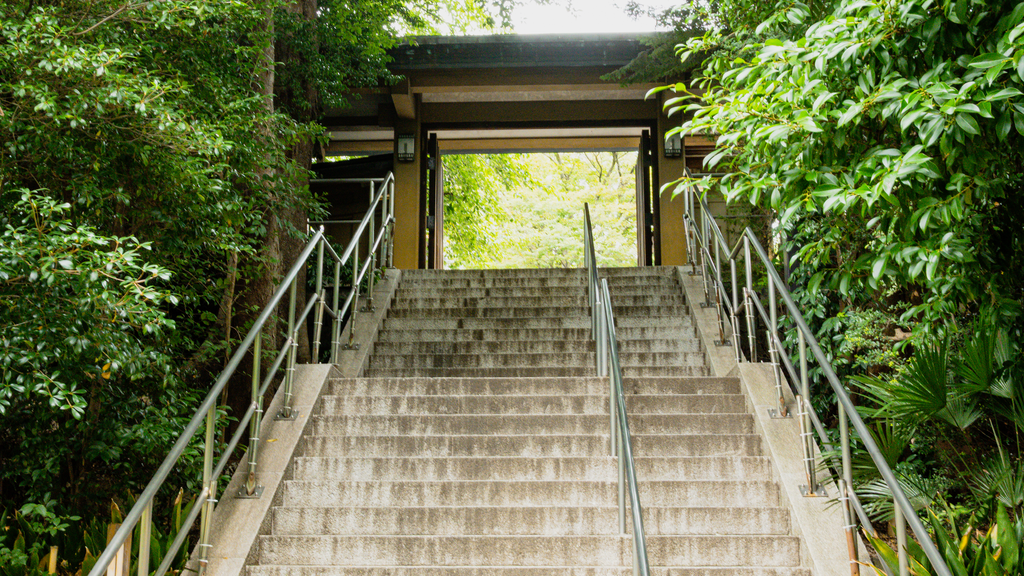
I hadn’t expected to find such a quiet space so close to Takeshita Street.
That sudden change in atmosphere made me want to slow down, look around, and see what else I could discover inside the shrine grounds.
Togo Heihachiro, the Z Flag & Harajuku’s Hidden Sacred Pond
Togo Shrine is dedicated to Admiral Togo Heihachiro, one of the best-known naval commanders in modern Japanese history.
He served as commander-in-chief of Japan’s Combined Fleet during the Russo-Japanese War and became especially associated with Japan’s victory at the Battle of Tsushima in 1905.
Today, Togo Shrine is associated with prayers for victory, sincerity, and good fortune.
Because of that, people visit the shrine before important moments in their lives, including examinations, competitions, work challenges, and other personal goals.
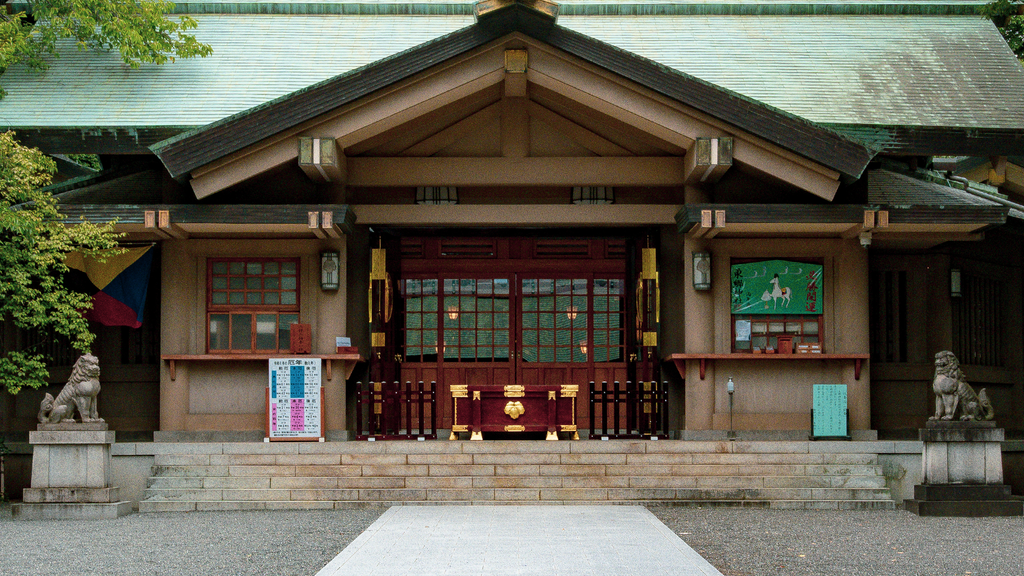
The Colorful Z Flag
One detail that immediately caught my attention around the shrine was a striking four-colored flag in red, blue, yellow, and black.
This is the Z Flag.
During the Battle of Tsushima, the Z Flag was raised aboard the flagship Mikasa under Togo’s command.
After Japan’s victory, the flag became closely associated with determination and victory, and that symbolism is still visible throughout Togo Shrine today.
I noticed the same colors and design appearing on victory-prayer banners and amulets around the shrine.
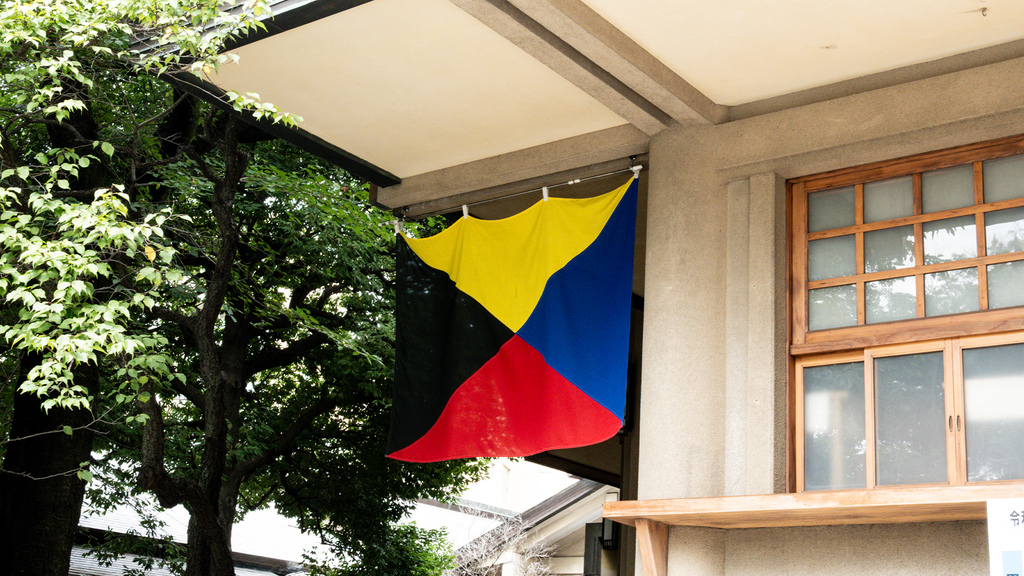
Knowing what the colors represented made me pay much closer attention to the flags as I walked around the shrine grounds.
What had first looked like a simple colorful design was actually connected directly to the history of the person enshrined here.
A Quiet Pond Hidden Beside Takeshita Street
Then there is another side of Togo Shrine that feels completely different.
As I walked deeper into the grounds, I found a green garden surrounding a quiet pond.
It was hard to believe that Takeshita Street was just next door.
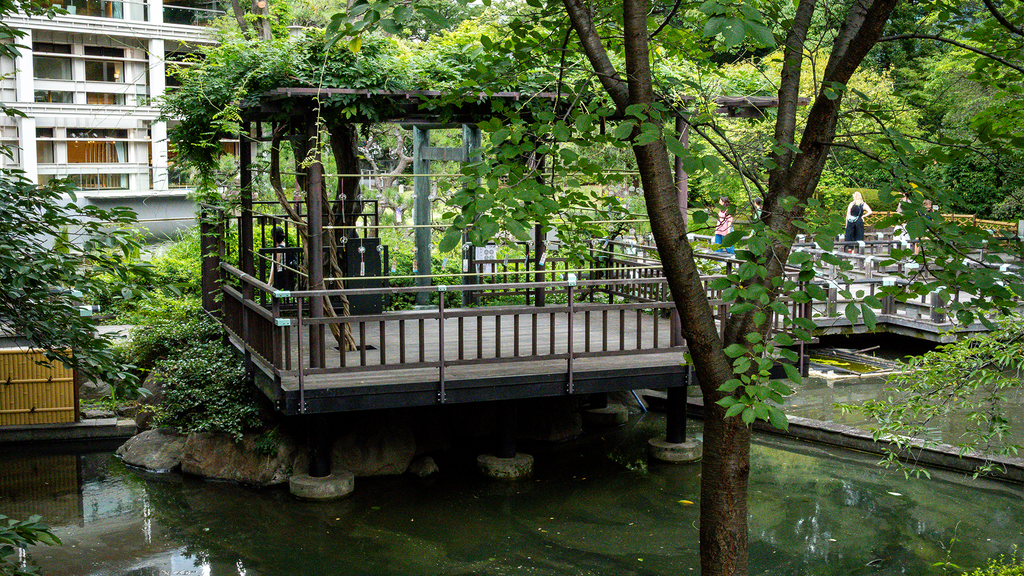
The shrine grounds cover around 8,600 tsubo, with trees and a pond where koi swim beneath the surface.
According to the shrine, kingfishers can sometimes be seen bathing here as well.
After the crowds and noise of Harajuku, stopping beside the water felt incredibly peaceful.
The wooden bridge, green trees, and reflections on the pond made this one of my favorite parts of the shrine.
For me, that contrast is what makes Togo Shrine so interesting.
You can learn about an important figure in modern Japanese history, notice symbols connected with victory and determination, and then, just a few steps later, stand beside a quiet pond surrounded by greenery.
All of it is tucked away right beside one of Tokyo’s busiest shopping streets.
Goshuin at Togo Shrine
If you love artistic goshuin—or Sanrio characters—Togo Shrine has a surprisingly cute side.
Alongside its traditional and seasonal goshuin, the shrine also offers special Sanrio kirie goshuin, combining Japanese cut-paper art with familiar characters such as Hello Kitty.
I honestly did not expect to find something this cute at a shrine dedicated to Admiral Togo Heihachiro.
That contrast made the goshuin even more memorable for me.
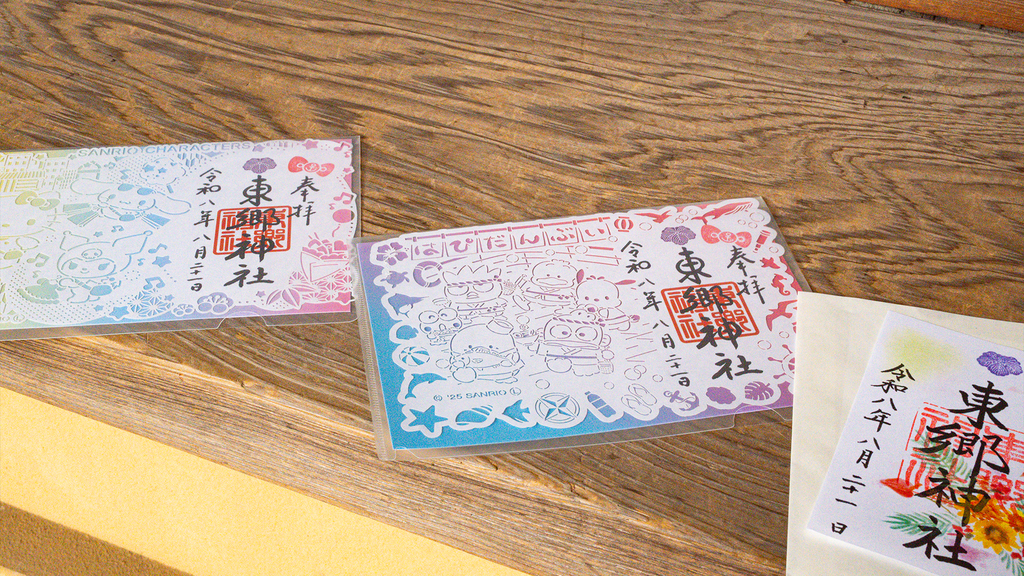
Sanrio Kirie Goshuin — Featuring Hello Kitty
The design I received featured Hello Kitty surrounded by delicate cut-paper details.
Unlike an ordinary goshuin written or printed on a flat sheet, kirie designs use carefully cut sections of paper to create patterns, openings, and layers.
I especially liked looking at this one against the light, because the small cut-paper details became much easier to see.
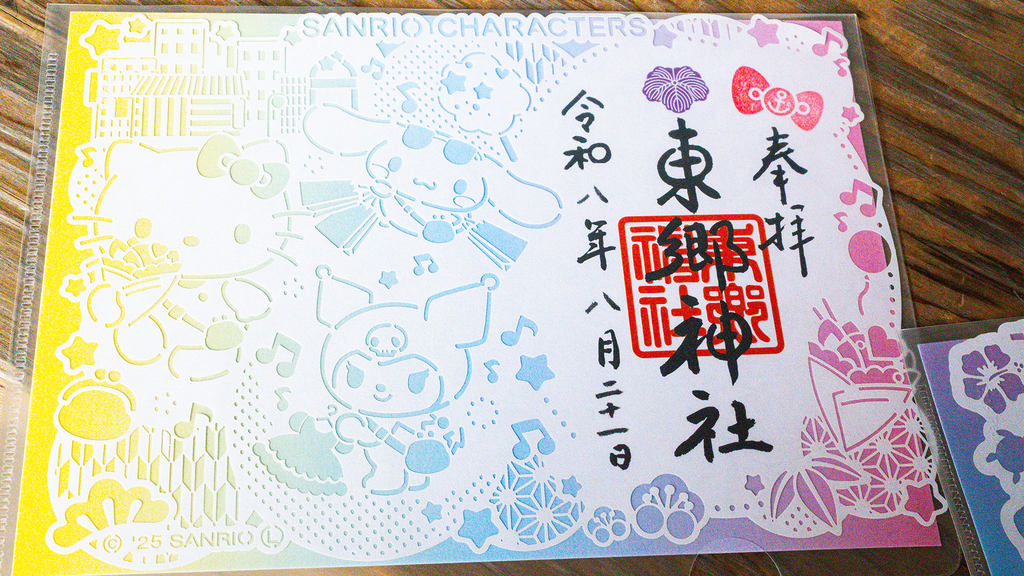
It felt unmistakably Harajuku to me: traditional Japanese craftsmanship combined with one of Japan’s most recognizable pop-culture characters.
Mine Came Carefully Protected
Another small detail I appreciated was how carefully the goshuin was handed to me.
My kirie goshuin came inside a clear protective sleeve, which made it much easier to carry without bending or damaging the delicate cut-paper sections.
It may sound like a small detail, but if you are spending the rest of the day walking around Harajuku, it is genuinely useful.
Check the Current Designs Before You Visit
Togo Shrine offers several Sanrio kirie goshuin designs, and the available characters and artwork can change.
When I visited, there was also a limit on how many of each design one person could receive.
Because designs may sell out or be replaced, I recommend checking the shrine’s latest announcements before your visit if there is a particular character you are hoping to find.
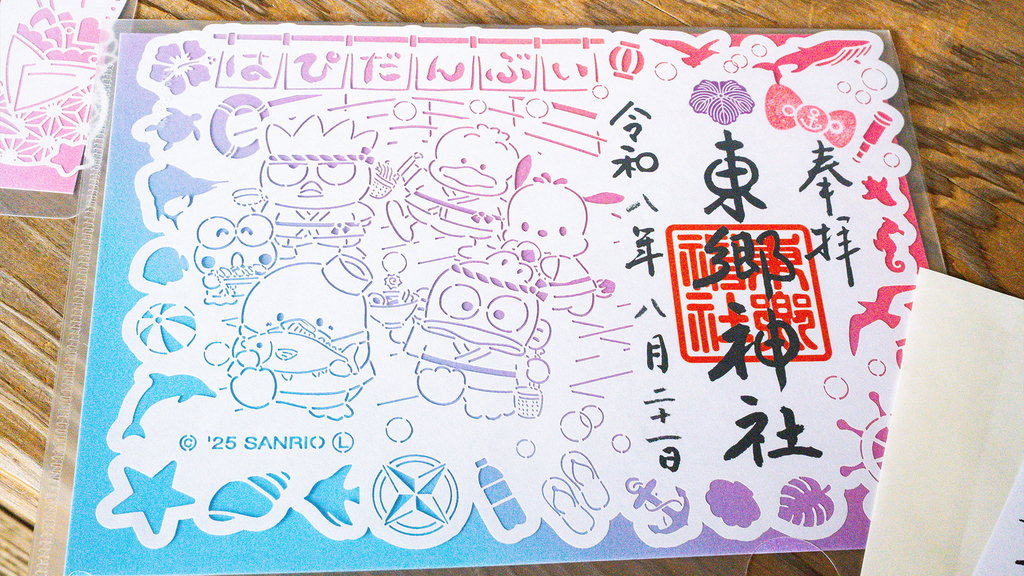
More Than Just Hello Kitty
Togo Shrine also offers a special Hello Kitty goshuincho, along with other Sanrio-themed sacred items.
So if you are both a goshuin collector and a Sanrio fan, I would give yourself a little extra time at the shrine office. There is more to look at than just the goshuin.
For me, this was one of those designs that made me smile the moment I saw it.
It is cute, distinctly Japanese, and somehow feels perfectly at home in Harajuku.
Location & Access
Address
1-5-3 Jingumae, Shibuya-ku, Tokyo 150-0001
Nearest Station
JR Yamanote Line — Harajuku Station
*From the Takeshita Exit, the shrine is approximately a 3-minute walk away.
Shrine Grounds
April–October — 6:00 AM–5:00 PM
November–March — 6:30 AM–5:00 PM
Shrine Office Hours
9:00 AM–4:30 PM
*The shrine office hours vary depending on the day. Please check the shrine’s Instagram or official website for the latest information.
Hatsuho-ryo (Offering Fee)
Sanrio Kirie Goshuin — 1,500 yen
Goshuin — 500 yen
*The fee varies depending on the goshuin design you choose
Official Instagram
https://www.instagram.com/togoshrine/
Google Maps
Photography
For ordinary sightseeing photos, I found that photography around the shrine grounds was possible as long as I stayed respectful of other worshippers and followed the signs and instructions on site.
Togo Shrine has separate restrictions for professional, commissioned, and commercial photography.
If you plan to use photos or video for commercial publication or other business purposes, I recommend checking the shrine’s latest photography policy before your visit.
What to Do Near Togo Shrine
One of the things I like most about visiting Togo Shrine is how quickly the atmosphere changes once you step back outside.
After walking beside the quiet pond and trees, you are suddenly back in the colorful energy of Harajuku.
For me, that contrast makes it easy to combine shrine culture with fashion, food, and shopping in the same afternoon.
Head Back to Takeshita Street
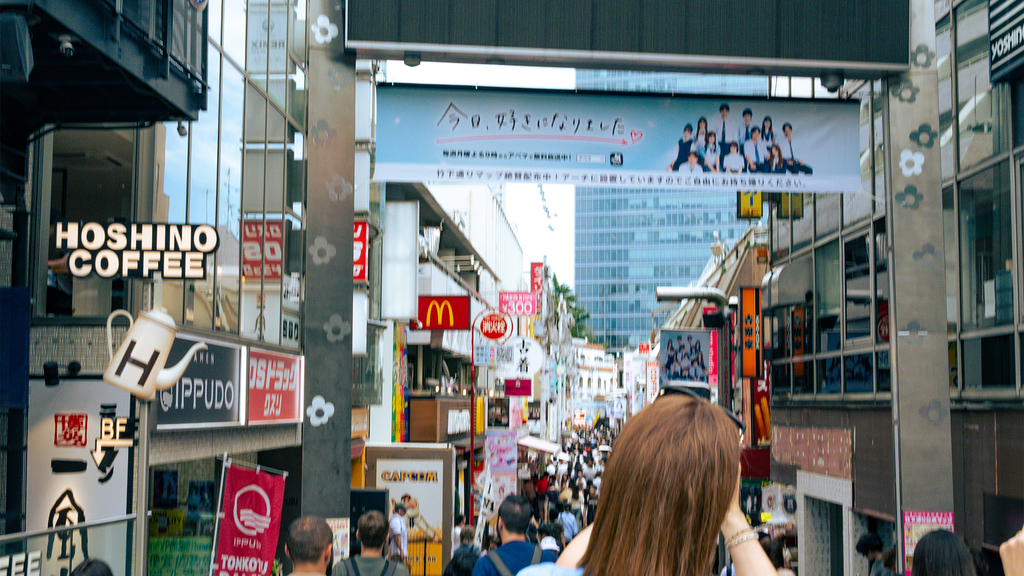
Takeshita Street is only a few minutes away.
The pedestrian street is filled with fashion shops, character goods, colorful snacks, and plenty of places to try a Harajuku-style crepe.
After the calm atmosphere of Togo Shrine, stepping straight back into the crowds felt almost surreal.
If you have never tried a Harajuku crepe before, this is an easy way to add one more very different Harajuku experience to your day.
Walk Through Cat Street
If Takeshita Street feels a little too crowded, I would continue toward Cat Street.
The atmosphere here is different, with select shops, streetwear, smaller fashion labels, cafés, and side streets that are fun to explore without a strict plan.
For me, this is one of the nicest ways to keep walking through Harajuku after visiting the shrine.
Continue to Omotesando
From there, you can continue toward Omotesando.
The broad, tree-lined avenue is known for architecture, major fashion brands, stylish shopping complexes, and cafés.
It gives you yet another version of Harajuku—less playful than Takeshita Street and more polished.
That means you can experience three very different sides of the neighborhood within a relatively small area.
Explore Harajuku with a Local Guide
If you want to go beyond the main shopping streets, a local walking tour can also be a useful way to explore Harajuku’s fashion, food, pop culture, and smaller side streets.
Is Togo Shrine Worth Visiting?
Togo Shrine in Harajuku is one of those places that feels almost impossible until you actually step inside.
Just a few minutes from the crowds of Takeshita Street, I found myself walking beneath trees, beside a quiet pond, and through a shrine deeply connected with modern Japanese history.
That contrast is what made the visit so memorable for me.
There is also much more here than the peaceful atmosphere.
The shrine’s connection with Admiral Togo Heihachiro, the Z Flag, and prayers for victory gives the grounds a distinctive historical character.
Then there is the completely different surprise at the shrine office: colorful Sanrio kirie goshuin featuring characters such as Hello Kitty.
For me, that combination made Togo Shrine especially interesting as a goshuin collector.
I would recommend it most to travelers who enjoy goshuin, Japanese history, Sanrio, or simply want to experience a quieter side of Harajuku.
And because Takeshita Street, Cat Street, and Omotesando are all nearby, you do not need to build your entire day around the shrine.
You can step away from Harajuku’s crowds for a while, enjoy the calm atmosphere of Togo Shrine, collect a distinctive goshuin, and then return straight to the energy of the city.
For me, that unexpected contrast is exactly what makes Togo Shrine worth visiting.