The Unplanned Detour: Discovering Anahachimangu in Waseda
That afternoon, I decided to visit Anahachimangu Shrine in Waseda.
I was walking along one of Waseda’s busy streets when a huge torii gate suddenly caught my attention.
With traffic rushing past just outside, the entrance felt unexpectedly inviting, and I found myself stopping instead of walking straight past.
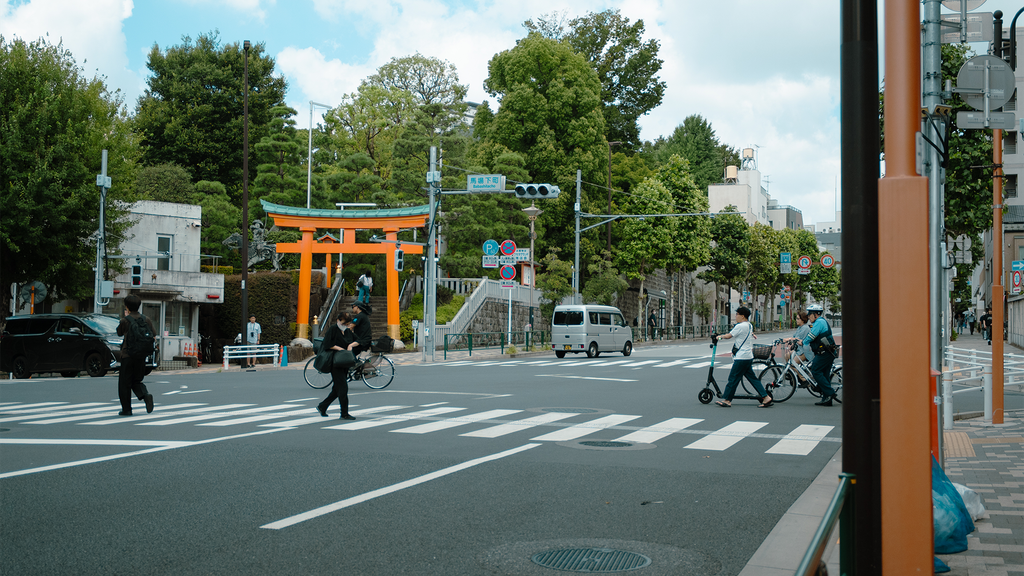
The moment I stepped through the gate, the atmosphere changed.
It was a hot summer day, but the trees lining the stone approach created a surprisingly cool and refreshing shade.
For a moment, the noise and heat of the street seemed much farther away.
I climbed the stone steps beneath the green canopy, still thinking I would only stop for a quick look.
Then the trees opened up, revealing the shrine grounds ahead.
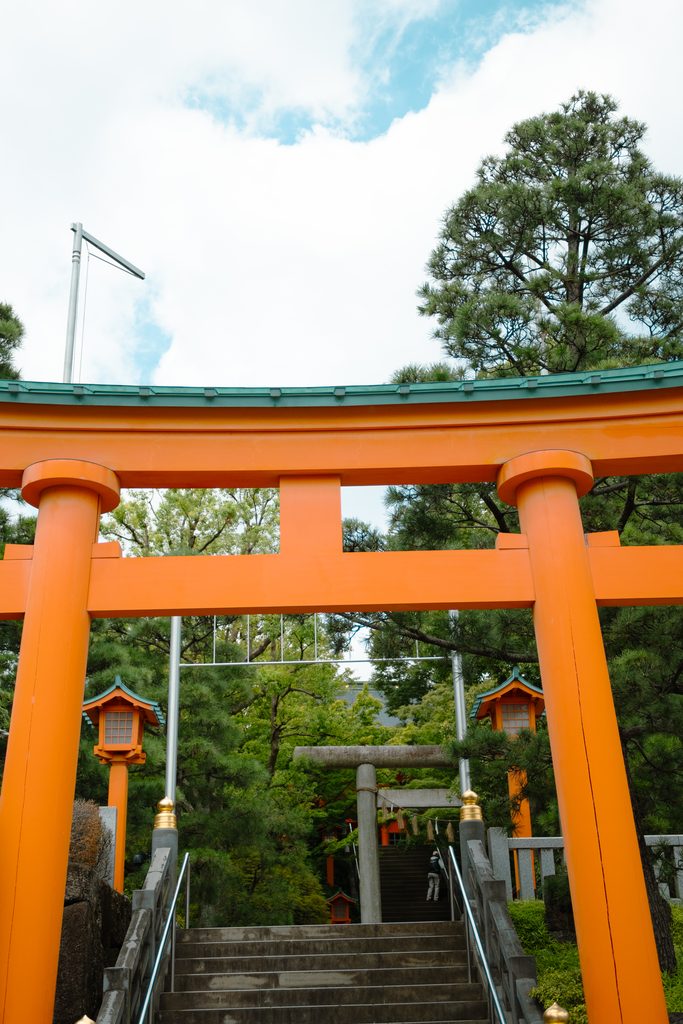
Anahachimangu has more than 900 years of history, but what struck me first was not its age.
It was the contrast.
Just minutes earlier, I had been surrounded by traffic and city streets. Now I was standing in a quiet shrine precinct with imposing gates, deep green trees, and an atmosphere that made me slow down almost immediately.
I had not planned to find this shrine at all.
That unexpected discovery made the visit even more memorable for me.
Samurai Origins, Shogun Patronage & the Famous Ichiyo Raifuku
Behind Anahachimangu’s peaceful atmosphere is more than 900 years of history.
According to the shrine’s tradition, its story began in 1062, when the warrior Minamoto no Yoshiie returned from military campaigns in northern Japan and enshrined Hachiman here.
Centuries later, the shrine developed an important connection with the Tokugawa shogunate.
In the 17th century, Tokugawa Iemitsu, the third Tokugawa shogun, ordered major improvements to the shrine. It later became an important place of prayer for the shogunal family and was regarded as one of Edo’s prominent shrines.
Learning that history made the scale of the grounds make much more sense to me. What had first seemed like an unexpectedly large shrine in the middle of Waseda suddenly felt connected to a much bigger story.
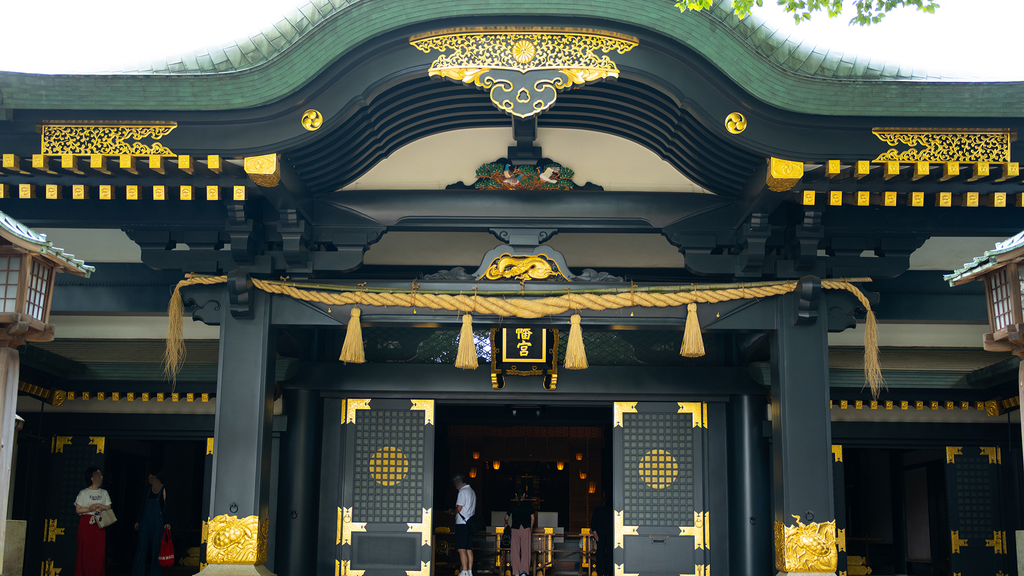
Why Is It Called “Anahachiman”?
The shrine’s unusual name also has its own story.
According to the shrine’s tradition, in 1641, while land near the shrine was being cleared, a sacred cavity—or ana in Japanese—was discovered, and a golden sacred image was reportedly found inside.
From around that time, the shrine came to be known as Anahachimangu, connecting the name “Hachiman” with the discovery of the ana.
It is one of those small pieces of history that made me appreciate the shrine even more after I had unexpectedly come across it.
The Cool Stairway I Still Remember
But honestly, before I knew any of that history, what impressed me most was something much simpler.
The shade.
Outside the shrine, it had been a brutally hot summer afternoon.
But as soon as I started climbing the stone steps beneath the dense trees, the temperature seemed to change completely.
It genuinely felt like walking into a natural air conditioner.
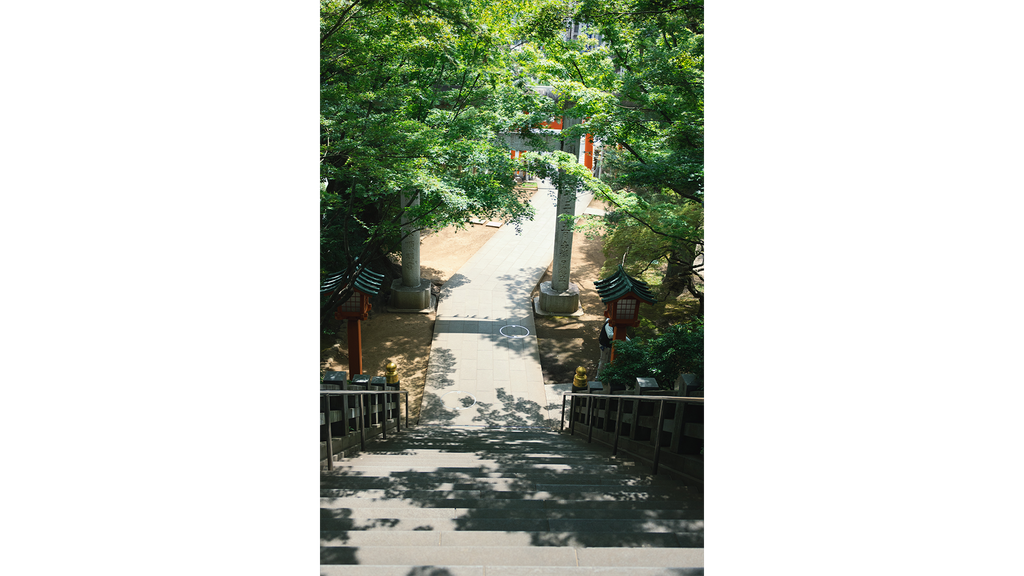
The traffic was still only a short distance away, but beneath the trees it felt strangely removed from the city.
Then the staircase opened onto the brighter shrine grounds, with the long stone approach leading toward the main shrine buildings.
That sudden transition—from hot pavement, to cool green shade, to the open shrine precinct—is still one of the strongest memories I have from my visit.
Ichiyo Raifuku — Anahachimangu’s Famous Winter Tradition
Anahachimangu is particularly famous for its Ichiyo Raifuku Omamori.
This special amulet has been offered at the shrine since the middle of the Edo period and is traditionally associated with kin-gin yuzu, the smooth circulation of money and financial good fortune.
It is available only during a limited period each year, from the winter solstice until Setsubun.
There are also specific traditions for displaying it at home or at a business, including the direction it should face and the dates and times when it is placed.
I visited outside the winter season, but learning about this tradition afterward gave me another reason to want to return and see Anahachimangu at a completely different time of year.
For me, it was another reminder that this shrine was much more than the peaceful green sanctuary I had unexpectedly discovered on a hot summer afternoon.
Goshuin at Anahachimangu
If you are hoping to receive a goshuin at Anahachimangu, there is one important thing to remember:
Bring your goshuincho with you.
When I visited, Anahachimangu did not normally offer pre-written kakioki sheets.
You needed to bring your own goshuincho in order to receive the goshuin.
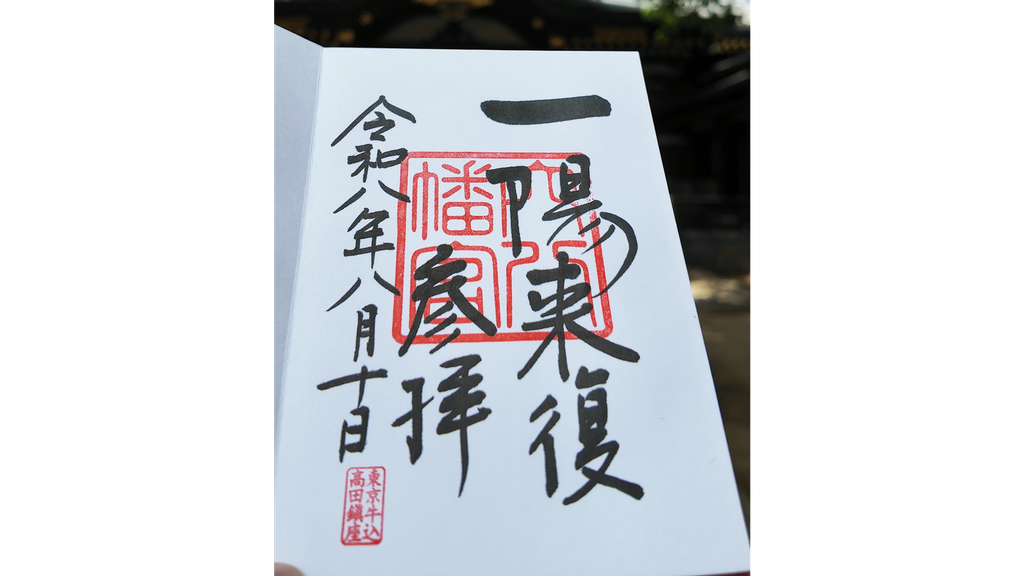
Bring Your Goshuincho
I love colorful kirie and embroidered goshuin, but the one I received at Anahachimangu was completely different.
It had a traditional, understated design, with bold black calligraphy and red seals rather than elaborate illustrations or decorative details.
For me, that simplicity suited the atmosphere of the shrine perfectly.
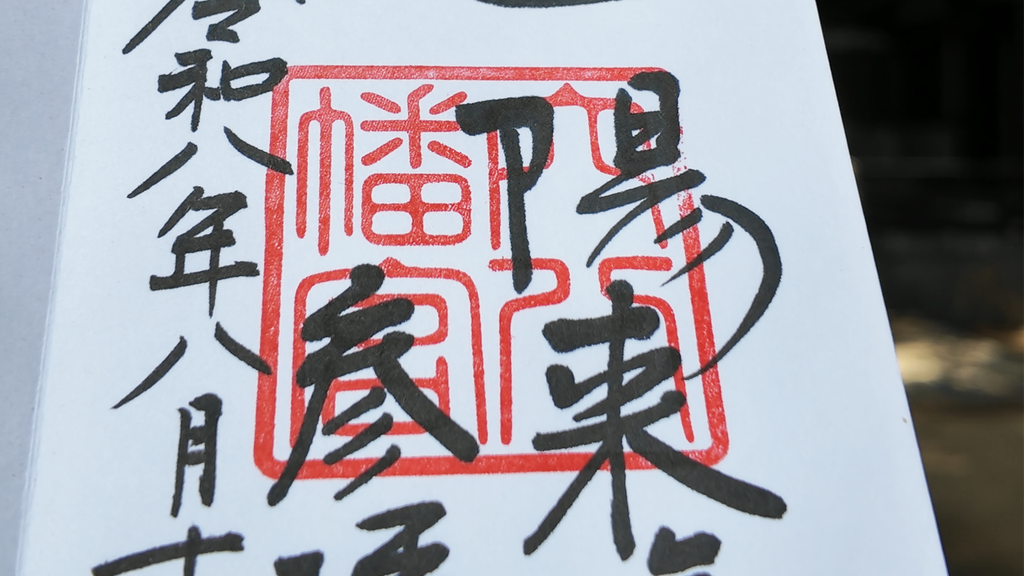
For me, this was a good reminder that a memorable goshuin does not always need an elaborate design.
Sometimes, the place where you received it—and the experience surrounding that visit—is what makes it special.
No Kakioki Goshuin
This is especially important for travelers.
Anahachimangu states that kakioki, or pre-written loose-paper goshuin, are not available.
So if you arrive without a goshuincho, you should not expect to receive the goshuin on a separate sheet.
The shrine also asks that each goshuin be received only by someone who has actually visited and worshipped there.
One Important Seasonal Exception
There is another important rule to know before visiting.
From the winter solstice until Setsubun, when Anahachimangu offers its famous Ichiyo Raifuku Omamori, goshuin are not offered.
Outside that period, goshuin are normally available from:
9:00 AM–4:00 PM
If collecting the goshuin is one of the main reasons for your visit, I recommend checking the shrine’s latest official information before you go—especially if you are traveling in winter.
For goshuin collectors, this is definitely one shrine where a little preparation matters.
Location & Access
Address
2-1-11 Nishi-Waseda, Shinjuku-ku, Tokyo 162-0051
Nearest Station
Waseda Station — About a 3-minute walk from Exit 2
Shrine Grounds
6:00 AM–5:00 PM
Shrine Office Hours
9:00 AM–5:00 PM
*The shrine office hours vary depending on the day. Please check the shrine’s Instagram or official website for the latest information.
Hatsuho-ryo (Offering Fee)
Goshuin — 500 yen
*The fee varies depending on the goshuin design you choose
HP
https://www.anahachimanguu.jp/
Google Maps
My Most Important Goshuin Tip
Do not leave your goshuincho at your hotel.
At many shrines, forgetting your book simply means receiving a separate sheet of paper instead.
That is not an option here.
If collecting the Anahachimangu goshuin is important to you, make checking for your goshuincho part of your morning routine before leaving your hotel.
If you do not have a goshuincho yet, I have also put together a page with some of my favorite designs and beginner-friendly options.
You can also see the goshuincho I have collected from Amazon here:
What to Do Near Anahachimangu
Anahachimangu sits right in the heart of Waseda, so stepping back through the torii does not have to mean the end of your walk.
The neighborhood outside has a completely different energy from the shrine grounds, and I liked that contrast almost as much as the shrine itself.
Explore the Waseda Neighborhood
After leaving the quiet, tree-covered approach of Anahachimangu, I would spend a little time walking around Waseda.
The area is shaped by nearby Waseda University, and generations of students have helped create a distinctive local food culture known as Wase-meshi.
Around the university, you will find casual restaurants serving curry, ramen, hearty set meals, and other inexpensive favorites popular with students.
If you enjoy seeing the everyday side of Tokyo rather than moving straight from one major sightseeing spot to another, Waseda is a good neighborhood to slow down and explore.
Take a Look Around Waseda University
Waseda University is also nearby, and its presence gives much of the neighborhood its character.
Even if you are not visiting the university itself, the surrounding streets offer a glimpse of another side of Tokyo, with students, small restaurants, cafés, bookstores, and everyday city life.
For me, that made an interesting contrast with the centuries-old shrine I had just visited.
Explore More of Tokyo with a Local Guide
If you enjoy discovering neighborhoods beyond Tokyo’s biggest tourist sights, a local walking tour can also be a useful way to explore areas around Shinjuku and western central Tokyo in more depth.
Is Anahachimangu Worth Visiting?
Anahachimangu was one of those places I never planned to visit—and that is exactly why it stayed with me.
What began as a spontaneous detour on a hot summer afternoon became one of the most memorable shrine discoveries of my day.
The cool, tree-covered approach, the sudden quiet away from the traffic, and the long history behind the shrine all made the visit feel surprisingly special.
For goshuin collectors, Anahachimangu is also a little different.
You need to bring your own goshuincho, there are no pre-written kakioki sheets, and goshuin are not offered during the winter Ichiyo Raifuku distribution period.
That means this is one shrine where checking the rules before you visit really matters.
I would especially recommend Anahachimangu to travelers who enjoy historic shrines, traditional goshuin, quiet green spaces, and neighborhoods that still feel connected to everyday Tokyo life.
If you are already exploring Waseda or Takadanobaba, it is easy to add to your route.
But even if, like me, you simply notice the huge torii while passing by, I think it is worth stepping inside.
Sometimes the best shrine visits are the ones you never planned at all.