Two Shrines in Ueno Park: Red Torii, Healing Gods, and Traditional Goshuin
I thought I knew Ueno Park fairly well, but Hanazono Inari Shrine and Gojo Tenjin Shrine still surprised me.
Located right beside each other inside one of Tokyo’s busiest parks, the two shrines have very different atmospheres.
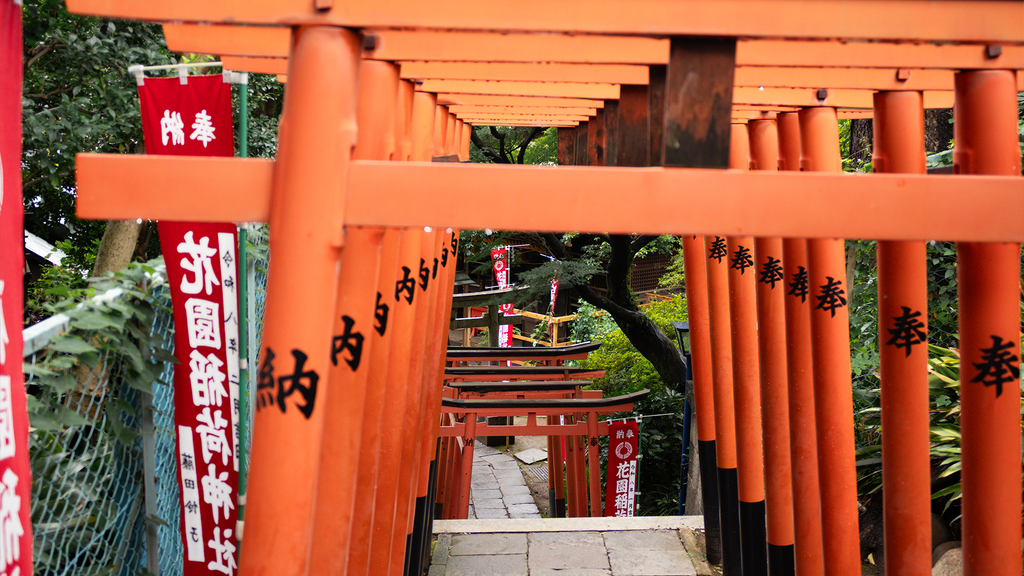
Hanazono Inari Shrine immediately caught my attention with its rows of bright red torii gates, while Gojo Tenjin Shrine felt quieter and more understated, with a peaceful wooden worship hall surrounded by trees and stone lanterns.
One of the most convenient things about visiting them together is that their grounds are connected. I could walk from one shrine to the other in just a few minutes, which made them an easy pair to explore during the same visit to Ueno Park.
Even though they sit side by side, they are separate shrines with different histories, traditions, and atmospheres.
That contrast was exactly what made visiting both so interesting to me.
At Hanazono Inari Shrine, the vivid red torii immediately create a very different first impression from the calmer atmosphere of Gojo Tenjin Shrine, which has a long connection with medicine and healing.
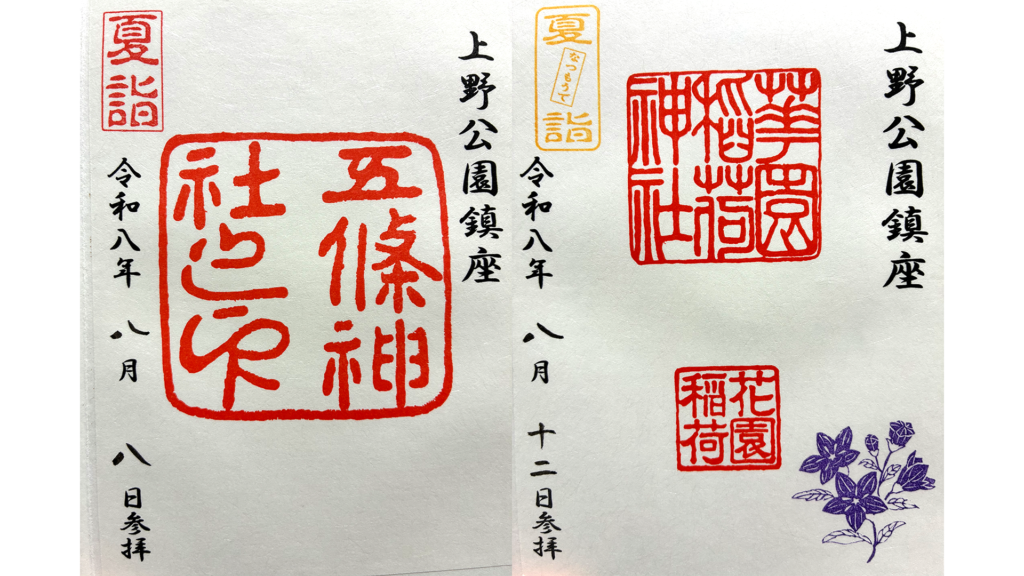
And as a goshuin collector, I also enjoyed seeing how different their goshuin felt from each other.
Here is what stood out to me at each shrine.
- Two Shrines in Ueno Park: Red Torii, Healing Gods, and Traditional Goshuin
- Hanazono Inari Shrine: Walk Beneath the Red Torii Gates
- Gojo Tenjin Shrine: A Quiet Shrine Connected with Healing
- Two Very Different Traditional Goshuin
- Location & Access
- Explore More of Ueno Park & Finish the Day at Ameyoko
- Are Hanazono Inari Shrine and Gojo Tenjin Shrine Worth Visiting?
Hanazono Inari Shrine: Walk Beneath the Red Torii Gates
The first thing that caught my attention at Hanazono Inari Shrine was the approach.
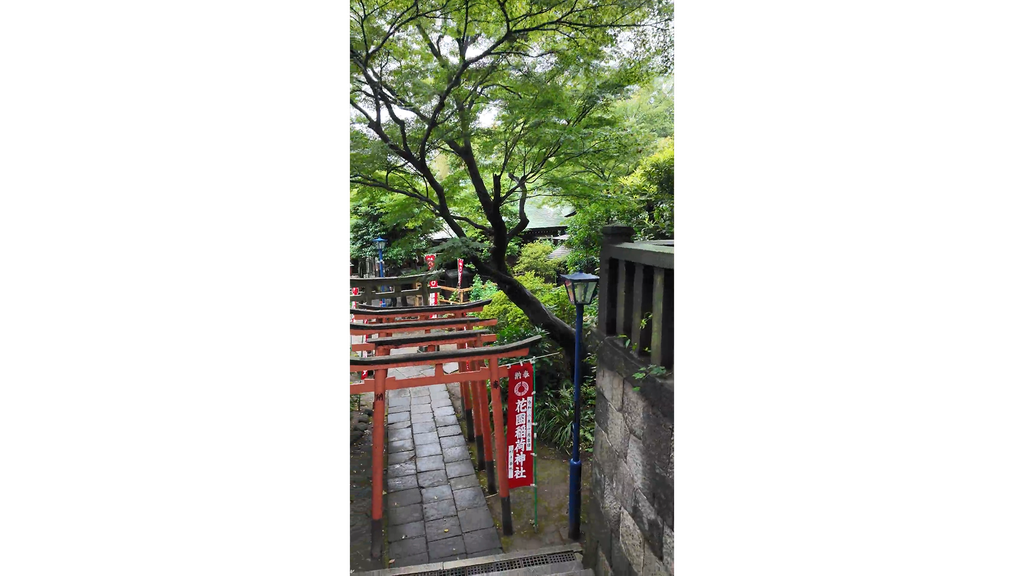
Rows of bright red torii gates lead down the slope toward the shrine, creating a small tunnel of vermilion beneath the greenery of Ueno Park.
As I walked farther down, the atmosphere seemed to change little by little.
The museums, crowds, and wide paths of Ueno Park suddenly felt much farther away.
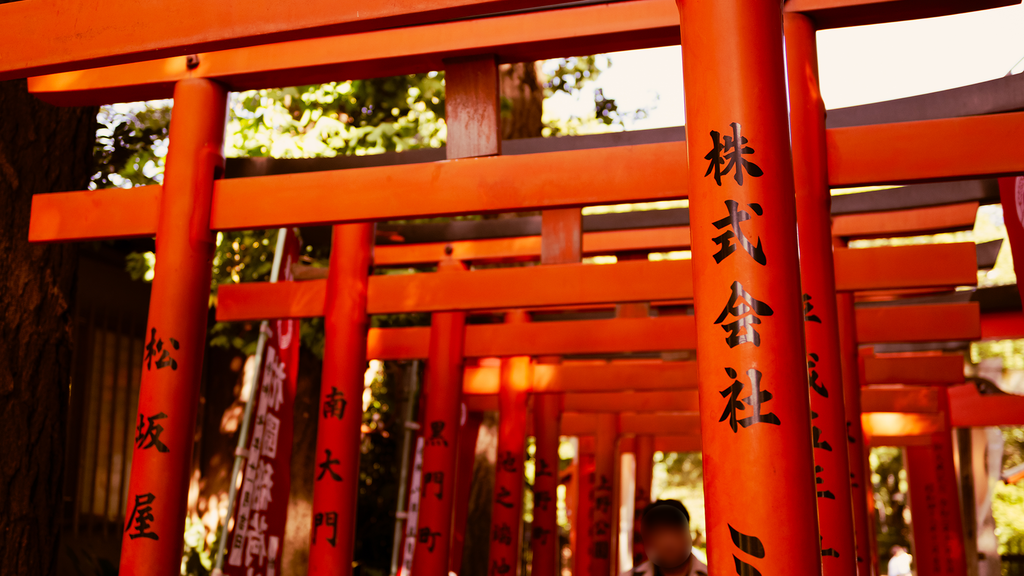
At the bottom, I found a small red shrine surrounded by trees.
It is not a huge or grand shrine, but that was part of what I liked about it. The vivid red buildings and torii stood out beautifully against the greenery, and the entire area felt much more intimate than the major sightseeing spots nearby.
Hanazono Inari Shrine is traditionally associated with blessings connected with the essentials of everyday life, including food, clothing, and shelter. It is also known for matchmaking.
I liked how approachable that felt.
The prayers here are connected with things that are very close to ordinary life rather than something distant or abstract.
A Peaceful Shrine with a Dramatic Past
The peaceful atmosphere hides a surprisingly dramatic chapter of Tokyo history.
During the Battle of Ueno in 1868, this area became the site of fighting involving the Shogitai.
The fighting around this location became known as the Battle of Anainari Gate.
I honestly did not expect to discover that kind of history behind such a small and peaceful shrine.
Today, visitors quietly walk beneath the red torii gates, take photos, and offer their prayers.
Knowing that this same area once looked completely different gave the shrine much more depth for me.
It was one of those moments when learning just a little history completely changed the way I looked at the place.
Gojo Tenjin Shrine: A Quiet Shrine Connected with Healing
Continue just a little farther, and the atmosphere changes again.
Gojo Tenjin Shrine felt noticeably calmer to me.
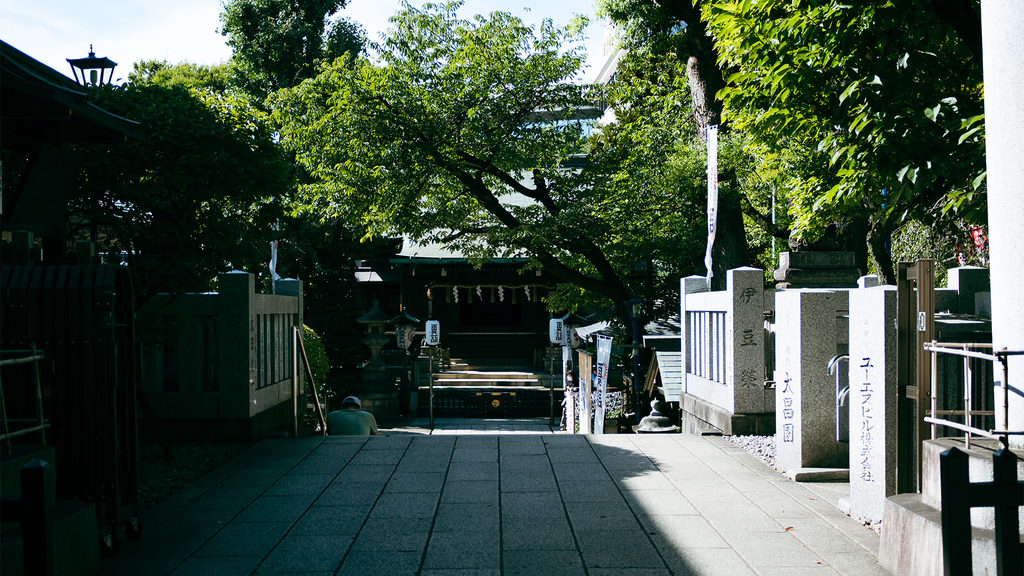
Instead of bright red torii gates, I found stone lanterns, trees, and a simple wooden worship hall with a beautiful green roof.
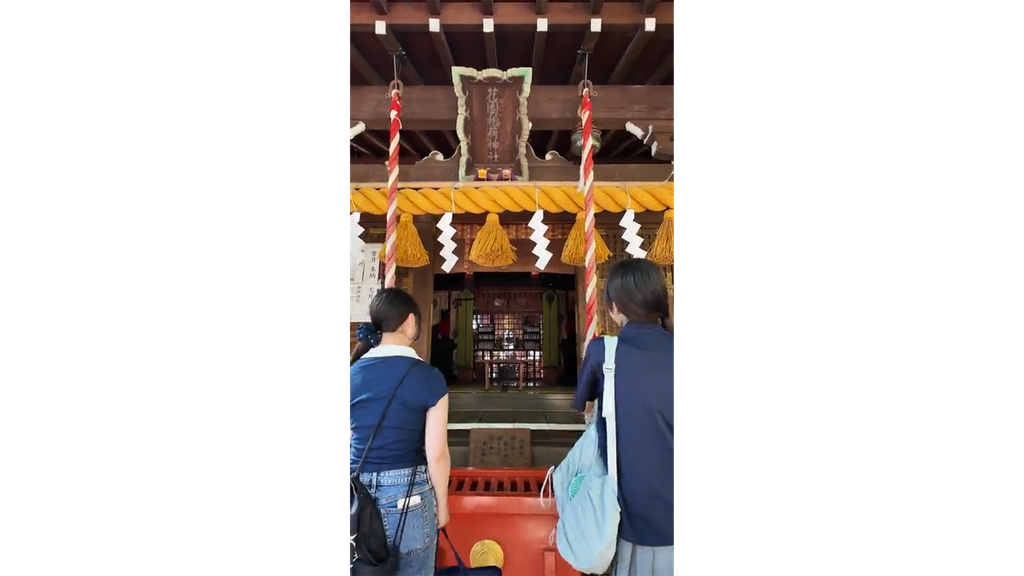
As I followed the gently sloping approach down toward the shrine, the movement of Ueno seemed to fade into the background.
For me, that quiet atmosphere was one of the shrine’s biggest charms.
But Gojo Tenjin Shrine is much more than simply a peaceful corner of Ueno Park.
Gods of Medicine, Healing, and Learning
Gojo Tenjin Shrine is dedicated to Onamuchi no Mikoto and Sukunahikona no Mikoto, two deities traditionally associated with medicine and healing.
According to shrine tradition, its origins are connected with the legendary prince Yamato Takeru, who is said to have established a shrine here after receiving their protection.
Sugawara no Michizane, widely worshipped as a deity of learning, is also enshrined here.
That combination made the shrine immediately more interesting to me.
In one small shrine, you find prayers connected with both health and learning—two very different parts of life, but both deeply important to many people.
Today, visitors come here to pray for good health and recovery from illness, while others visit with wishes connected to study and academic success.
The Colorful Pinwheels I Found in Summer
When I visited, one detail made the quiet shrine feel noticeably more cheerful: colorful summer pinwheels.
These were at Gojo Tenjin Shrine, not Hanazono Inari Shrine.
Against the shrine’s calm wooden buildings and surrounding greenery, the pinwheels created a completely different mood.
I loved watching them move in the summer breeze.
They added a playful splash of color to a shrine that otherwise felt very traditional and peaceful.
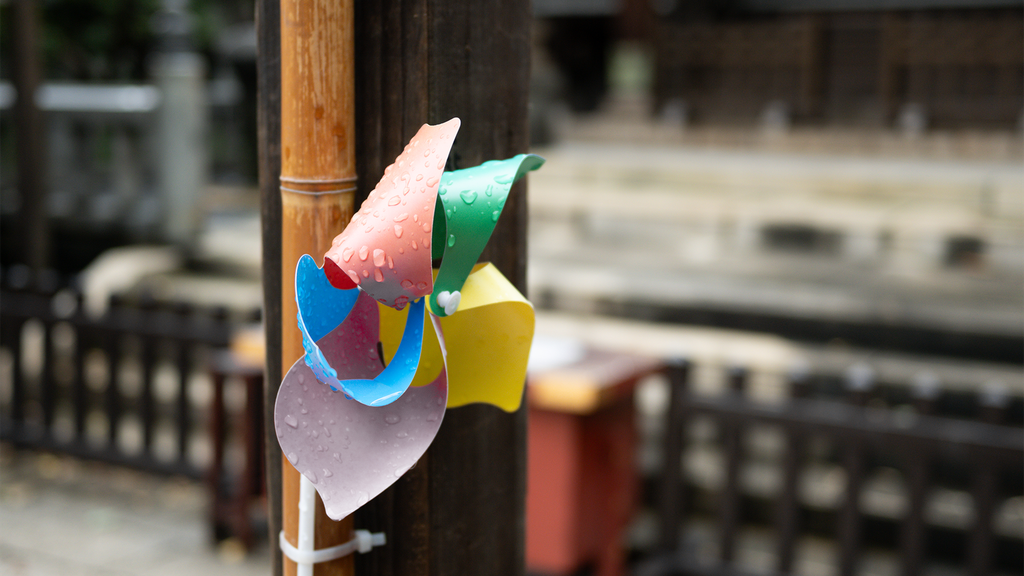
For me, that small seasonal detail made the visit especially memorable
The Ukera no Shinji Ritual
One of the traditions that made Gojo Tenjin Shrine especially interesting to me is its annual Setsubun ceremony known as Ukera no Shinji.
During the ritual, ukera, a traditional medicinal herb, is burned as ceremonies are performed to pray for protection from illness and misfortune.
The event also includes traditional ritual elements such as archery and bean throwing.
I did not visit during Setsubun, but learning about the ritual made the shrine’s connection with medicine feel much more tangible to me.
It is not simply part of the shrine’s history. The tradition continues today, right in the middle of modern Tokyo.
That was one of the things I found most fascinating about Gojo Tenjin Shrine.
At first glance, it looks like a small and simple shrine.
But once I started learning more about it, I realized how much history and tradition sit behind that quiet appearance.
Two Very Different Traditional Goshuin
If you collect goshuin, visiting both shrines is especially convenient.
Although Hanazono Inari Shrine and Gojo Tenjin Shrine are separate shrines, the goshuin for both can be received at the shrine office within the Gojo Tenjin Shrine grounds.
I received one from each shrine, and although both have a traditional appearance, there was one interesting difference between them.
Hanazono Inari Shrine: A Peel-and-Stick Goshuin
Hanazono Inari Shrine’s goshuin has an elegant traditional design, with black calligraphy and bold red shrine seals.
But when I received mine, I discovered something unexpectedly convenient.
It came as a prepared sheet with an adhesive backing.
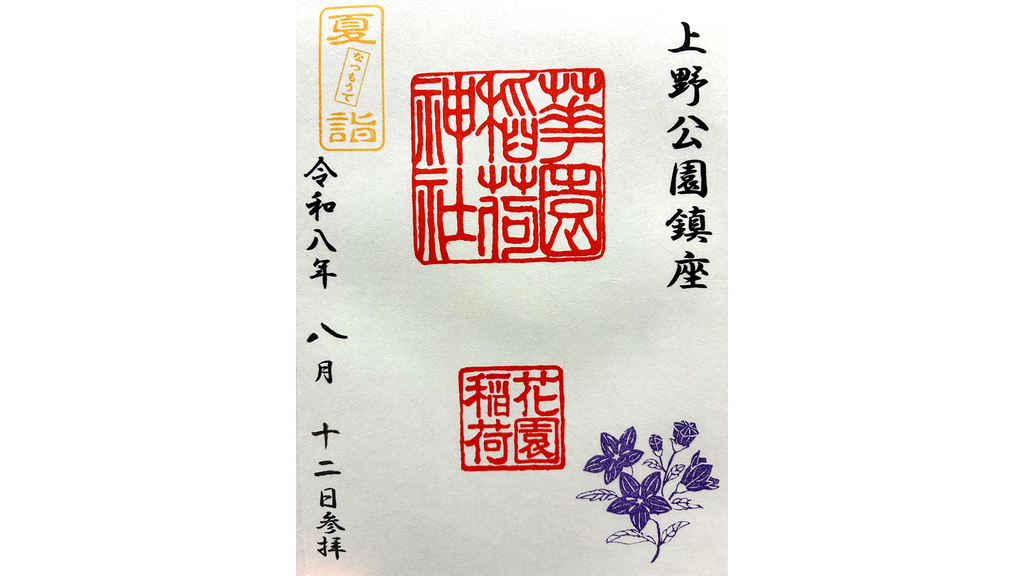
I could simply peel off the backing and place it directly into my goshuincho.
No liquid glue, no wrinkled paper, and much less worrying about whether I had attached it neatly.
As someone who collects goshuin, I honestly loved how easy this was.
What I also liked was the contrast.
The format felt modern and convenient, but the design itself still looked beautifully traditional.
The black calligraphy and strong red seals gave it a simple, timeless feel.
Gojo Tenjin Shrine: Simple, Classic Calligraphy
The goshuin I received from Gojo Tenjin Shrine had a slightly different character.
It was also traditional, with bold red seals and elegant black calligraphy, but for me, its simplicity matched the shrine’s quiet atmosphere perfectly.
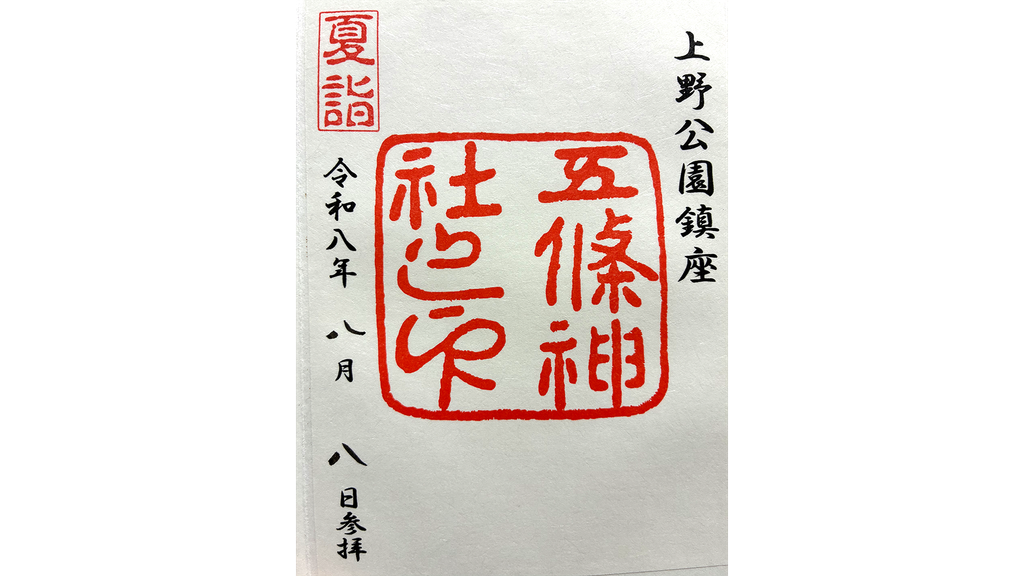
When I visited, I received the Gojo Tenjin Shrine goshuin as a prepared paper sheet (kakioki), which I could take home and add to my goshuincho later.
After seeing so many colorful seasonal and cut-paper goshuin around Tokyo, I sometimes find these more understated designs refreshing.
For me, they feel very close to the classic image of a goshuin: bold black Japanese calligraphy combined with vivid red shrine seals.
If you are visiting both shrines, being able to receive both goshuin at the same shrine office makes the process especially convenient.
Location & Access
Hanazono Inari Shrine and Gojo Tenjin Shrine are located beside each other inside Ueno Park, so I recommend visiting them together rather than treating them as completely separate destinations.
Address
4-17 Uenokoen, Taito-ku, Tokyo
Nearest Station
Keisei Ueno Station — About a 5-minute walk
Ueno Station — About a 10-minute walk from the JR or Tokyo Metro exits
Shrine Grounds
6:00 AM – 5:00 PM
Shrine Office Hours
9:00 AM – 5:00 PM
*The shrine office hours vary depending on the day. Please check the shrine’s Instagram or official website for the latest information.
Hatsuho-ryo (Offering Fee)
Goshuin — 500 yen
*The fee varies depending on the goshuin design you choose
HP *not official
https://t-navi.city.taito.lg.jp/spot/1027
Google Maps
Where to Get Both Goshuin
The shrine office is located within the Gojo Tenjin Shrine grounds.
The goshuin for Hanazono Inari Shrine is also available here.
When I visited, the standard Hanazono Inari Shrine goshuin was ¥500.
Offering fees and available formats may change, so I recommend checking the latest information at the shrine when you visit.
My Personal Visit Tip
I would not rush through these shrines just because they are small.
At Hanazono Inari Shrine, take your time walking beneath the rows of red torii gates.
They are beautiful in photos, but for me, slowly walking down the narrow sloping path was part of what made the shrine memorable.
At Gojo Tenjin Shrine, I would slow down even more.
The atmosphere is completely different, and spending a few quiet minutes there made it feel surprisingly far removed from the busier parts of Ueno.
Before praying, stop at the temizuya to cleanse your hands.
At a Shinto shrine, the standard prayer style is two bows, two claps, your prayer, followed by one final bow.
Because Hanazono Inari Shrine and Gojo Tenjin Shrine are separate shrines, I personally prefer offering a prayer at each one rather than simply passing through one on the way to the other.
Explore More of Ueno Park & Finish the Day at Ameyoko
One of the things I like most about visiting Hanazono Inari Shrine and Gojo Tenjin Shrine is their location.
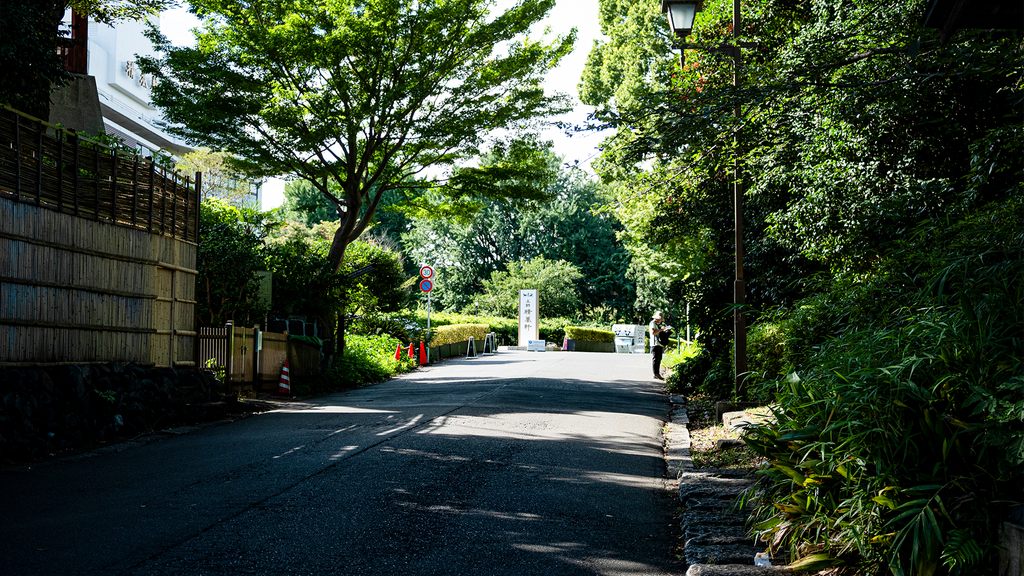
You are already inside Ueno Park, so it is easy to continue exploring afterward.
Depending on your interests, you can continue toward the museums, walk around Shinobazu Pond, visit more nearby shrines and temples, or simply enjoy the park.
I love how many completely different sides of Tokyo you can experience within such a small area.
A few minutes earlier, you might be walking beneath bright red torii gates.
Then you are standing quietly in front of a shrine associated with medicine and healing.
And not long afterward, you can be back among museums, cafés, trains, and busy city streets.
If you still have energy afterward, I would continue toward Ameyoko.
The atmosphere changes completely again.
Instead of trees and quiet shrine grounds, you suddenly find yourself among crowded shopping streets, food stalls, restaurants, and bright signs.
For me, that contrast is one of the reasons Ueno is such a fun area to explore.
Local Tours
If you want to explore more of Ueno beyond the major sightseeing spots, a local walking or food tour can also be a useful way to discover more of the area.
A guide can add context to Ueno’s history and help you notice smaller cultural spots or local streets that are easy to walk past on your own.
Are Hanazono Inari Shrine and Gojo Tenjin Shrine Worth Visiting?
For me, yes—especially because you can experience two very different shrines without traveling to another part of Tokyo.
Hanazono Inari Shrine immediately caught my attention with its vivid red torii gates.
But after spending more time there, I found its connection with everyday prayers and the history of the Battle of Ueno just as interesting as its appearance.
Gojo Tenjin Shrine had a completely different charm.
Its quiet atmosphere, traditional green-roofed worship hall, connection with medicine and healing, and the colorful pinwheels I saw during my summer visit gave it a very different personality.
I also enjoyed receiving goshuin from both shrines.
Hanazono Inari Shrine’s peel-and-stick format was surprisingly practical, while the simple goshuin I received from Gojo Tenjin Shrine felt much more traditional.
Together, the two shrines made a much more interesting stop than I had expected.
If you are already exploring Ueno Park and want to discover something beyond the major museums and sightseeing spots, I think these two shrines are well worth adding to your walk.