The Golden Shogun’s Sanctuary Tucked Away in Ueno Park
I thought I already knew Ueno Park fairly well, but Ueno Toshogu Shrine still surprised me.
Much of Ueno Park feels busy, with museums, sightseeing spots, and people constantly moving through the area. But as I turned toward the greener path leading to Ueno Toshogu, the atmosphere began to change.
Then the golden shrine came into view.
For a moment, it felt almost like stepping away from modern Ueno and into a small piece of the Tokugawa era.
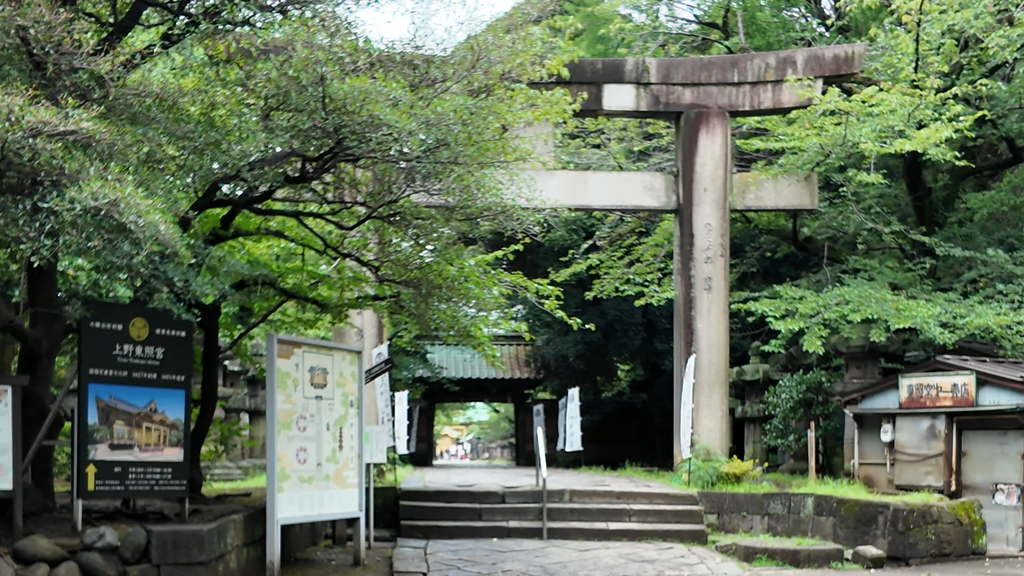
Founded in 1627 and dedicated to Tokugawa Ieyasu, the founder of the Tokugawa shogunate, Ueno Toshogu has a long and remarkable history.
The golden shrine buildings you see today were constructed in 1651 under Tokugawa Iemitsu, the third shogun.
What impressed me even more was knowing that they survived the Battle of Ueno, the Great Kanto Earthquake, and the air raids of World War II.
Standing there and looking at the elaborate gold decoration, I found it incredible to think that I was seeing architecture that had remained in place since the early Edo period.
One of the first things that caught my attention was the way the approach gradually opens into the shrine grounds.
To me, the pathway almost felt T-shaped, creating a slow reveal as I walked deeper inside.
Rather than seeing everything at once, I moved from the long approach lined with stone lanterns toward the ornate gates—and then finally to the brilliant golden shrine beyond them.
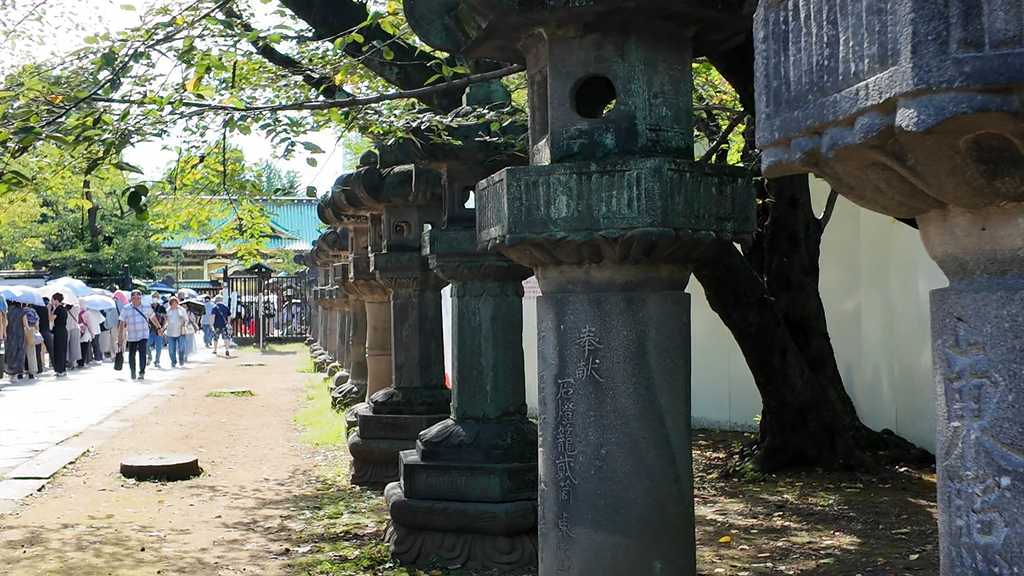
For me, Ueno Toshogu is especially interesting if you have already seen some of Ueno’s better-known attractions and want to discover a different side of the area.
What stayed with me was the combination of Tokugawa history, beautifully preserved Edo-period architecture, intricate carvings, and an almost unbelievable amount of gold—all hidden inside one of Tokyo’s most familiar parks.
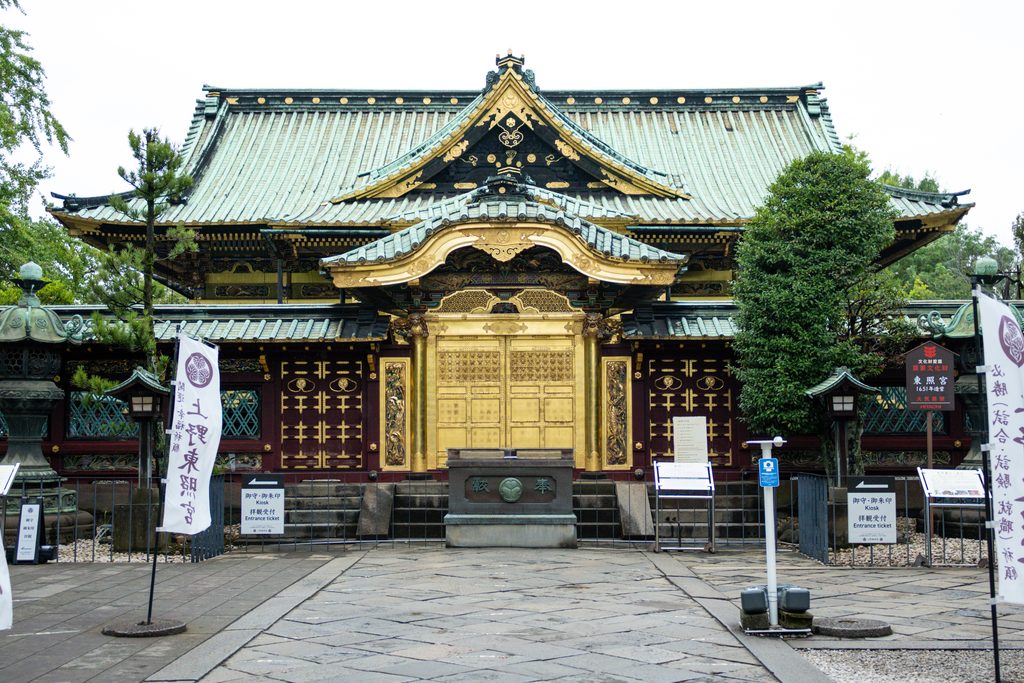
The dramatic gold may be what catches your eye first, but the details were what made me want to look more closely.
So I stepped inside.
A Quiet Approach, a Golden Reveal, and the Lucky Tanuki
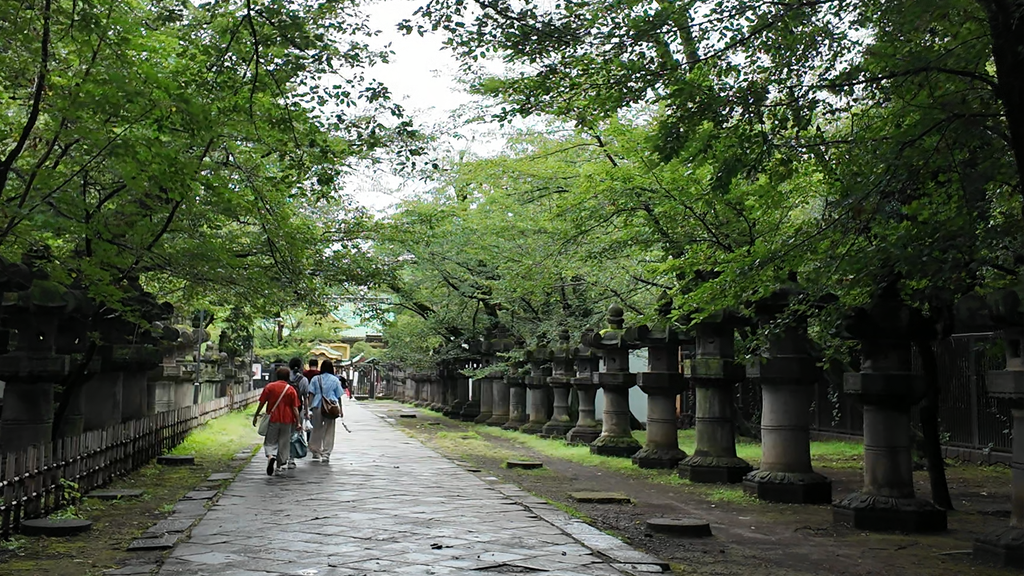
The moment I stepped onto the stone-paved approach, I felt a subtle shift in the atmosphere.
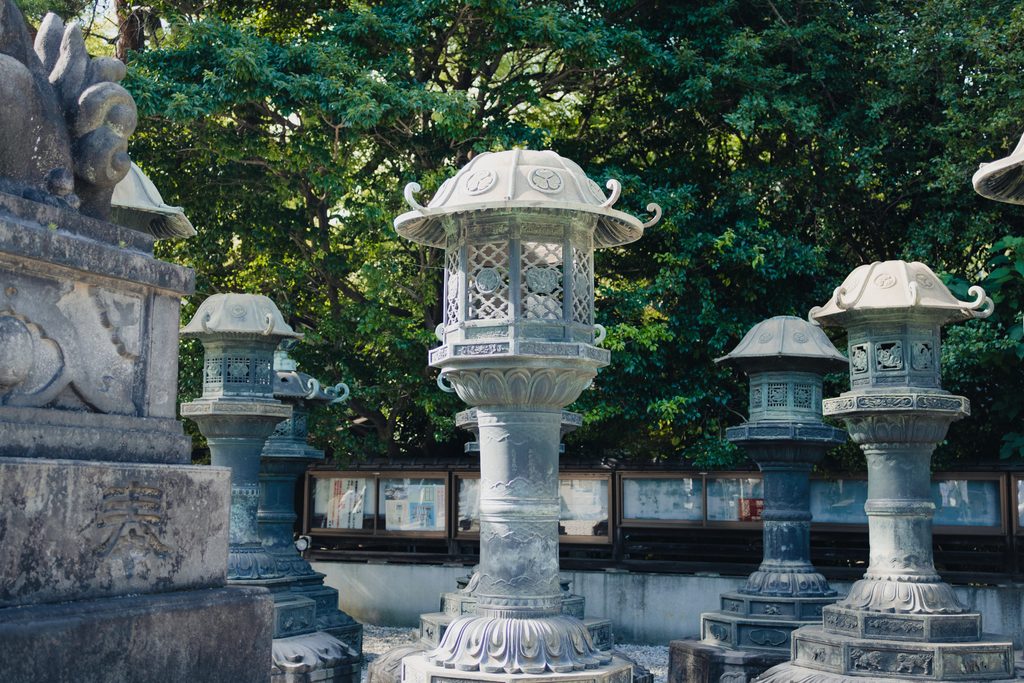
Massive stone lanterns line the pathway, and as I walked between them, I naturally found myself slowing down and paying more attention to my surroundings.
What struck me most was how restrained this part of the shrine felt compared with what was waiting farther ahead. The gray stone, weathered lanterns, and simple temizuya created a quiet, almost monochrome scene.
For me, it felt like the perfect build-up to the golden shrine waiting beyond.
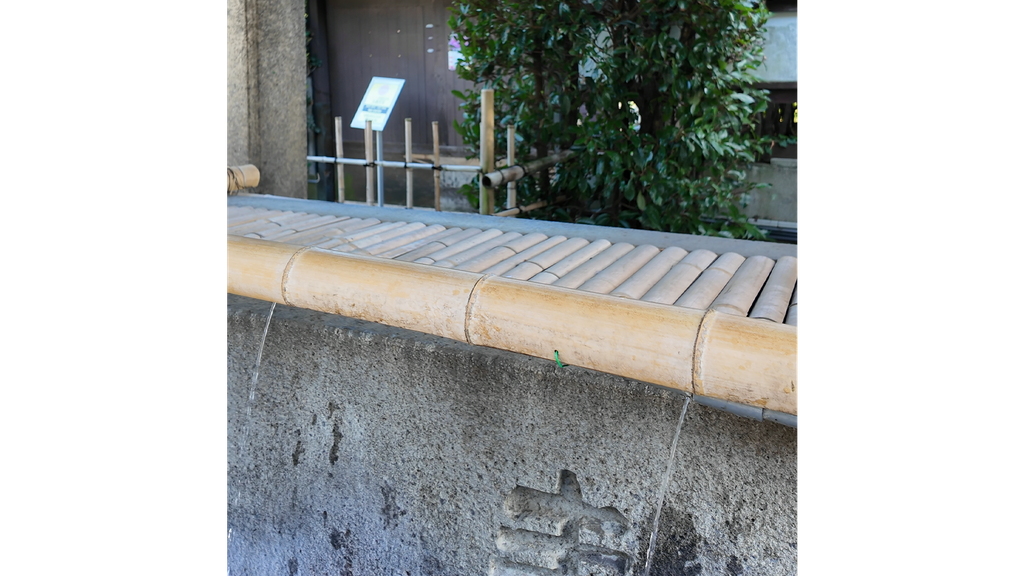
As I reached the end of the approach and turned, the atmosphere changed completely.
And then—boom—gold.
The magnificent Karamon appeared ahead of me, covered in brilliant gold and intricate carvings. Beyond it stood the Golden Hall, decorated with gold leaf and vivid touches of color.
After walking through such a calm and subdued approach, the sudden burst of gold felt even more dramatic to me.
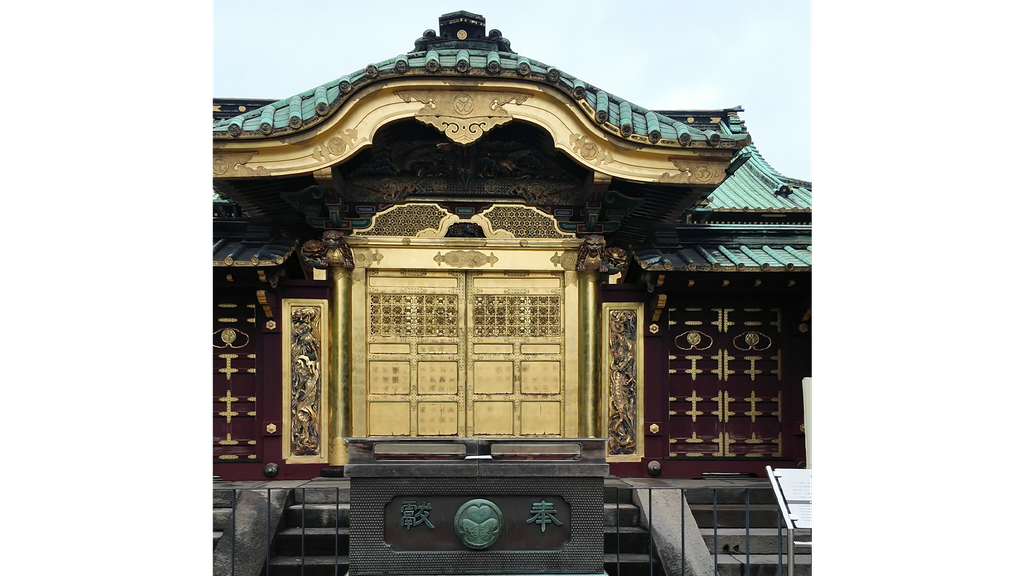
The contrast made me wonder whether that was part of what made the experience feel so powerful.
I had spent several minutes surrounded by stone, wood, and muted colors—and suddenly I was standing in front of one of the most dazzling Edo-period shrine buildings I had ever seen.
But the gold is not the only surprise inside the paid viewing area.
Nearby stands Eiyo Gongen Shrine, better known as O-Tanuki-sama, the shrine’s tanuki deity.
According to the shrine, this tanuki was once believed to bring misfortune wherever it was enshrined. After being donated to Ueno Toshogu during the Taisho era, however, the troubles are said to have stopped, and it eventually came to be worshipped as a deity associated with powerful good fortune.
There is also a playful Japanese word association behind its popularity: tanuki is linked with the phrase ta o nuku (他を抜く), meaning “to surpass others.”
Because of this, O-Tanuki-sama is associated with prayers for success in exams, employment, competitions, and other important challenges.
I loved finding this small, slightly unusual shrine tucked beside all that dazzling gold. It was exactly the kind of detail that made me want to slow down and explore every corner instead of simply photographing the main building and moving on.
Seasonal Art, a Lucky Tanuki, and the Osamu Tezuka Goshuincho
If you have even a tiny collector’s itch, Ueno Toshogu can be a dangerous place for your wallet—in the best possible way.
I was immediately drawn to the variety of goshuin and shrine items available here. From seasonal designs and traditional woodblock-style artwork to special cut-paper editions, there was much more to look through than I had expected.
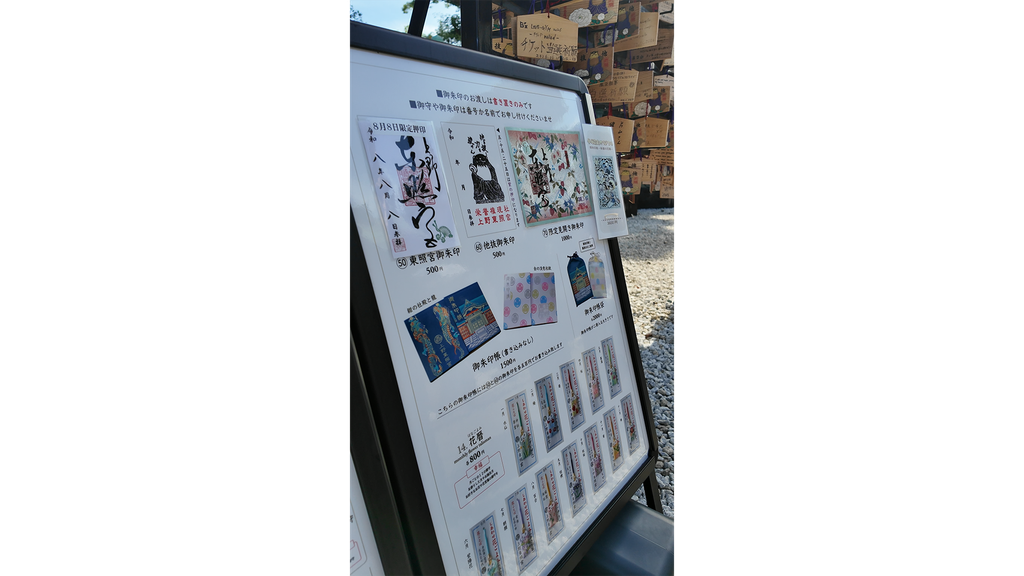
Here is what stood out to me most:
Seasonal Goshuin & Special Designs
One of the goshuin I received featured a beautiful goldfish motif.
I especially liked it during summer because the design felt cool and refreshing, and the seasonal imagery gave it a distinctly Japanese feel.
Ueno Toshogu also offers special goshuin designs at different times of the year. Some feature seasonal flowers and motifs, while others use more elaborate techniques such as layered cut-paper (kirie) designs.
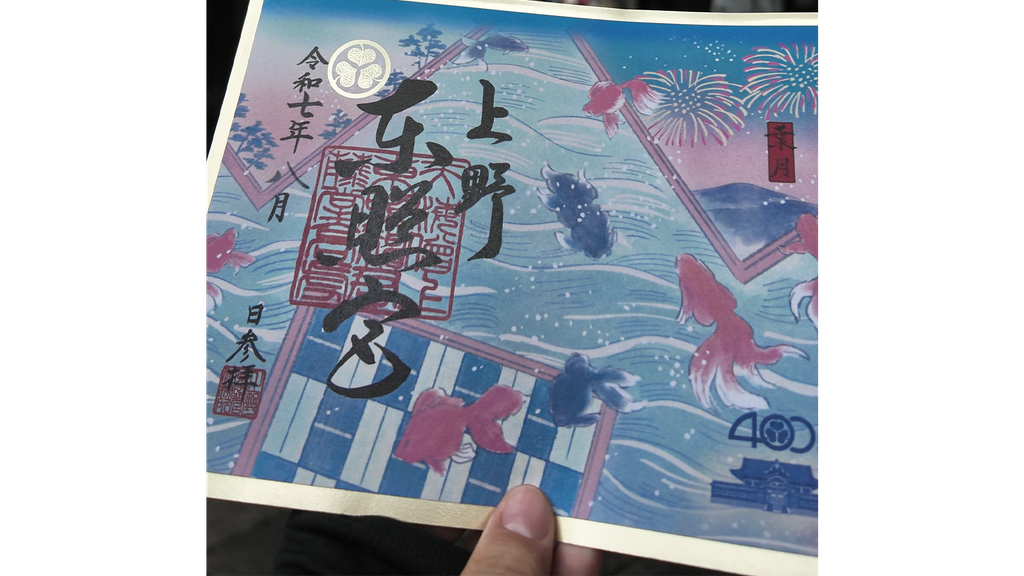
The Lucky Tanuki Goshuin
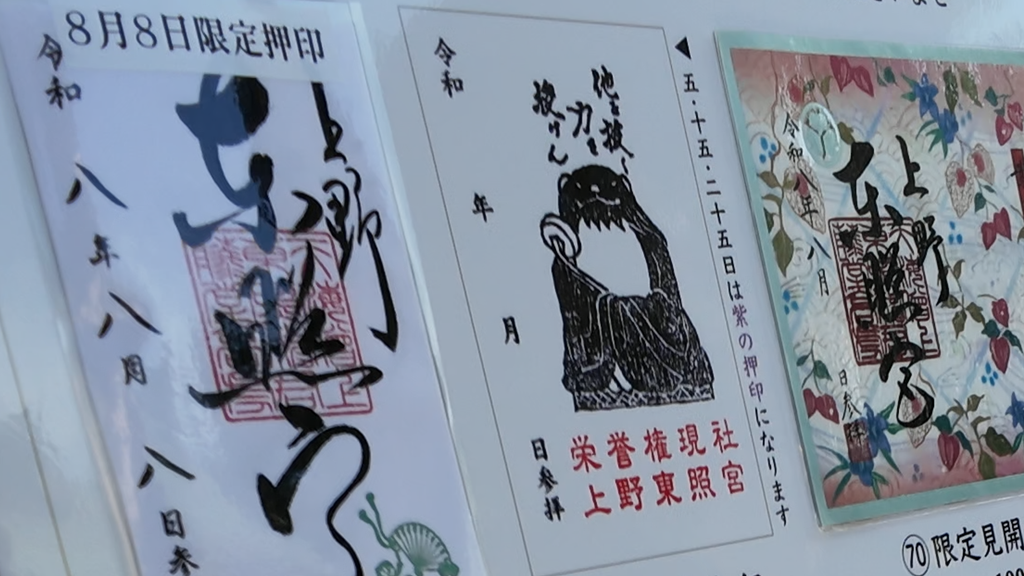
I also loved the goshuin for Eiyo Gongen, or O-Tanuki-sama, the lucky tanuki deity I mentioned earlier.
Its unusual woodblock-style design immediately caught my attention. Compared with the more colorful seasonal goshuin, this one had a completely different character—and knowing the story behind O-Tanuki-sama made me want it even more.
When I visited, this goshuin was offered as a prepared paper sheet (kakioki), so I could add it to my goshuincho later.
The Osamu Tezuka Goshuincho
And then I found the one that completely won me over: the Osamu Tezuka goshuincho.
I was lucky enough to get one featuring Osamu Tezuka’s artwork. The soft, charming illustrations felt completely different from the shrine’s dramatic golden architecture, and that contrast made it even more memorable for me.
As someone who already enjoys collecting goshuin, finding such an unexpected collaboration at a historic shrine was one of the highlights of my visit.
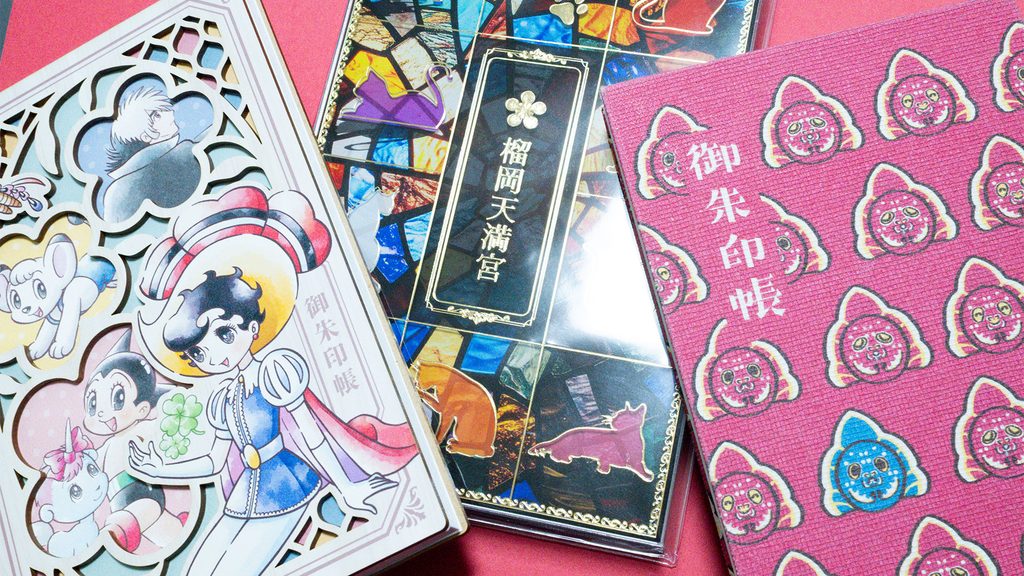
The goshuincho can be very popular, and availability may change, so I recommend checking Ueno Toshogu’s latest official announcements if this is one of the main reasons for your visit.
A Surprisingly Modern Shrine Office
Another thing that surprised me was how modern the shrine office felt.
After walking past centuries-old stone lanterns and brilliant Edo-period architecture, stepping into a sleek contemporary building created another unexpected contrast.
There was also one very practical detail I appreciated: credit cards and QUICPay could be used for goshuin, amulets, and admission to the paid viewing area when I visited.
For me, that combination of traditional culture, playful designs, modern collaborations, and practical convenience made the goshuin experience at Ueno Toshogu especially memorable.
Location & Access
Address
9-88 Uenokoen, Taito-ku, Tokyo
Nearest Station
Ueno Station — About a 10-minute walk from the Park Exit
Shrine Grounds
March–September — 9:00 AM – 5:30 PM
October–February — 9:00 AM – 4:30 PM
Shrine Office Hours
March–September — 9:30 AM – 5:00 PM
October–February — 9:30 AM – 4:00 PM
*The shrine office hours vary depending on the day. Please check the shrine’s Instagram or official website for the latest information.
Hatsuho-ryo (Offering Fee)
Kirie / Mihiraki Goshuin — 1,000 yen
Goshuin — 500 yen
*The fee varies depending on the goshuin design you choose
HP
https://www.uenotoshogu.com/
Official Instagram
https://www.instagram.com/uenotoshogu/
Google Maps
Nearby Shrines
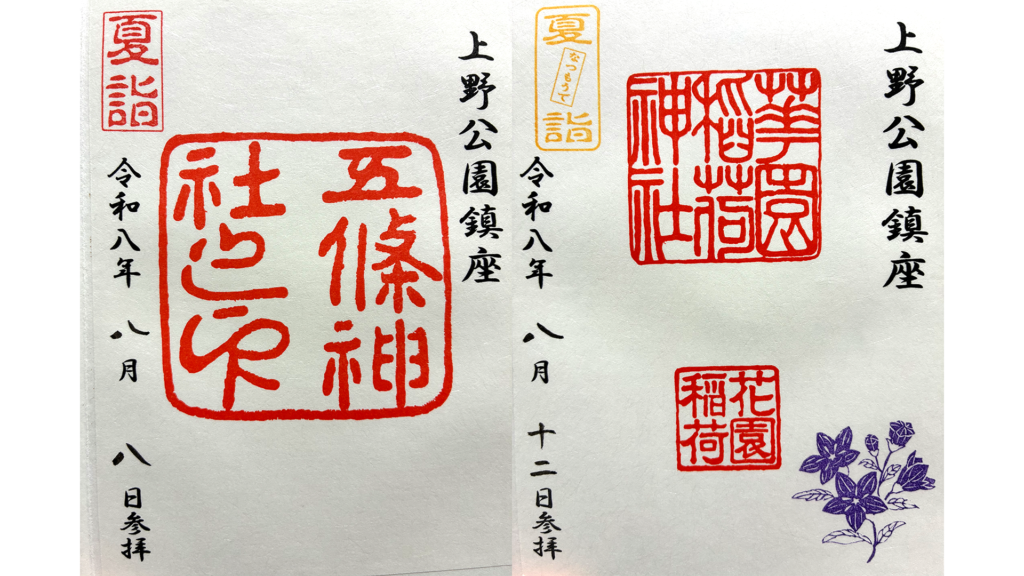
Hanazono Inari Shrine & Gojo Tenjin Shrine in Ueno
Hanazono Inari Shrine and Gojo Tenjin Shrine are two neighboring shrines located inside Ueno Park. Hanazono Inari is known for its red torii gates, while Gojo Tenjin is traditionally associated with health and healing, making them an easy pair to visit together while exploring Ueno.
My Personal Visit Tip
For me, the approach is part of the experience, so I would not rush straight toward the gold.
I like to slow down as I walk between the huge stone lanterns, take in the quieter colors of the approach, and stop at the temizuya before continuing toward the shrine.
At the main shrine, I follow the standard Shinto prayer style: bow twice, clap twice, offer my prayer, and finish with one final bow.
After that, if you enter the paid viewing area, you can get much closer to the Golden Hall and also visit Eiyo Gongen Shrine, home to the beloved O-Tanuki-sama.
I personally recommend giving yourself enough time to explore this area slowly. The carvings, gold decoration, shrine buildings, and smaller details became much more interesting to me once I stopped seeing the shrine as just one big golden photo spot.
And one last tip: do not forget to look behind you and around the sides of the buildings. Some of my favorite details were the ones I almost walked straight past.
Explore Ueno Park, Shinobazu Pond & Ameyoko
One of the things I like most about visiting Ueno Toshogu is how easily you can turn the shrine visit into a full day in Ueno.
After seeing the golden architecture and collecting my goshuin, I like continuing through Ueno Park at a slower pace. From there, you can visit one of the nearby museums, walk down toward Shinobazu Pond, or simply enjoy the park before moving on.
If you still feel like exploring, I would continue toward Ameyoko, where the atmosphere changes completely. The quiet shrine grounds and open park paths give way to busy shopping streets, small restaurants, and food stalls.
I really like that contrast. It is one of the reasons Ueno feels so easy to enjoy as a full-day area rather than just a single sightseeing stop.
Local Tours
If you want to explore Ueno beyond the major sightseeing spots, a local walking or food tour can also be a useful way to discover more of the area.
A guide can add context to the history, smaller streets, shrines, temples, and food spots that are easy to miss when you are exploring on your own.
Some links on this page are affiliate links. If you book through them, I may earn a small commission at no extra cost to you.
Is Ueno Toshogu Shrine Worth Visiting?
For me, yes—especially if you enjoy Japanese history, ornate shrine architecture, and distinctive goshuin.
What impressed me most about Ueno Toshogu was the contrast. I began on a quiet approach lined with old stone lanterns, and then suddenly found myself standing in front of brilliant gold, intricate carvings, and beautifully preserved Edo-period architecture.
I also liked that there was more to discover beyond the famous golden buildings. From O-Tanuki-sama and the seasonal goshuin to the Osamu Tezuka goshuincho, the smaller details made me want to slow down and explore the shrine properly rather than simply take a photo and move on.
Because Ueno Toshogu sits inside Ueno Park, it is also easy to combine with Shinobazu Pond, nearby museums, Ameyoko, and other sights around Ueno.
If you are already visiting Ueno and want to experience a shrine where Tokugawa history, dramatic golden architecture, and memorable goshuin all come together, I think Ueno Toshogu is well worth adding to your route.