Kawagoe Kumano Shrine: One of the Most Interactive Shrines I Visited in Kawagoe
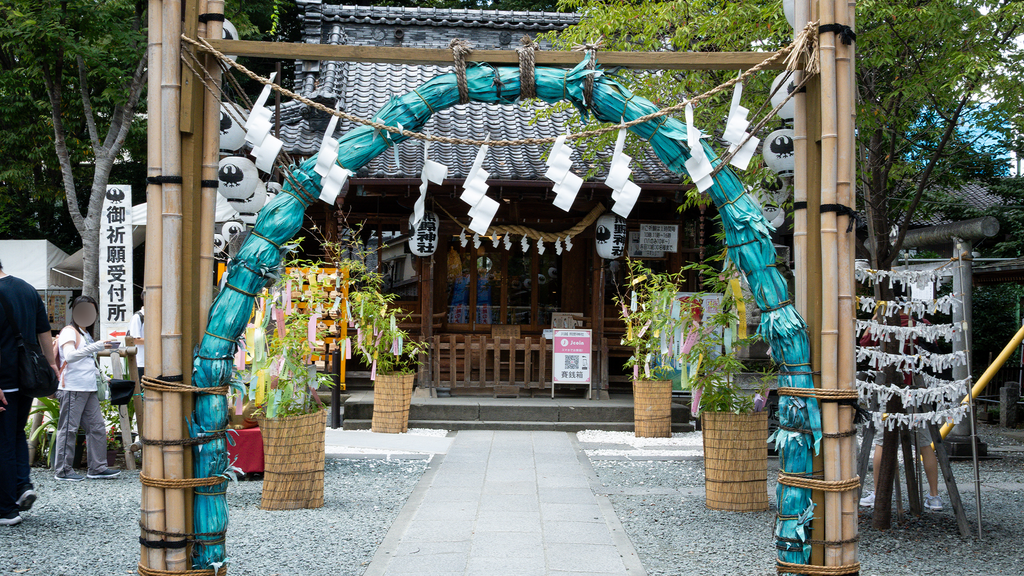
When I visited Kawagoe Kumano Shrine (川越熊野神社), what stood out to me most was how much there was to actually do.
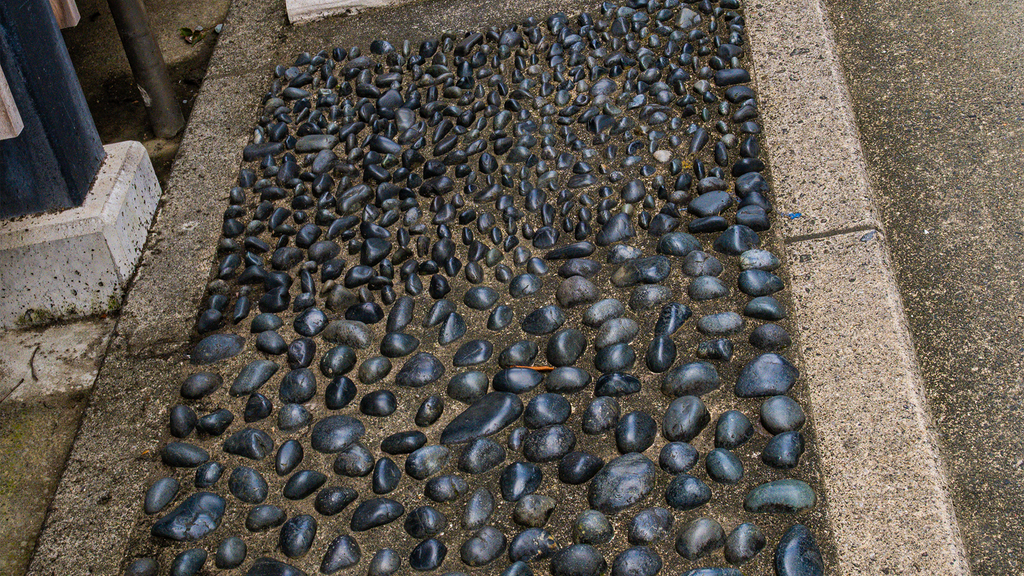
Instead of simply walking through the grounds, praying, and leaving, I found several hands-on experiences throughout the shrine. Near the entrance, visitors can try the barefoot “Stepping Health Road,” where you walk over pebbles that press against the soles of your feet.
I also tried the shrine’s money-washing ritual and explored other features connected with good fortune, including white snake motifs and a ring-toss activity.
Another thing that caught my attention was the shrine’s zodiac kirie goshuin series. The series began in 2023, with a different zodiac design released each year. According to the shrine’s information, visitors who collect all twelve can receive a special large goshuincho.
For me, Kawagoe Kumano Shrine felt very different from shrines where the visit is mostly about looking around quietly. There were several small activities to try, which made the experience more interactive and gave me more reasons to spend time exploring the grounds.
Interactive Experiences at Kawagoe Kumano Shrine
One of the things I liked most about Kawagoe Kumano Shrine was that there was more to do than simply walk around and look at the buildings.
When I visited, even the temizuya felt surprisingly modern, with QR-code guidance explaining shrine etiquette. As I explored further into the grounds, I found several small rituals and interactive spots that made the visit feel much more hands-on.
The Stepping Health Road
Near the entrance is the Stepping Health Road, a barefoot path covered with rounded stones designed to stimulate pressure points in your feet.
I took off my shoes and tried it myself.
Some stones were manageable. Others were surprisingly painful—and honestly, that was part of the fun.
It was one of the most memorable little experiences during my visit, and it gave me a reason to slow down and spend more time exploring the shrine grounds.
The official Kawagoe tourism site also introduces this barefoot pebble path as one of the shrine’s notable attractions.
Wash Your Money at Zeniarai Benzaiten
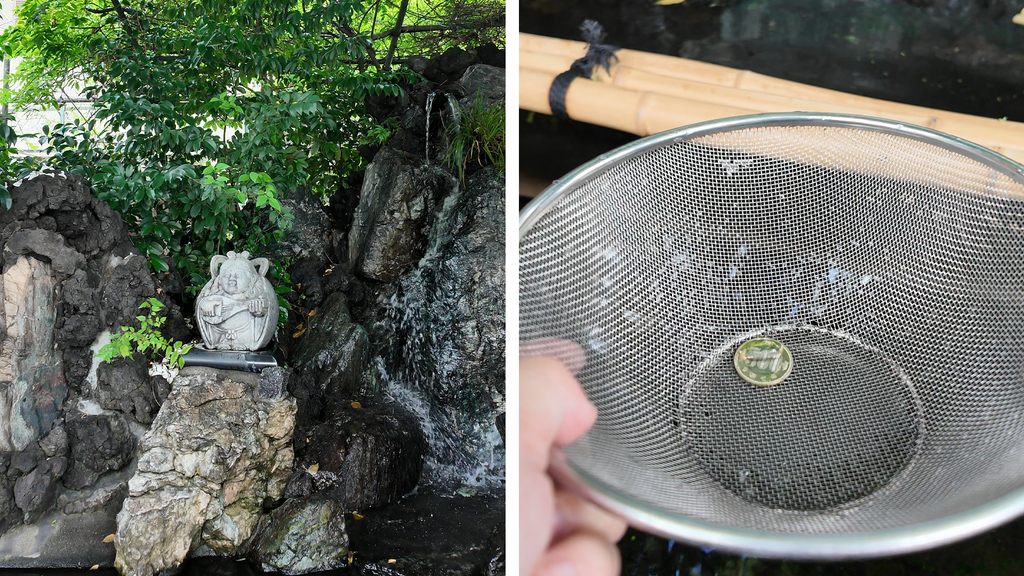
Another spot I found interesting was Kawagoe Zeniarai Benzaiten, located at the shrine’s Itsukushima Shrine.
Here, visitors can wash coins or bills in the sacred water of the treasure pond as part of a ritual associated with prayers for financial good fortune. On certain Benzaiten festival days, the shrine also distributes special coins that have been purified in the same water.
I tried the money-washing ritual myself, and there was something surprisingly satisfying about lowering the money into the cool water, especially on a hot day in Kawagoe.
Of course, this is not a magic way to make money. For me, it felt more like a small symbolic ritual—a moment to pause and think about good fortune and how we treat money.
White Snakes and Good Fortune
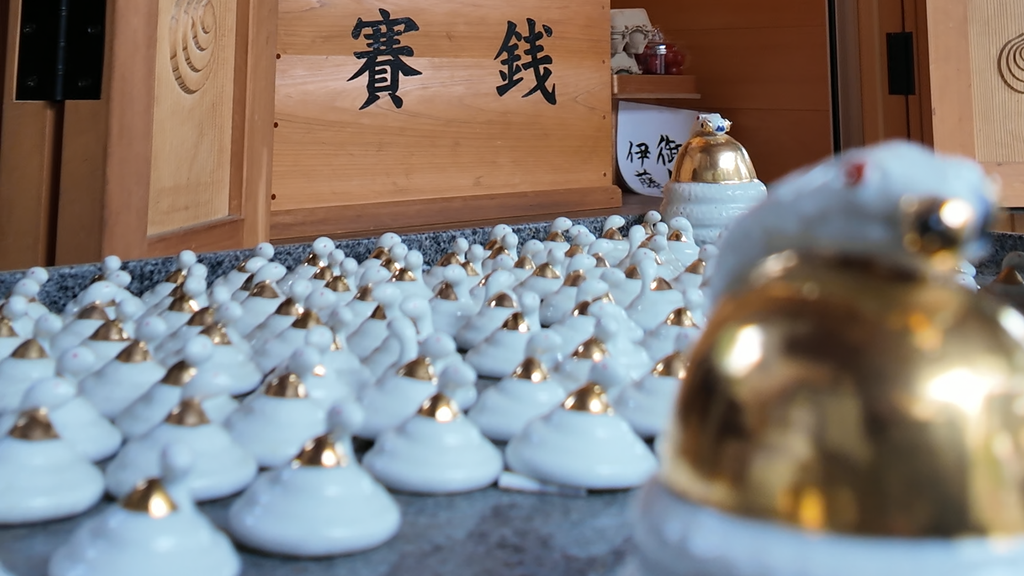
White snakes also have a special presence at Kawagoe Kumano Shrine.
The shrine offers several white-snake charms associated with good fortune and financial luck, including protective amulets and prayer figures.
So while the money-washing ritual and the white-snake worship are separate experiences, together they add another layer to the shrine’s strong connection with prosperity and good fortune.
Test Your Luck with the Ring Toss
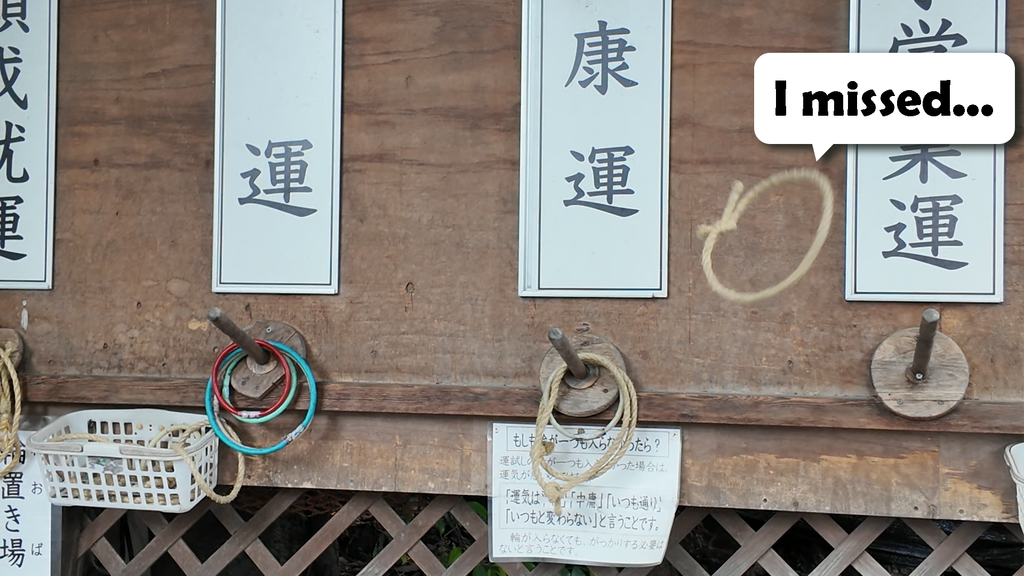
Another interactive spot I tried was the fortune ring toss beside Kayu Inari Shrine.
After making a small offering, I picked up the rings and gave it a try.
It looked easy.
It wasn’t.
I missed all three throws—but honestly, laughing at myself in the middle of the shrine grounds was part of the fun.
If you visit, it is a quick and simple activity to try while exploring the shrine. The ring toss is also introduced as one of Kawagoe Kumano Shrine’s interactive attractions.
Receive a Message from Yatagarasu
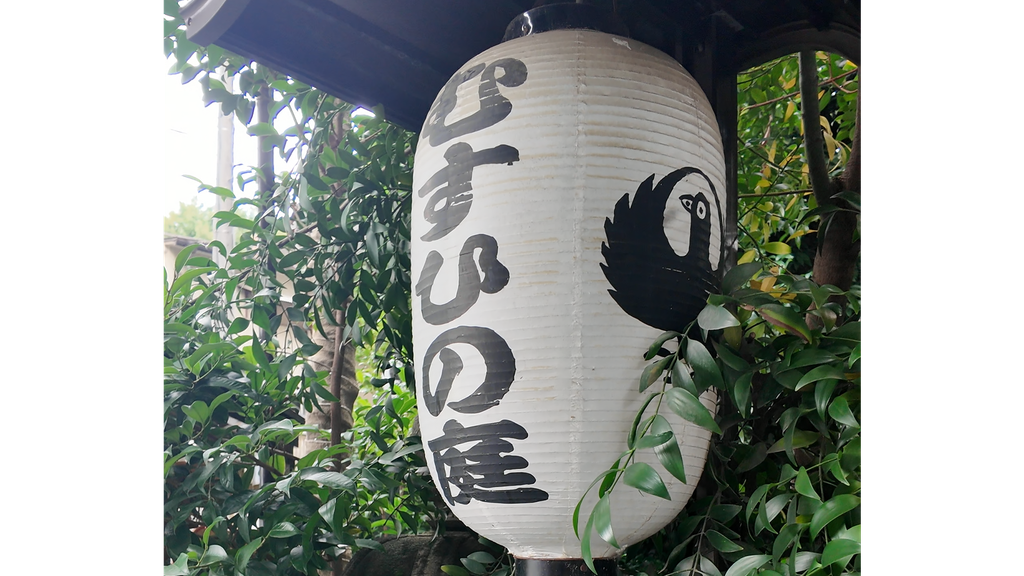
One of the quieter experiences I found at Kawagoe Kumano Shrine was the Musubi no Niwa, a small space connected with Yatagarasu, the three-legged crow associated with the shrine.
According to the shrine, Yatagarasu is traditionally regarded as a guide and is linked to the story of guiding Emperor Jimmu safely through the mountains of Kumano. Because of that, the bird has long been associated with guidance and hope.
Inside the Musubi no Niwa, visitors can choose from themes such as good fortune, relationships, or gratitude and receive a short message from Yatagarasu.
I liked this part because it felt very different from the more playful activities elsewhere in the shrine. After trying things like the ring toss and money-washing ritual, ending with a quieter moment of reflection made the visit feel nicely balanced.
The Charm of Kawagoe Kumano Shrine’s Goshuin
As a goshuin collector, one of the things that caught my attention most at Kawagoe Kumano Shrine was its Yatagarasu and Zodiac Kirie Goshuin series.
Collecting the Zodiac Kirie Goshuin
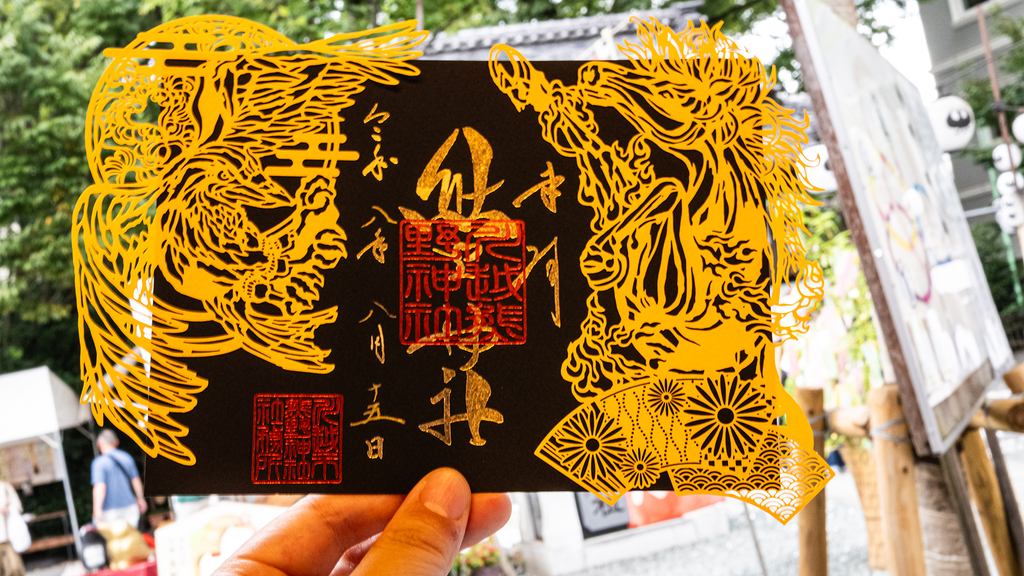
The series began in 2023, combining Yatagarasu, the three-legged crow associated with the shrine, with the zodiac animal featured for that year.
When I saw the design, I immediately liked the idea that each year could become another piece of a larger collection. The detailed cut-paper style also makes these goshuin especially interesting to look at up close.
And here’s the part that really caught my attention as a collector:
The shrine’s zodiac kirie goshuin series is designed as a long-term collection, with a different zodiac animal featured over the years.
If you are thinking about collecting the full series, I recommend checking the shrine’s latest official information before planning around any completion reward or verification system, as these details may change.
For me, that long-term collecting aspect is part of what makes the series so appealing. It gives you a reason to look forward to future designs—and maybe even a reason to return to Kawagoe again.
Watching a Goshuin Come to Life
If you prefer a more traditional style of goshuin, take a look at the shrine office as well.
During my visit, I could watch through the clear window as the shrine staff carefully worked on a Yatagarasu goshuin, with the brush moving across the paper right in front of me.
Seeing the process made the goshuin feel different from simply receiving the finished piece. I could see the careful brushwork, the ink being applied, and the concentration that went into creating it.
For me, that made the goshuin feel less like a simple souvenir and more like something created by hand as part of the visit itself.
If you want to photograph the process, ask permission first. The shrine office is a working space, so it is important to be respectful of the staff.
Want something more colorful? Check out my Hanazono Shrine guide for its distinctive pink kirie goshuin.
Location & Access
Address
17-1 Renjakucho, Kawagoe, Saitama 350-0066
Nearest Station
Hon-Kawagoe Station — about a 5-minute walk from the east exit.
*If you’re coming from JR Kawagoe Station or Tobu Kawagoe Station, expect a longer walk through central Kawagoe, or consider taking a local bus toward the historic district.
Shrine Grounds
Open 24 hours
Shrine Office Hours
Weekdays — 9:30 AM–5:00 PM
Weekends & Public Holidays — 9:00 AM–5:00 PM
*From 4:40 PM to 5:00 PM — Pre-written goshuin only
*The shrine office hours vary depending on the day. Please check the shrine’s Instagram or official website for the latest information.
Hatsuho-ryo (Offering Fee)
Limited-edition Goshuin — 1,000 yen
Limited-edition Kirie Goshuin — 2,000 yen
Goshuin — 500 yen
*The fee varies depending on the goshuin design you choose
HP
https://www.kawagoekumano.jp/
Official Instagram
https://www.instagram.com/okumansama/
Google Maps
My Money-Washing Tip
When I tried the money-washing ritual at Zeniarai Benzaiten, I found it more meaningful to slow down for a moment instead of simply rinsing the money and moving on.
I took a moment to feel the cool water and think about how I wanted to use my money more carefully and meaningfully.
On certain Tsuchinotomi-no-Hi festival days, the shrine also distributes specially purified lucky coins to visitors who receive goshuin or other shrine items worth ¥500 or more. According to the shrine, these coins can be kept in a wallet or bag as a charm connected with financial and artistic fortune.
Snack-Hopping Through Little Edo
One of the things I like about visiting Kawagoe Kumano Shrine is how easy it is to continue exploring the food streets of Little Edo afterward.
After trying the shrine’s activities and receiving your goshuin, you can head toward the Kurazukuri warehouse district and stop for snacks along the way.
Kawagoe is especially well known for sweet potatoes, and you’ll find them used in many different foods, including gelato, donuts, traditional sweets, croquettes, noodles, and more. Kawagoe’s official tourism guide also introduces sweet potato dishes as one of the area’s signature food experiences.
For me, this is one of the fun parts of visiting Kawagoe. Instead of choosing just one restaurant, I like the idea of trying several small snacks while walking through the historic streets.
Planning Your Kawagoe Trip?
I think Kawagoe works very well as a day trip from Tokyo, but staying a little longer can make the visit feel more relaxed, especially if you want to explore the old streets outside the busiest sightseeing hours.
Where to Stay
If you prefer a slower pace, staying overnight in Kawagoe can give you more time to enjoy the historic area. Staying near Ikebukuro is another practical option if you want easy access between central Tokyo and Kawagoe.
Local Tours
If you want more background on Kawagoe’s old merchant streets, temples, shrines, and local food culture, a guided walking tour can be useful.
Some links in this section are affiliate links. If you book through them, Sacred Japan Guide may earn a small commission at no extra cost to you. See our Affiliate Disclosure for details.
Is Kawagoe Kumano Shrine Worth Visiting?
Yes—especially if you enjoy shrines where there is more to do than simply admire the buildings and move on.
What stood out to me most about Kawagoe Kumano Shrine was how interactive it felt. During my visit, I found several things to try and explore, including the stepping health road, money-washing ritual, white-snake motifs, fortune ring toss, Yatagarasu messages, and its distinctive goshuin.
I also liked how approachable the shrine felt. Even if you are not already familiar with Japanese shrine culture, the different activities give you several easy ways to engage with the grounds instead of simply walking through.
For goshuin collectors, the zodiac kirie series is another strong reason to pay attention to this shrine. I especially like the idea of returning over the years to see how the designs change and gradually build a larger collection.
Kawagoe Kumano Shrine is also easy to combine with the rest of Kawagoe. After visiting, you can continue toward the historic warehouse district, try local sweet-potato snacks, and explore more of Little Edo without traveling far.
If you prefer very quiet and solemn shrines, this one may feel more playful than expected. But if you enjoy hands-on rituals, goshuin collecting, and a shrine visit with plenty to discover, Kawagoe Kumano Shrine is a memorable stop.
For me, it was one of the most interactive shrine visits I had in Kawagoe, and I would recommend it to travelers who want to experience shrine culture in a more hands-on way.