Yasukuni Shrine: A Quiet Morning in the Heart of Tokyo
Hey there, fellow shrine-hoppers and travelers interested in Japan’s history.
Yasukuni Shrine (靖国神社) is one of Tokyo’s most historically significant and internationally discussed shrines.
According to the shrine’s official history, it was established in 1869 as Shokonsha and renamed Yasukuni Shrine in 1879. The name “Yasukuni” is explained by the shrine as carrying the meaning of preserving peace throughout the nation.
Before visiting, I thought carefully about how I wanted to experience and write about this place.
Yasukuni is closely connected with Japan’s modern history, so I knew this visit would feel different from the more colorful or playful shrines I often introduce on Sacred Japan Guide.
I visited on a rainy morning.
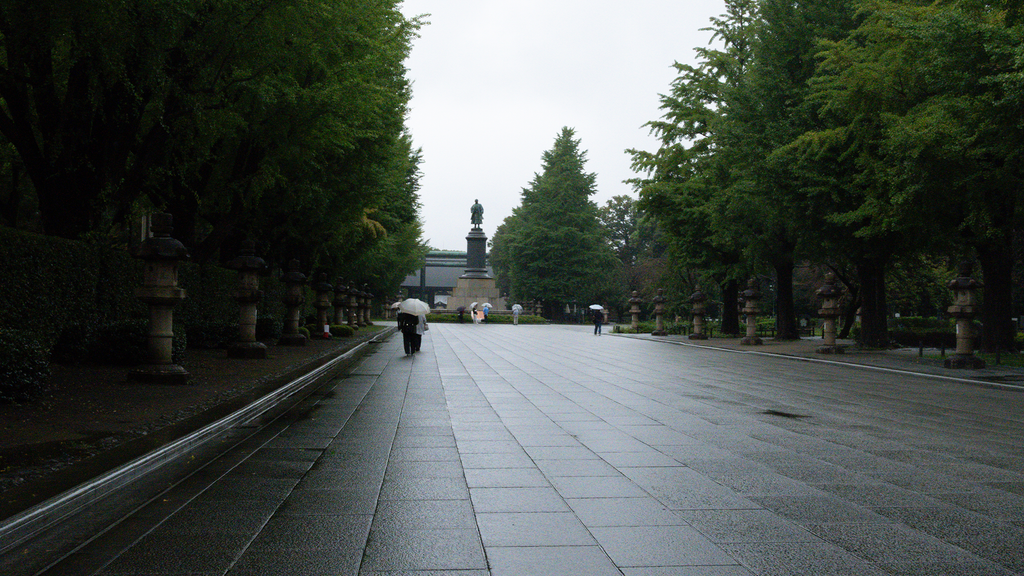
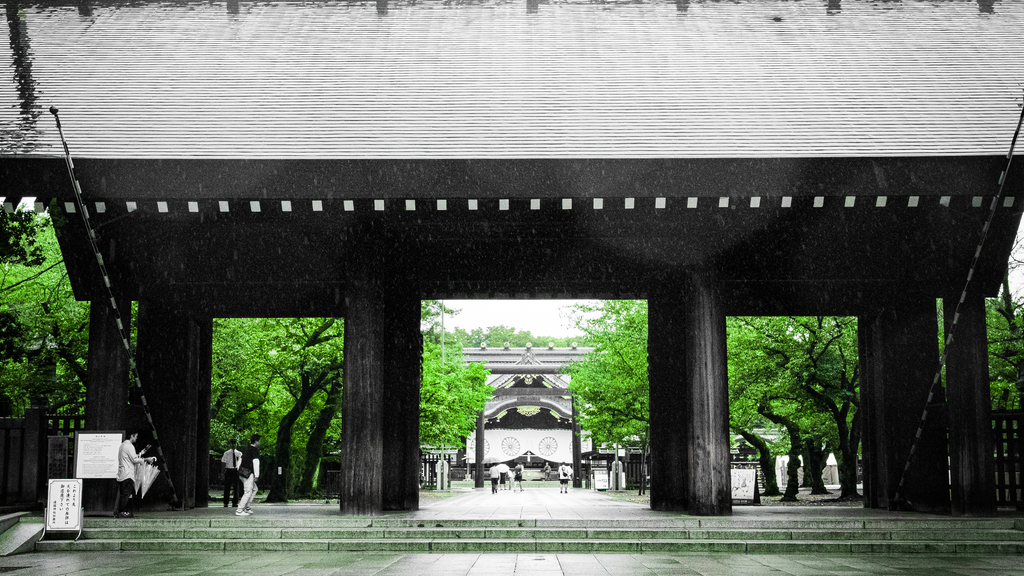
As I approached the enormous First Torii, or Daiichi Torii, I folded my umbrella and walked beneath it in the rain.
Looking up at the dark structure against the grey sky, I remember instinctively straightening my posture.
What stayed with me most was the quiet.
People moved slowly through the grounds, voices were subdued, and the atmosphere felt noticeably different from many of Tokyo’s busier sightseeing shrines.
For me, Yasukuni Shrine was not a place I wanted to rush through. I found myself walking more slowly, looking more carefully, and thinking more about the history connected with the grounds.
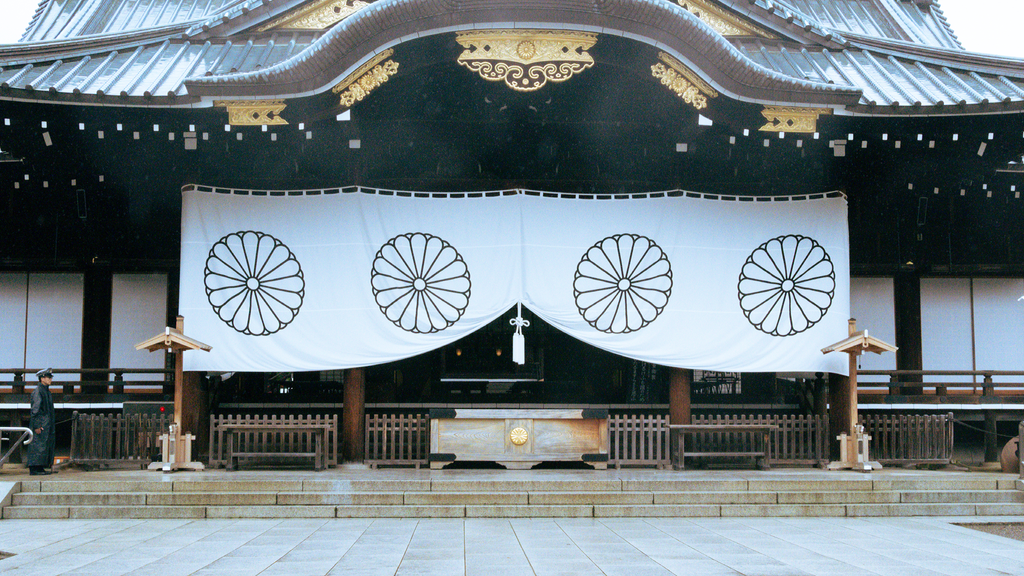
History, Sakura & Sazare-ishi at Yasukuni Shrine
One of the things that made my visit to Yasukuni Shrine feel different was how much modern Japanese history is connected to the grounds.
According to the shrine, more than 2.46 million people are enshrined here. They include figures associated with the Meiji Restoration such as Yoshida Shoin, Sakamoto Ryoma, and Takasugi Shinsaku, as well as many others who died in later conflicts and wartime service.
I had come across some of these names many times while learning about Japanese history, so seeing them connected with a place I was actually walking through changed the way I experienced the shrine.
Instead of feeling like I was simply reading about history again, I found myself thinking about how those names, events, and memories are tied to a real place in present-day Tokyo.
The Tree That Announces Sakura Season in Tokyo
As I continued toward the main shrine, I came across one of the trees I had been especially curious to see at Yasukuni Shrine.
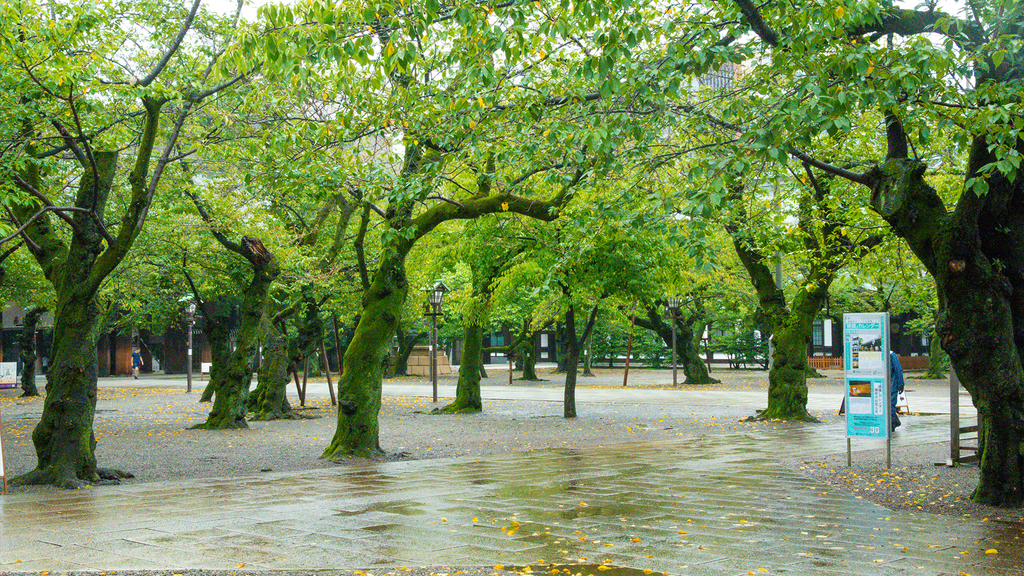
At first glance, it looks like an ordinary Somei Yoshino cherry tree.
But this is Tokyo’s official specimen tree used to observe the start of cherry blossom season.
When the required number of blossoms has opened, Tokyo’s official cherry blossom announcement is made based on this tree.
So when you see the news saying that cherry blossoms have officially started blooming in Tokyo, this is the tree connected to that announcement.
I visited outside peak blossom season, so there were no pink flowers. Instead, the branches were covered in fresh green leaves, softened by the light rain.
Even without the blossoms, I found myself stopping for much longer than I expected. Knowing that this single tree becomes the focus of attention every spring made it feel much more significant than it first appeared.
Cherry blossoms also carry a deeper historical meaning at Yasukuni Shrine.
During the wartime period, Yasukuni and cherry blossoms became closely linked in military songs, imagery, and ideas about remembrance. The phrase and sentiment of “meeting again at Yasukuni” were also part of wartime culture, although historians have noted that the way soldiers themselves understood cherry-blossom symbolism was not always uniform.
Standing beneath the tree today, I found it difficult not to think about how something as delicate and familiar as a cherry blossom can carry very different meanings depending on the history surrounding it.
A Sazare-ishi Hidden in the Shrine Grounds
Another small discovery that genuinely excited me was the sazare-ishi.
If you have ever heard Japan’s national anthem, Kimigayo, you may already know the word—even if you have never stopped to think about what it actually refers to.
“Sazare-ishi” literally means “small stones.”
Over a long period of time, mineral-rich water can help bind small stones and gravel together, gradually forming a larger rock mass known as calcareous breccia.
The image of tiny stones eventually becoming a great rock appears in Kimigayo as a symbol of extraordinary longevity.
Yasukuni Shrine has several examples of sazare-ishi within the grounds.
What made this memorable for me was finally seeing one in person.
I had heard the phrase sazare-ishi no… many times before, but standing in front of the actual stone made the words feel much more concrete than they ever had before.
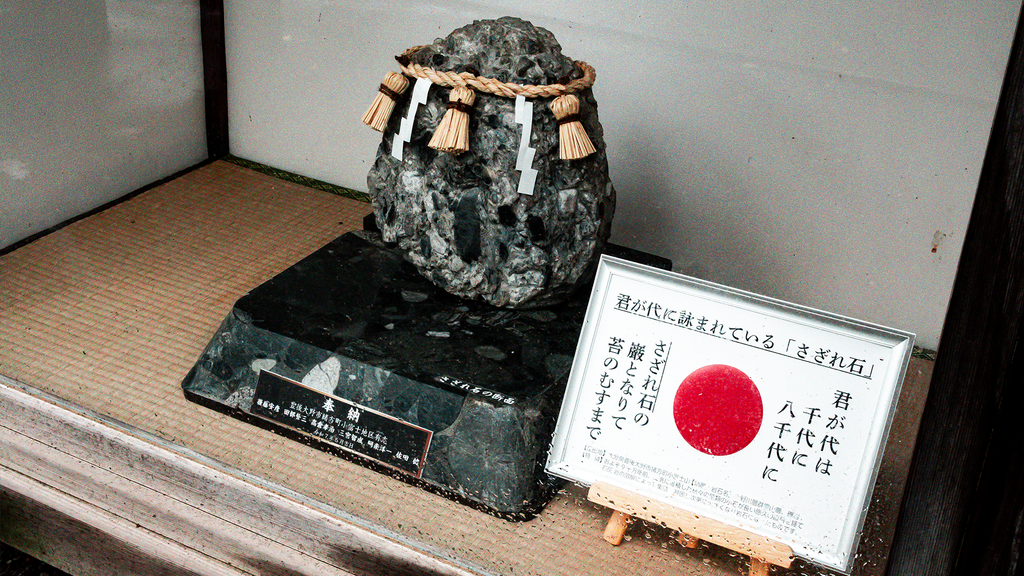
These small discoveries—the historic names, Tokyo’s famous cherry tree, and a stone mentioned in Japan’s national anthem—were what made exploring the shrine grounds especially interesting to me.
The Charm of Goshuin & Goshuincho
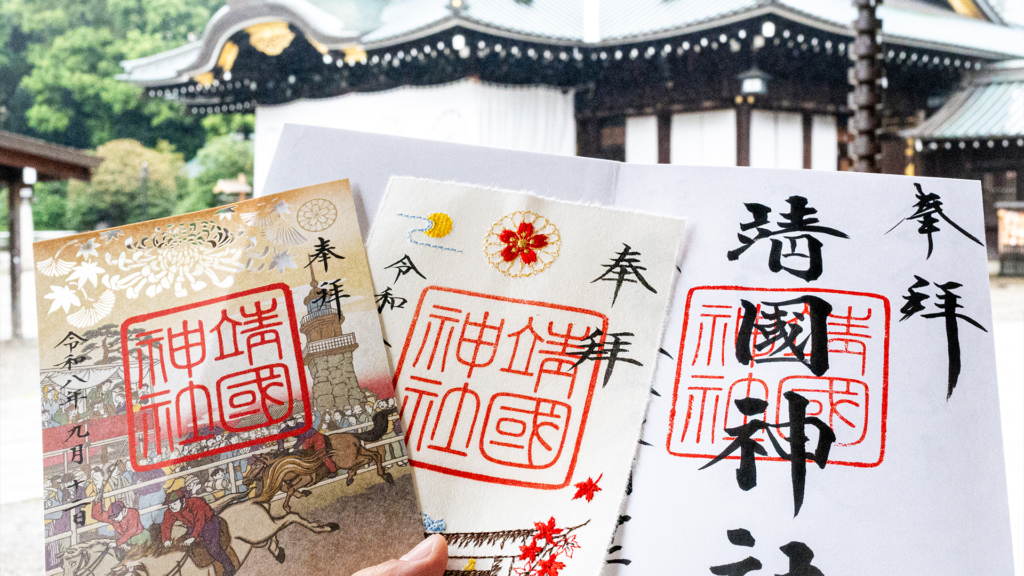
For me, one of the highlights of visiting Yasukuni Shrine was seeing how different the seasonal goshuin could be from the standard design.
When I visited in September, I found two autumn editions, and they immediately caught my attention because they looked completely different from each other.
I remember receiving them and stopping for a moment just to look more closely at the small details in each design.
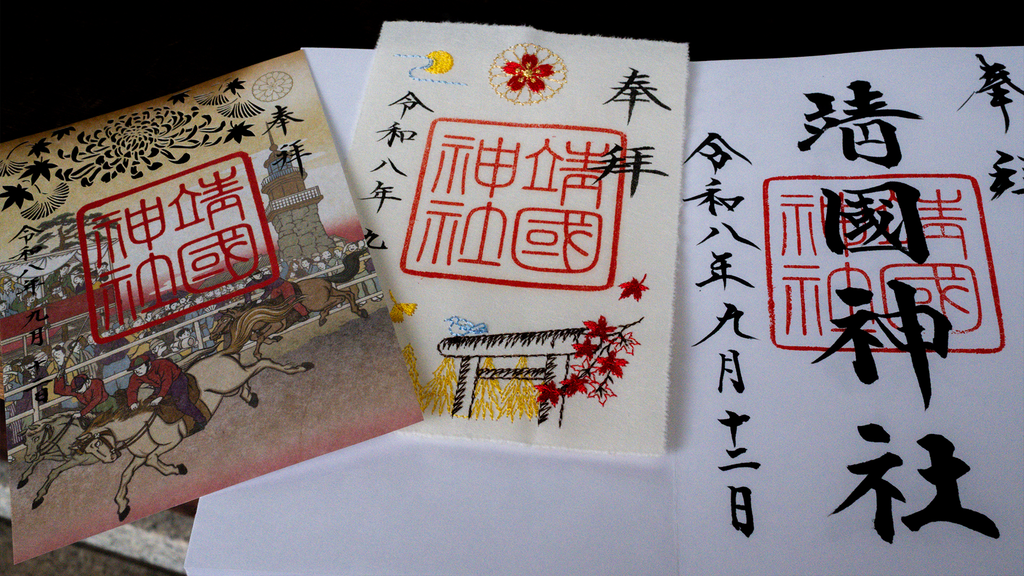
The Standard Goshuin
The standard goshuin has a much more traditional look.
Bold black calligraphy reading “Yasukuni Jinja” is combined with red seals, creating the classic black-and-vermilion contrast that I associate with more traditional goshuin.
I liked how simple and formal it felt compared with the seasonal designs.
If you prefer handwritten calligraphy and a more classic style, this is the goshuin I would choose.
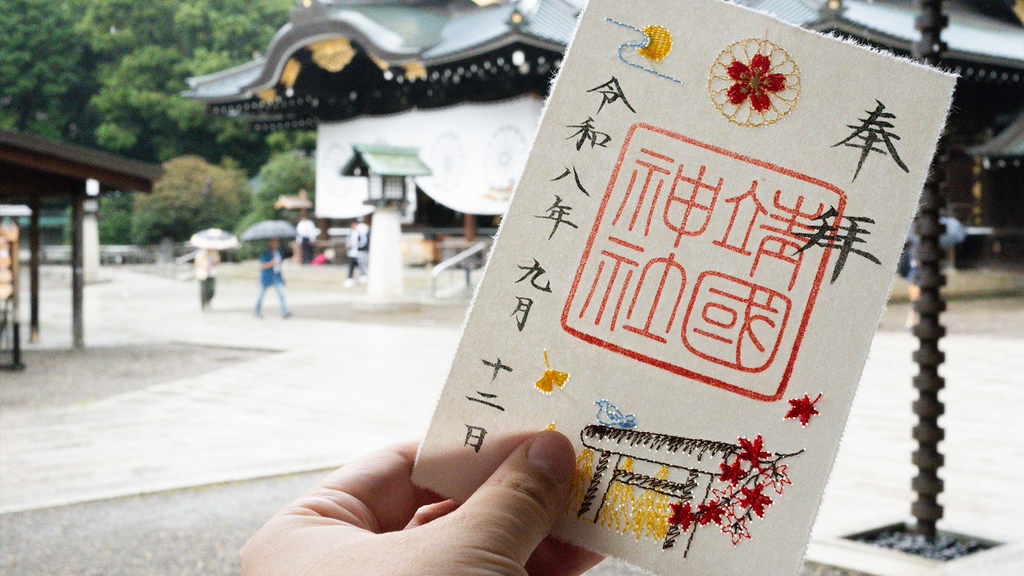
Autumn Embroidered Goshuin — Moon & Maple Leaves
This was one of my favorite goshuin from the visit.
When I visited in autumn 2026, Yasukuni Shrine had a seasonal embroidered goshuin featuring the shrine crest, autumn leaves, and the moon on Mino washi paper.
Up close, the embroidery gave the goshuin a completely different texture from the paper designs I usually collect.
What I liked most was the balance between the autumn colors and the moon. It felt elegant without being too bright, and I found myself looking at the tiny embroidered details for much longer than I expected.
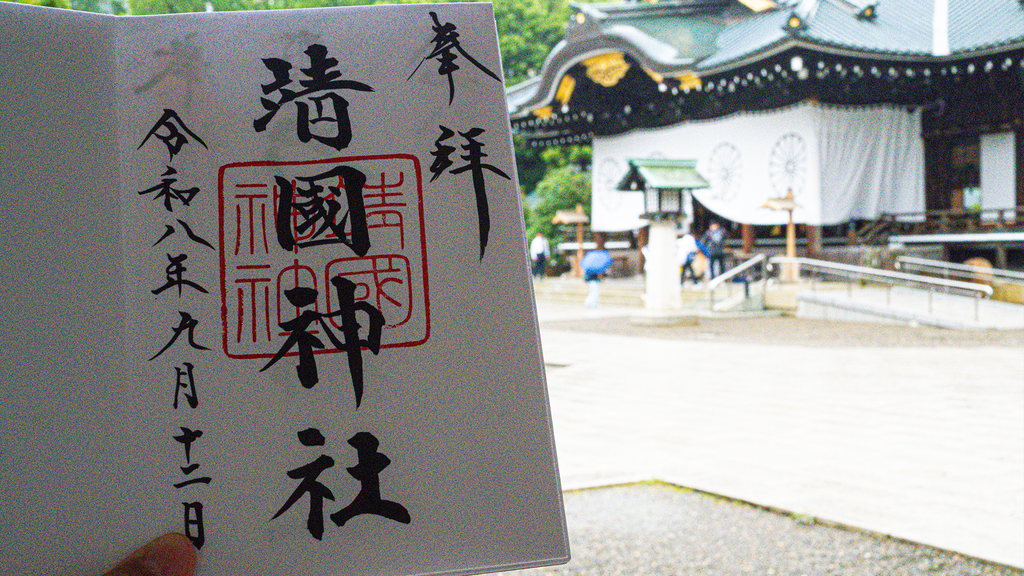
Autumn Kirie Goshuin — Horse Racing in the Meiji Era
The second seasonal design I found was completely different.
When I visited, this kirie goshuin featured delicate cut-paper chrysanthemums and ginkgo leaves surrounding a horse-racing scene connected with events once held in Yasukuni Shrine’s outer grounds during the Meiji period.
The central illustration has a style reminiscent of traditional nishiki-e woodblock prints, which made the combination especially interesting to me.
What caught my attention was the contrast: delicate modern cut-paper work surrounding an image connected to Tokyo’s Meiji-era history.
This is exactly the kind of goshuin I enjoy collecting. It is not only something beautiful to keep in my goshuincho—the design also made me curious about a piece of the shrine’s history that I might otherwise have walked past without noticing.
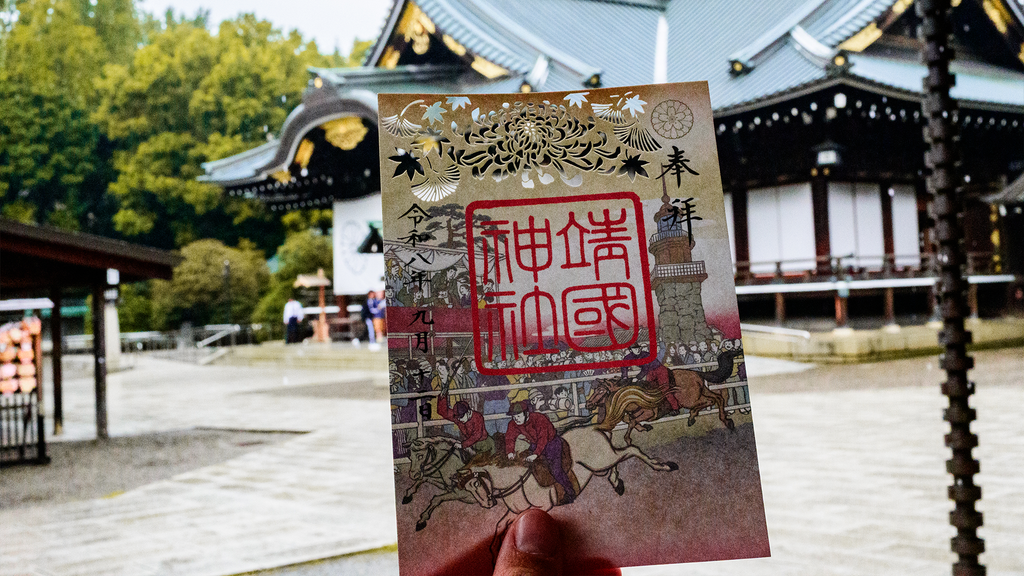
Both autumn goshuin were introduced on September 1, 2026, with an initial offering fee of ¥1,000 each.
Because seasonal goshuin may only be available for a limited time or while supplies last, the designs and availability could be different when you visit.
If goshuin are one of the main reasons for your visit, I recommend checking Yasukuni Shrine’s latest announcements before you go.
Location & Access
Address
3-1-1 Kudankita, Chiyoda-ku, Tokyo 102-8246
Nearest Station
Kudanshita Station — about a 5-minute walk from Exit 1.
You can reach Kudanshita Station via — Toei Shinjuku Line / Tokyo Metro Hanzomon Line / Tokyo Metro Tozai Line
Shrine Grounds
March-October — 6:00 AM–6:00 PM
January, February, November, and December — 6:00 AM–5:00 PM
Shrine Office Hours
9:00 AM–4:50 PM
*The shrine office hours vary depending on the day. Please check the shrine’s Instagram or official website for the latest information.
Hatsuho-ryo (Offering Fee)
Kirie Goshuin / Embroidered Goshuin — 1,000 yen
Goshuin — 500 yen
*The fee varies depending on the goshuin design you choose
Official Instagram
https://www.instagram.com/yasukuni.official/
Google Maps
Nearby Shrines
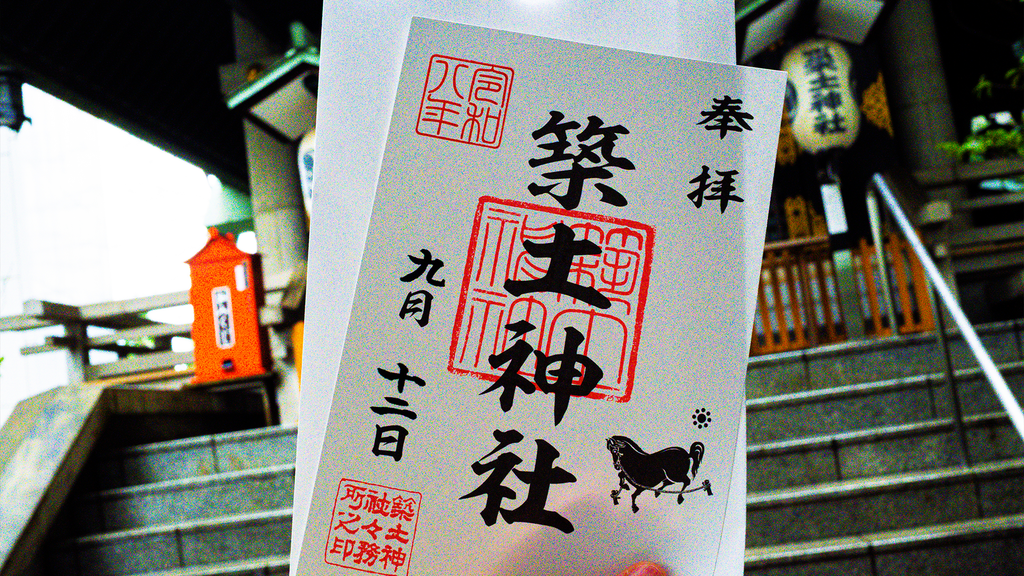
Tsukudo Shrine in Chiyoda
Tsukudo Shrine is a historic shrine located near Kudanshita in central Tokyo. It has deep connections to samurai history and is especially associated with Taira no Masakado.
Photography Etiquette
Yasukuni Shrine is an active place of worship, so I was especially careful about where and when I took photos.
Photography is prohibited inside the Main Sanctuary, and visitors taking part in formal worship should not use phones or cameras inside the Main Hall or Worship Hall.
Around the grounds, I also tried to avoid blocking the approach or getting too close to people who were praying.
If you are taking photos or video for publication, media, or commercial purposes, Yasukuni Shrine has separate photography rules, so I recommend checking the shrine’s official policy before your visit.
What to Do Near Yasukuni Shrine
After collecting my goshuin, I would not end the visit there.
Yasukuni Shrine is in a convenient part of central Tokyo, and I found it easy to combine with a walk around the surrounding area.
Walk Around Chidorigafuchi
If the weather is good, I would continue toward Chidorigafuchi after visiting the shrine.
It is especially well known during cherry blossom season, but even outside spring, I like the contrast between the greenery, the moat, and the busy streets of central Tokyo nearby.
After the quiet atmosphere I experienced at Yasukuni Shrine, continuing the walk around Chidorigafuchi felt like a natural way to stay in that slower pace a little longer before heading somewhere busier.
Continue to Tokyo Dome City
If you want something completely different afterward, I would continue toward Tokyo Dome City.
It is around a 20-minute walk from Kudanshita, and for me, it makes an interesting contrast with the quiet, historical atmosphere of Yasukuni Shrine.
If you enjoy anime, manga, or amusement parks, there is plenty to see here. One spot I would look out for is the official JUMP SHOP, which carries merchandise from popular Weekly Shonen Jump series.
I actually like how different these two stops feel. Visiting Yasukuni Shrine first and then moving on to Tokyo Dome City gives the day a completely different rhythm without requiring a long trip across Tokyo.
Explore More of Central Tokyo
If you want to continue exploring the history of central Tokyo, I would look at the Imperial Palace area and the wider Chiyoda district next.
A guided walking tour can be useful if you want more context about the area’s history and landmarks rather than simply walking through on your own.
The East Gardens of the Imperial Palace are also free to enter, so they can work well as another stop if you want to keep the day focused on Japanese history.
Some links on this page are affiliate links. If you book through them, we may earn a small commission at no extra cost to you.
Is Yasukuni Shrine Worth Visiting?
Yasukuni Shrine is not a place I would recommend simply because it is beautiful or photogenic.
For me, what made the visit memorable was the combination of modern Japanese history, the unusually quiet atmosphere I experienced that morning, and the small discoveries I made while walking through the grounds—from Tokyo’s cherry blossom specimen tree and the sazare-ishi to the seasonal goshuin.
If you are interested in modern Japanese history, Shinto culture, or distinctive goshuin, there is a lot here to look at and think about.
At the same time, Yasukuni Shrine has a complex place in modern history and is viewed differently both within Japan and abroad. Because of that, I do not think this is a shrine to visit simply as another photo stop. Knowing some of its historical background before you go can change the way you experience the grounds.
I was especially glad that I visited on a quiet, rainy morning.
I still remember walking beneath the enormous torii in the rain, recognizing names I had encountered while learning Japanese history, stopping in front of the cherry blossom specimen tree even though it was not in bloom, and discovering the detailed autumn goshuin.
Those individual moments are what stayed with me after I left.
If you have already visited some of Tokyo’s better-known shrines and want to experience a place where shrine culture and modern Japanese history are closely connected, Yasukuni Shrine offers a very different kind of visit.