Hanazono Shrine: A Hidden Sanctuary in the Heart of Shinjuku
Hey there, fellow shrine-hoppers and goshuin collectors! Taiko here, your passionate insider to Japan’s coolest spiritual corners. You’ve probably seen the dizzying neon lights of Kabukicho and navigated Shinjuku’s chaotic streets. But let me ask you this: have you ever stood in a place where time seems to completely stop, right in the beating heart of Tokyo?
If you’re on your second or third trip to Japan, you’re probably ready to move beyond the standard tourist spots. You want something with teeth. Something with a wild contrast.
Welcome to Hanazono Shrine (花園神社).
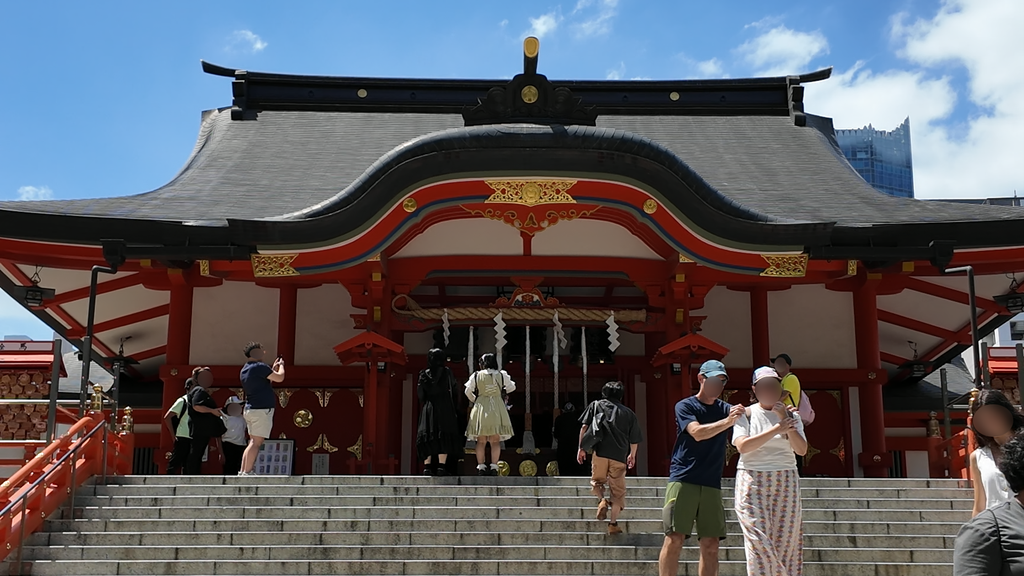
When I stepped into the grounds on a blazing mid-summer afternoon, the shift felt almost physical. One moment, you’re surrounded by the buzz of the city; the next, you’re enveloped by the heavy chorus of cicadas and the crisp, soothing sound of running water from the purification fountain.
It’s the kind of hidden oasis that makes you forget, for a moment, that you’re standing in the middle of one of Tokyo’s busiest districts.
History, Legends & Blessings
Hanazono Shrine isn’t just an old building; it has been one of Shinjuku’s spiritual anchors for centuries.
The shrine’s history stretches back to before the Edo period. It was originally located near what is now the Shinjuku 3-chome intersection and was moved to its present location during the Kan’ei era (1624–1644). Since then, it has watched Shinjuku transform from the old post-town district of Naitō-Shinjuku into one of the wildest entertainment and commercial districts in modern Tokyo.
That contrast is part of what makes this place so fascinating. Step outside the gates and you’re surrounded by neon signs, traffic, crowds, and nightlife. Step back inside, and suddenly you’re standing in a space that has survived fires, war, rebuilding, and centuries of change.
Itoku Inari Shrine
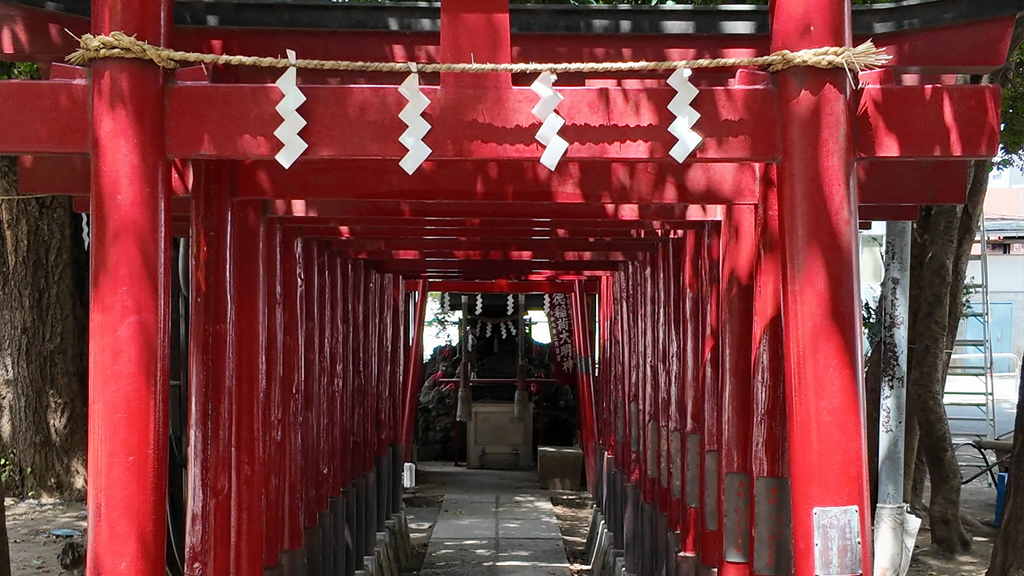
The crown jewel of spiritual exploration here is Itoku Inari Shrine (威徳稲荷神社), tucked away inside the main grounds.
Stepping into this sub-shrine feels like slipping through a tear in the fabric of reality. You are guided through a dense tunnel of vibrant red torii gates. Walking through them, the distant wails of police sirens and ambulances, mixed with the low hum of Shinjuku traffic, begin to fade into a strange, dreamlike background noise.
For a moment, you feel completely isolated from the city outside.
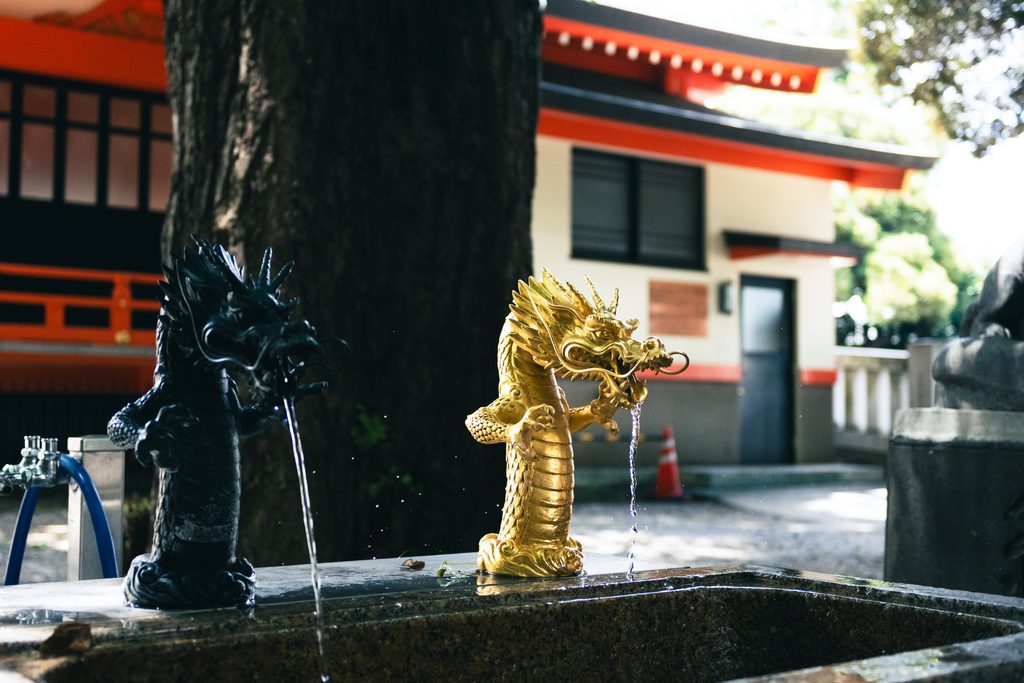
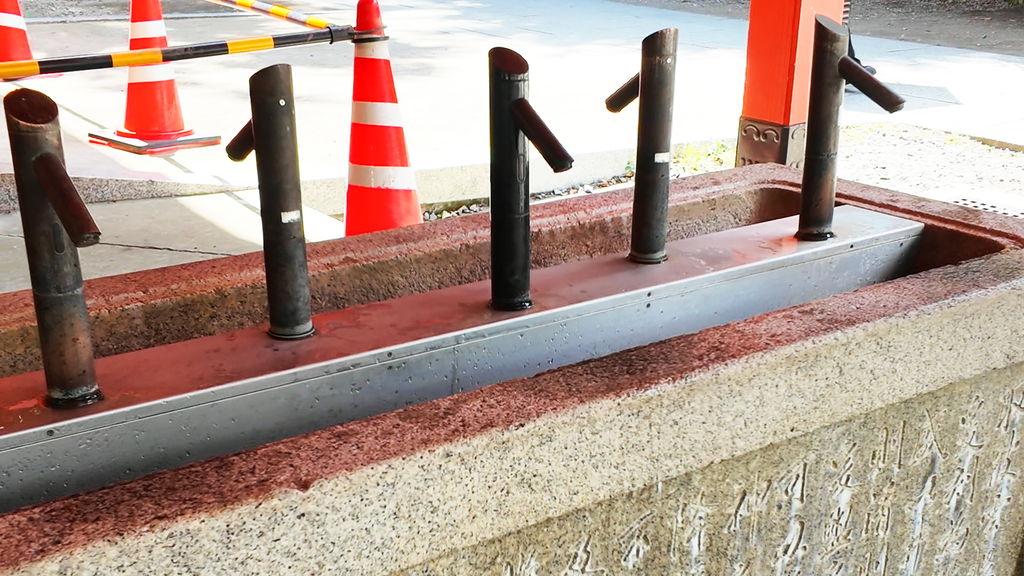
And look out for the chozuya, the water purification pavilion, as you explore the grounds.
Instead of an ordinary waterspout, you’ll find two striking dragons guarding the water—one finished in deep black and the other gleaming in brilliant gold.
To me, they perfectly capture the duality of Shinjuku itself: dark grit on one side, golden glamour on the other.
The Pink Kirie Goshuin
Alright, my collectors, brace yourselves. This is what you came for.
Hanazono Shrine offers a piece of spiritual art that can completely reset your expectations of what a goshuin can look like.
Say hello to the Pink Kirie (Cut-Out) Goshuin.
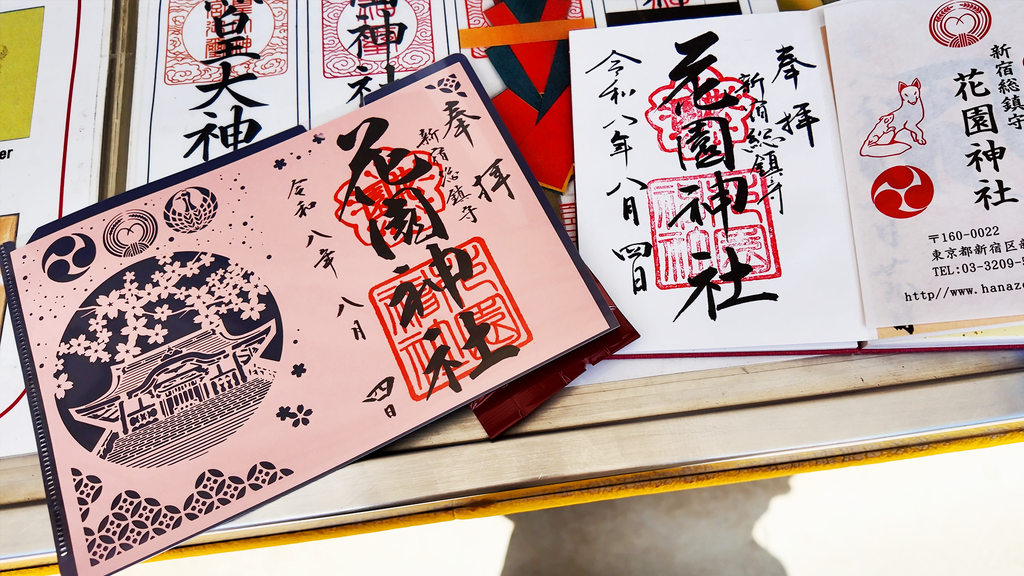
Unlike standard goshuin written or stamped on white paper, this one is intricately cut from vivid pink paper, with delicate details inspired by the shrine’s architecture and design.
When I held it up toward the sky inside the courtyard, the entire piece changed.
The light passed through the cut-out sections, and suddenly the goshuin felt less like a souvenir and more like a tiny piece of stained glass.
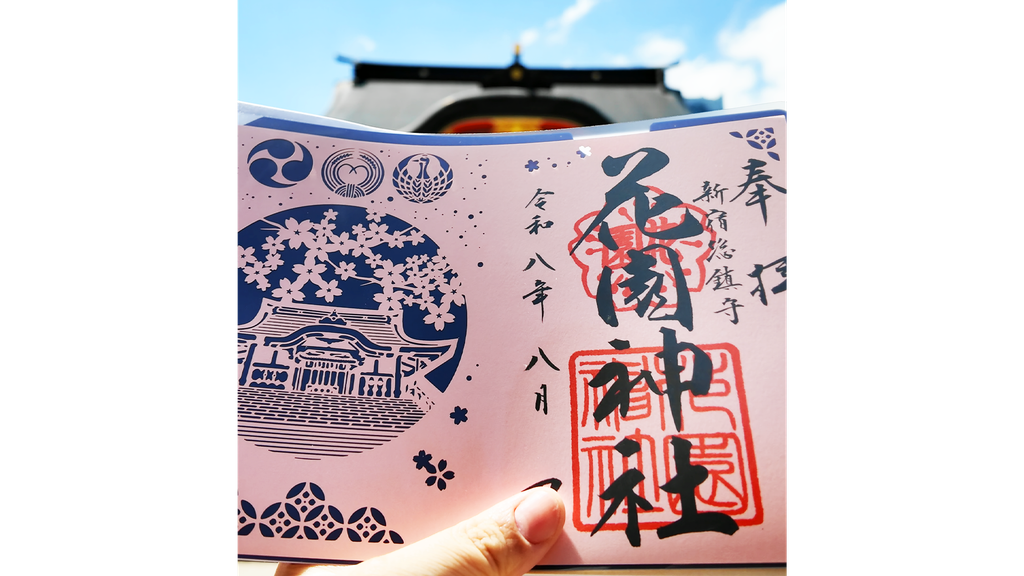
The contrast was incredible: hot-pink paper, a piercing blue Tokyo sky, and glimpses of Shinjuku’s high-rises peeking through in the distance.
It created one of those travel moments that sticks in your memory long after the trip is over.
For me, this is what makes kirie goshuin so special. You are not just collecting a stamp—you are taking home a piece of visual art that changes depending on where and how you look at it.
Access, Goshuin Hours & Shrine Etiquette
Ready to make the jump? Here’s the practical breakdown to help you visit Hanazono Shrine like a seasoned traveler.
Quick Facts & Access
Address
5-17-3 Shinjuku, Shinjuku City, Tokyo
Nearest Station
Shinjuku-sanchome Station — Exit E2 is right next to the shrine.
JR Shinjuku Station East Exit — about a 7-minute walk.
Shrine Grounds
The shrine grounds can be visited at any time, while the shrine office has separate opening hours. Recent Shinjuku tourism information lists the shrine office as open from 9:00 AM to 4:30 PM.
Goshuin
Goshuin are available at the shrine office. Since reception times and available designs can change, I recommend checking the latest information before your visit.
Hatsuho-ryo (Offering Fee)
The fee varies depending on the goshuin design you choose, especially for special or kirie versions.
Kirie Goshuin — 1,000 yen
Goshuin — 500 yen
My Shrine Etiquette Tip
When you reach the chozuya, take a moment to purify yourself before approaching the main shrine.
Traditionally, you use the ladle with your right hand to rinse your left hand, then switch hands and rinse your right. Next, pour a little water into your left hand to rinse your mouth—never touch the ladle directly to your mouth. Finally, tilt the ladle so the remaining water runs down the handle.
Don’t worry about performing every movement perfectly. The important part is simply to approach the shrine with respect.
And honestly, doing the ritual beneath the gaze of Hanazono Shrine’s black and gold dragons makes the whole experience feel even more memorable.
Don’t worry about performing every movement perfectly.
What to Do Around Hanazono Shrine
Once you step back through the torii gates and re-enter the 21st century, you are perfectly positioned to dive into some of Shinjuku’s most iconic nightlife.
Hanazono Shrine sits just a short walk from Kabukicho, but one of the most interesting places nearby is Shinjuku Golden Gai.
Shinjuku Golden Gai
Golden Gai is a maze of narrow alleys packed with tiny bars, each with its own personality and atmosphere.
After the calm of Hanazono Shrine, stepping into Golden Gai feels like entering a completely different version of Shinjuku—intimate, chaotic, and full of character.
It can be a great place to end your visit if you want to experience the contrast that makes this part of Tokyo so memorable.
Kabukicho
Kabukicho is also within easy walking distance and offers a completely different side of Shinjuku, with neon lights, restaurants, entertainment, and nightlife packed into a very small area.
If you visit Hanazono Shrine in the late afternoon, it is easy to continue straight into an evening exploring Shinjuku.
Planning Your Shinjuku Trip?
Hanazono Shrine is easy to combine with an evening in Shinjuku, especially if you want to experience both the quiet side of the city and its famous nightlife.
If you’re planning to stay nearby, join a local food tour, or explore Golden Gai with a guide, here are a few options worth checking out.
Local Tours & Nightlife Experiences
If Golden Gai feels a little overwhelming on your own, joining a guided bar crawl or local food tour can be an easy way to explore the area.
Some links on this page are affiliate links. If you book through them, we may earn a small commission at no extra cost to you!
Is Hanazono Shrine Worth Visiting?
Absolutely—especially if you want to see a side of Shinjuku that feels completely different from the neon streets surrounding it.
Hanazono Shrine isn’t the kind of place that requires half a day of sightseeing. That’s exactly why I like it. You can step away from the crowds, walk beneath the red torii gates, admire the black and gold dragons, pick up a beautiful goshuin, and then return to the energy of Shinjuku just minutes later.
For goshuin collectors, the pink kirie design alone makes this shrine worth adding to your Tokyo itinerary. But even if you aren’t collecting goshuin yet, the contrast between the peaceful shrine grounds and the city outside makes Hanazono Shrine a memorable stop.
If you’re already exploring Shinjuku, don’t just walk past the entrance. Step inside—you might be surprised by how quickly Tokyo seems to disappear.